

Germany Blames Russia for Leipzig Airport Drone Attack
In a significant development, the German government has accused Russia of attempting to carry out an attack at Leipzig/Halle Airport last month using an explosive-laden drone. In response to this incident, Germany plans to close a Russian consulate and implement other measures against Moscow. NATO Secretary-General Mark Rutte and EU Chief Ursula von der Leyen expressed their unwavering support for Berlin during this crisis.
Responses from NATO and the EU
Following discussions with Chancellor Friedrich Merz, Rutte took to social media platform X to emphasize NATO’s commitment to strengthening its ability to protect all member states from threats, particularly from actions similar to those seen in Leipzig. He pointed out that Berlin had presented clear evidence linking Russia to this “hybrid attack” and welcomed the measures Germany announced in retaliation.
Rutte firmly stated, “Russia’s attempts to intimidate us, to undermine our unity and our willingness to support Ukraine are futile and will fail.” Similarly, von der Leyen reassured Merz of the EU’s full solidarity with Germany in the wake of this attack. She affirmed, “The message is clear: hybrid attacks will not go without a clear response.” The EU is also preparing to announce further sanctions against Russia in light of these escalating threats.
The Incident at Leipzig/Halle Airport
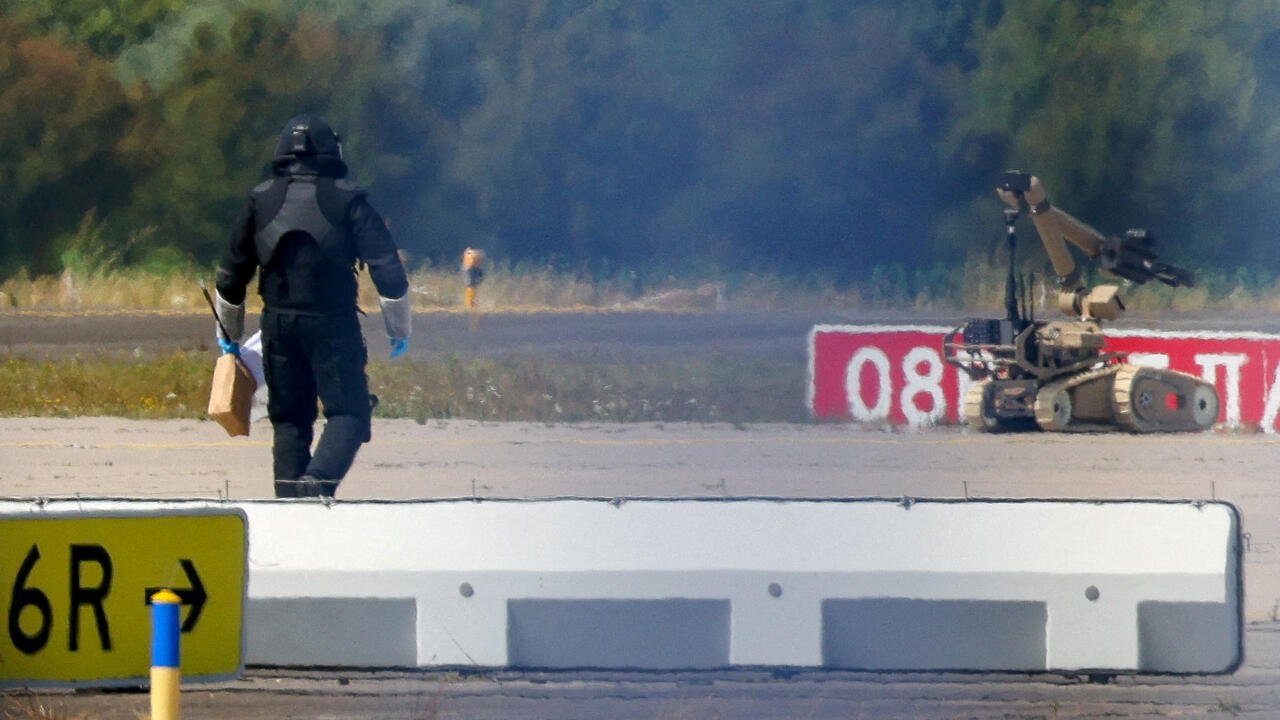
On the evening of August 4, a drone was discovered near a Ukrainian aircraft at Leipzig/Halle Airport, prompting immediate action to defuse the explosive device. German officials indicated at that time that the situation represented a new level of danger. Moscow has faced widespread allegations from Western officials regarding its involvement in campaigns aimed at sabotage and disruption across Europe, seeking to undermine support for Ukraine and destabilize European nations.
Technical Expertise and Investigation Findings
German Interior Minister Alexander Dobrindt reported that the investigation revealed components and configurations of the drone that are consistent with Russian hybrid operations and its ongoing conflict in Ukraine. He noted that the device indicated a high degree of technical expertise and careful planning, but suggested that the execution may have been assigned to lower-level operatives.
Dobrindt stated to reporters, “Taken together, the police investigations, the pattern and intelligence findings prove a Russian responsibility for the attempted attack at Leipzig airport.” Foreign Minister Johann Wadephul remarked that this attack represents a deliberate effort by the Russian leadership to further strain the already tense bilateral relationship with Germany.
Measures to Counter Russian Aggression
Germany has announced that the Russian consulate in Bonn will cease operations effective September 18. Additionally, the contract for the Russian House cultural center in Berlin will be canceled. Germany plans to propose adding more individuals from Russia to EU sanctions lists related to hybrid attacks, tighten border controls for individuals entering from Russia, and apply increased pressure on a network of tankers suspected of transporting Russian oil in violation of international sanctions. The EU has already initiated sanctions against hundreds of vessels within this “shadow fleet.”
Future Implications
In retaliation, Russia’s Foreign Ministry indicated that it’s likely to respond to what they labeled as Germany’s “anti-Russian decision.” Leipzig/Halle Airport serves as a crucial hub for international freight and aid support to Ukraine, regularly hosting Ukrainian Antonov transport aircraft. It also plays a vital role in NATO’s Strategic Airlift International Solution (SALIS), which is active almost daily in delivering resources to NATO forces stationed along its eastern border.
In the past, in 2024, an incendiary device was ignited at this airport’s logistics center, highlighting the risks posed by ongoing tensions. Western security officials suspect that this incident was orchestrated by Russian intelligence entities as part of a broader campaign of aggression.
Conclusion
The recent drone incident at Leipzig/Halle Airport has raised alarms about the extent of Russian aggression and the need for unity among European nations. As Germany implements firm responses against Russia, the situation underscores the critical importance of international cooperation in countering hybrid threats.
- The German government attributes a drone attack attempt at Leipzig Airport to Russia.
- NATO and EU leaders have expressed strong solidarity with Germany.
- Germany is implementing measures including closing a Russian consulate and proposing further sanctions.
- The incident highlights ongoing concerns about security threats stemming from Russia.