

German Accusations Against Russia: The Drone Attack at Leipzig Airport
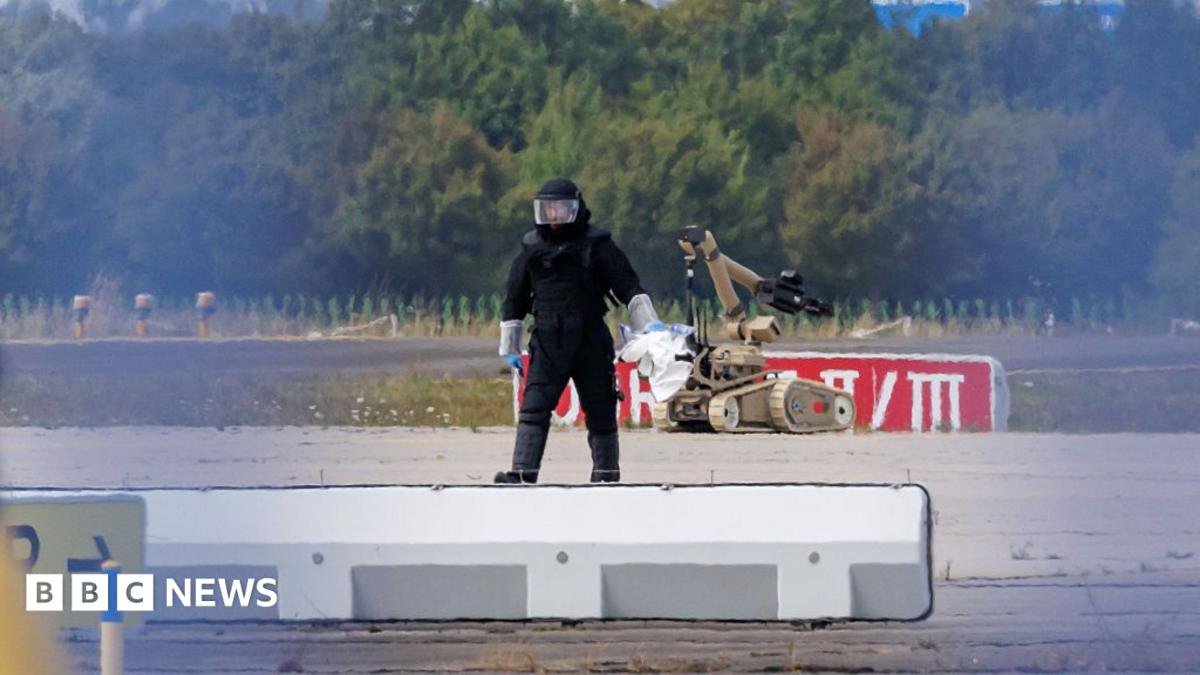
Germany has recently pointed the finger at Russia for a drone attack that occurred last month at Leipzig’s airport. This incident, involving a drone laden with an explosive device, unfolded on August 4 at Leipzig/Halle Airport in eastern Germany, close to Ukrainian cargo planes. Fortunately, the drone did not detonate due to a faulty detonator, but investigators suspect that another drone may have collided with a cargo aircraft in the vicinity. Furthermore, approximately ten days later, a third drone was reported found nearby.
Official Statements and Actions Taken
Interior Minister Alexander Dobrindt highlighted that this attack reflects a “well-established pattern of Russian hybrid operations in Europe,” indicating a likelihood of further targeting of Germany. His remarks were supported by evidence from equipment analysis and intelligence, affirming Russia’s involvement.
Closure of Russian Diplomatic Presence
In a press conference in Berlin alongside Dobrindt, German Foreign Minister Johann Wadephul announced significant measures in response to the incident. He revealed plans to shut down the Russian consulate in Bonn and terminate the contract for the Russian House in Berlin, which has been alleged to serve as a hub for espionage and the dissemination of Russian propaganda.
Tighter Entry Controls and Increased Pressure on Moscow
Wadephul also mentioned plans for stricter entry regulations for Russian nationals and a commitment to heightening pressure on Russia’s shadow fleet—aging tankers utilized to bypass Western sanctions implemented after the 2022 invasion of Ukraine. To further emphasize diplomatic actions, he summoned Sergei Nechayev, Russia’s ambassador to Germany, who arrived at the foreign ministry shortly after the announcement.
NATO and EU Responses
In response to the unfolding situation, NATO’s head, Mark Rutte, expressed solidarity with Germany, stating, “The evidence is clear, and I welcome the measures announced by Germany.” Discussions regarding this issue were scheduled for the upcoming EU foreign ministers’ meeting in Ireland.
EU Commission President Ursula von der Leyen reaffirmed the EU’s united stance against Russian aggression, declaring that additional sanctions against Russia were in the works. British Prime Minister Andy Burnham echoed similar sentiments, deeming Russian attempts to weaken collective resolve as “futile and doomed to fail.”
Broader Context and Ongoing Concerns
Over the past year, several NATO member states, including Germany, have reported drone sightings near airports and military installations. Until recently, Berlin had been cautious in attributing responsibility for the Leipzig incident but had hinted at potential foreign involvement. US media reports had previously connected the incident to Russian actions.
Germany has publicly warned of being a “daily target” of hybrid warfare, with Chancellor Friedrich Merz indicating that those behind hostile actions would face consequences. Efforts are underway to enhance the capabilities of intelligence services that have faced criticism for being under-equipped to tackle such threats.
Political Climate in Germany
As a staunch supporter of Ukraine, Chancellor Merz understands the vulnerabilities associated with the presence of Ukrainian cargo planes at a vital German logistics hub. However, his administration is amid a sensitive political moment, particularly with a significant election approaching in the eastern state of Saxony-Anhalt, where the far-right Alternative für Deutschland (AfD) party could gain power for the first time at the state level. The AfD has expressed intentions to halt military support for Ukraine and restore ties with Russia.
Incident in Brandenburg
In a related development, German police are also investigating the discovery of improvised explosive and incendiary devices found at a power substation in Brandenburg. This incident resulted in damage to a power line, causing a temporary outage; however, the identity of those responsible for planting the devices remains unknown.
Conclusion
The drone attack at Leipzig Airport has raised alarm bells in Germany and the broader international community regarding Russia’s ongoing hybrid warfare tactics. As Germany strengthens its responses and prepares for additional sanctions, the situation remains critical, mirroring the delicate dynamics in European politics.
Key Takeaways:
- Germany attributes the recent drone attack at Leipzig Airport to Russia.
- Significant diplomatic measures have been announced, including the closure of the Russian consulate.
- NATO and EU leaders express solidarity and prepare for further sanctions against Russia.
- Political tensions rise in Germany with an upcoming key election and increasing concerns about hybrid warfare.