

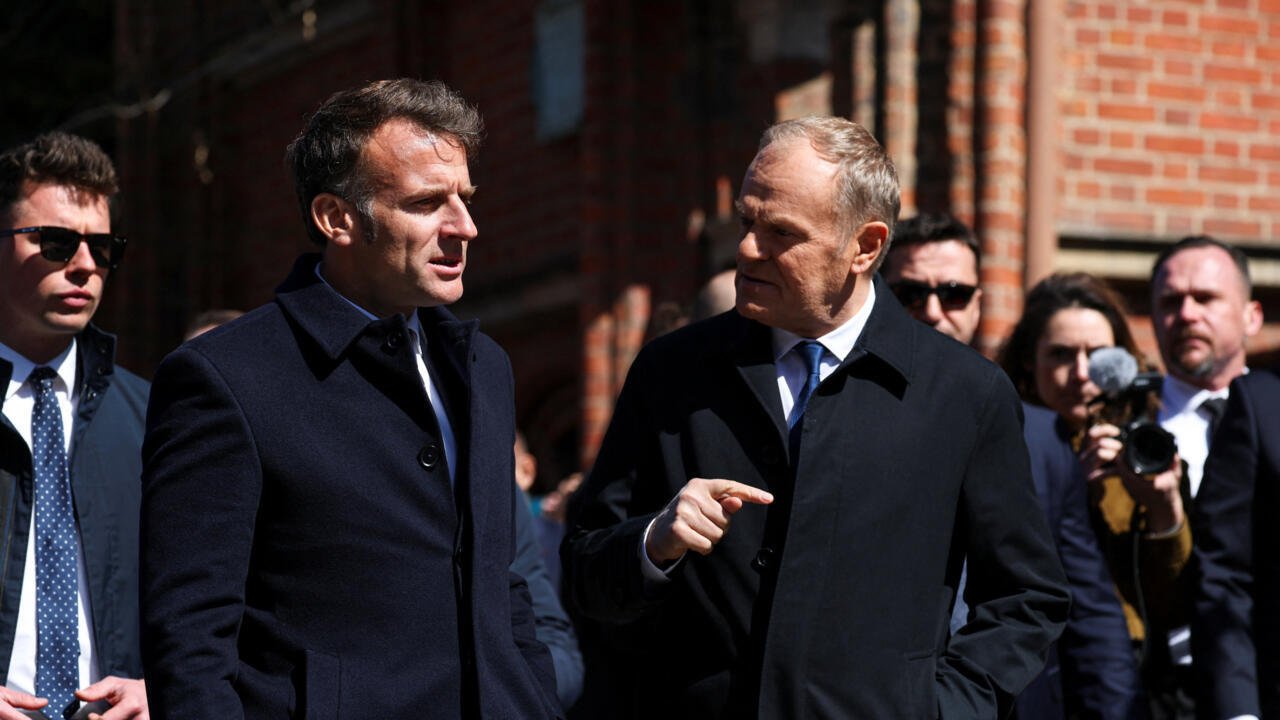
Strengthening Defense Cooperation: Macron and Tusk’s Meeting in Poland
French President Emmanuel Macron and Polish Prime Minister Donald Tusk are convening in northern Poland to bolster defense collaboration in light of escalating Russian threats and a diminishing U.S. commitment to Europe. This meeting marks their first official engagement since the two nations solidified a treaty focused on friendship and enhanced cooperation last May. Tusk expressed optimism about their shared vision for reinforcing the sovereignty of both Poland and France, alongside a unified Europe.
Addressing Defense Challenges
As Europe enhances its defensive capabilities in response to Russia’s ongoing invasion of Ukraine, the two leaders will explore the potential for Poland’s involvement in France’s nuclear deterrent initiatives. Tusk emphasized that this serves as a vital “wake-up call for Europeans” to increase their defense investments amid a growing threat landscape.
Collaboration on Military Projects
While it has been established that France will retain ultimate control over military force decisions, there are opportunities for Polish forces to support initiatives like early warning systems and air defense. Additionally, both nations will collaborate on a military communications satellite project involving multiple European partners, which aims to enhance operational efficiency across the continent.
A Shift in Procurement Preferences
Another significant topic of discussion will be Macron’s advocacy for “European preference” in military procurement, a stance that has created some friction with Eastern European countries, including Poland, which have strong ties to the United States. In recent years, Poland has heavily invested in modernizing its military, leading to its status as an attractive ally within NATO. By 2026, Poland’s military expenditure is projected to surpass 4.8% of its GDP, a stark contrast to many European nations.
Balancing Relationships
Despite Poland’s substantial investments in American military assets, such as F-35 fighters and Apache helicopters, there are political factions within the country that express reservations about deepening EU military ties. Nationalist President Karol Nawrocki has voiced opposition to participation in the EU’s Security Action For Europe program, citing concerns over national independence, despite the financial benefits it could bring.
Following Tusk’s electoral victory in 2023, Poland is once again under pro-European leadership, yet it remains dependent on its U.S. relationship. This bond has experienced strains due to former President Trump’s rhetoric towards Europe and conflicts in the region.
Welcoming New Dynamics
During their meeting, Macron and Tusk will also acknowledge Hungary’s renewed commitment to pro-European policies following the recent electoral setback of Prime Minister Viktor Orban, who had previously positioned himself as a leader within the illiberal camp of the EU. The discussions are taking place in Gdansk, a city with deep historical significance related to Europe’s 20th-century struggles for democracy.
Macron commenced his visit with a tribute at a nearby French military cemetery, continuing a tradition honored by previous French leaders.
Conclusion
This meeting between Macron and Tusk underscores the importance of European unity and defense collaboration amidst external threats. As both leaders navigate the evolving geopolitical landscape, their discussions may be pivotal for Europe’s collective security strategy.
Key Takeaways
- Macron and Tusk aim to strengthen defense cooperation amid Russian threats.
- Poland may contribute to France’s nuclear deterrents as part of their collaborations.
- Differences arise over military procurement preferences between Eastern Europe and the EU.
- Hungary’s shift back to pro-European policies is a significant development in the region.