

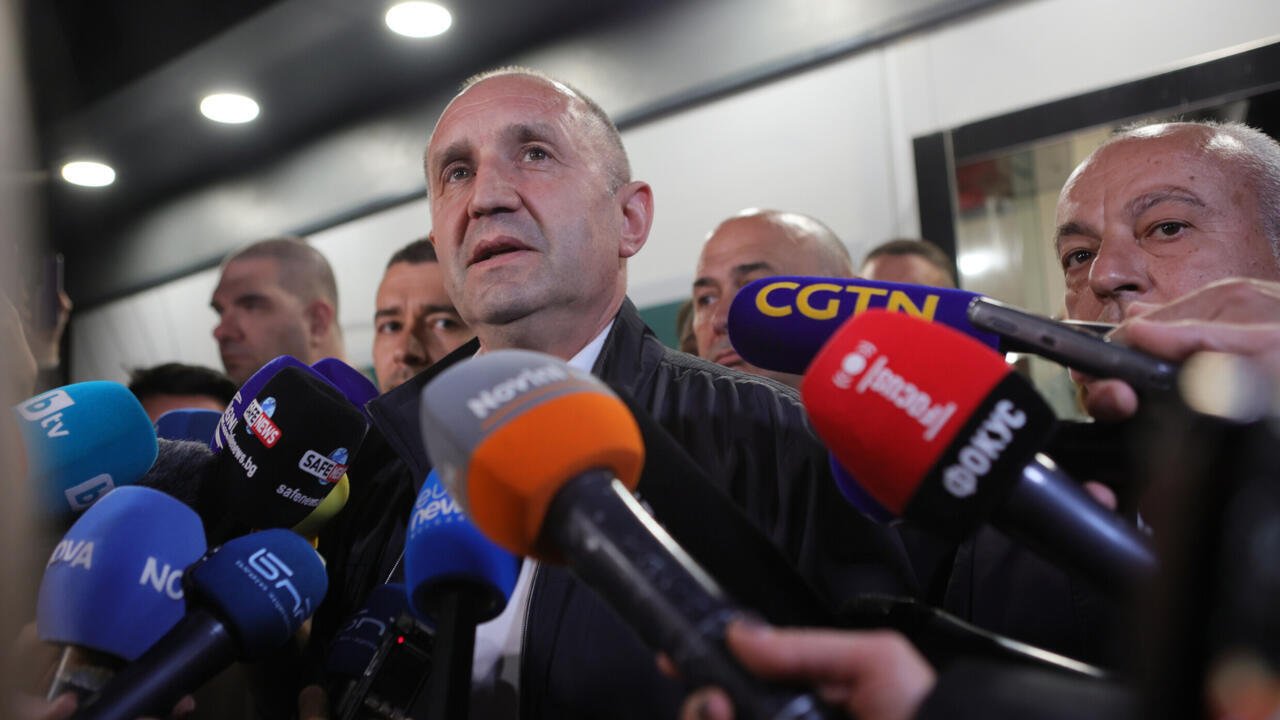
Rumen Radev’s Victory: A New Era for Bulgaria?
Bulgarian former president Rumen Radev, known for his criticism of the European Union and his calls to strengthen ties with Russia, has achieved a striking majority in the recent parliamentary elections. This outcome could bring an end to years of political instability in Bulgaria, highlighted by multiple elections since 2021. As anti-corruption protests toppled the pro-European government of Boyko Borissov, Radev has now emerged as a significant political force with a mission to combat corruption in the country.
Election Results and Political Landscape
With nearly all votes counted on Monday, Radev’s Progressive Bulgaria party garnered 44.7% of the votes, equating to approximately 130 seats in the 240-seat parliament. This marks the first outright parliamentary majority for a single party since 1997. In stark contrast, Borissov’s GERB party saw a drop to 13.4%, while the liberal coalition PP-DB followed closely with 13.2%.
Other parties, such as the far-right Vazrazhdane and the MRF, which represents Turkish and Roma minorities, also succeeded in securing seats in parliament. This diverse political environment indicates a shifting landscape in Bulgarian politics.
Radev’s Vision for Bulgaria
After the election results were announced, Radev celebrated what he termed a “victory of hope,” emphasizing the need for Bulgaria to continue its European journey. He expressed that progress requires critical thinking and pragmatism, especially in a Europe facing new global challenges. Radev’s pledge to dismantle Bulgaria’s oligarchic governance structure resonates with many voters who participated in anti-corruption demonstrations that led to the removal of the previous conservative government.
Challenges Ahead
While Radev’s party has a majority, experts suggest that the real challenge lies in enacting essential reforms to tackle corruption. Political analyst Teodor Slavev pointed out that for significant judicial or constitutional changes requiring a two-thirds majority, Radev will need to collaborate with other parties.
Balancing Between Europe and Russia
With an eye towards balancing Bulgaria’s relationship with the EU and Russia, Radev faces pressure to adopt a more eurosceptic stance, especially from the far-right factions. Political scientist Daniel Smilov notes that Radev’s initial indications lean towards a pro-European policy, but his actual implementation of these signals remains to be seen.
In a bid for pragmatic relations, Radev has advocated for mutual respect and equal treatment with Russia. He has also raised concerns regarding a recent defense agreement between Bulgaria and Ukraine, opposing the idea of sending arms to Ukraine while maintaining a commitment not to block EU decisions.
Looking Forward After a Period of Distrust
Former Prime Minister Boyko Borissov acknowledged Radev’s victory but reminded voters that winning elections does not equate to effective governance. With public trust in politics dwindling, as evidenced by only 39% voter turnout, many Bulgarians call for profound changes to combat widespread corruption and improve the judicial system.
As political parties try to encourage citizen participation to diminish vote-buying practices, recent raids have yielded significant results, leading to the arrest of numerous individuals involved in corrupt practices.
Conclusion
Rumen Radev’s election victory marks a crucial turning point for Bulgaria, amid a backdrop of political upheaval and public demand for reform. As the nation looks ahead, the focus will be on whether Radev can fulfill his promises to tackle corruption while navigating a complex international landscape.
Key Takeaways
- Rumen Radev’s party won a historic majority in the Bulgarian parliament.
- Radev aims to fight corruption and dismantle the oligarchic governance model.
- The balancing act between pro-European policies and relations with Russia will be crucial.
- Bulgaria faces significant reforms as public trust in politics remains low.