

Ongoing Tensions Between the US and Iran: An In-Depth Analysis
The United States has been actively engaged in a combination of military actions and economic sanctions against Iran, spurring the Iranian government to contemplate increasingly assertive measures. Recent developments have escalated tensions in the region, as military actions have come to the forefront and both nations clash over vital resources.
Military Actions Escalate
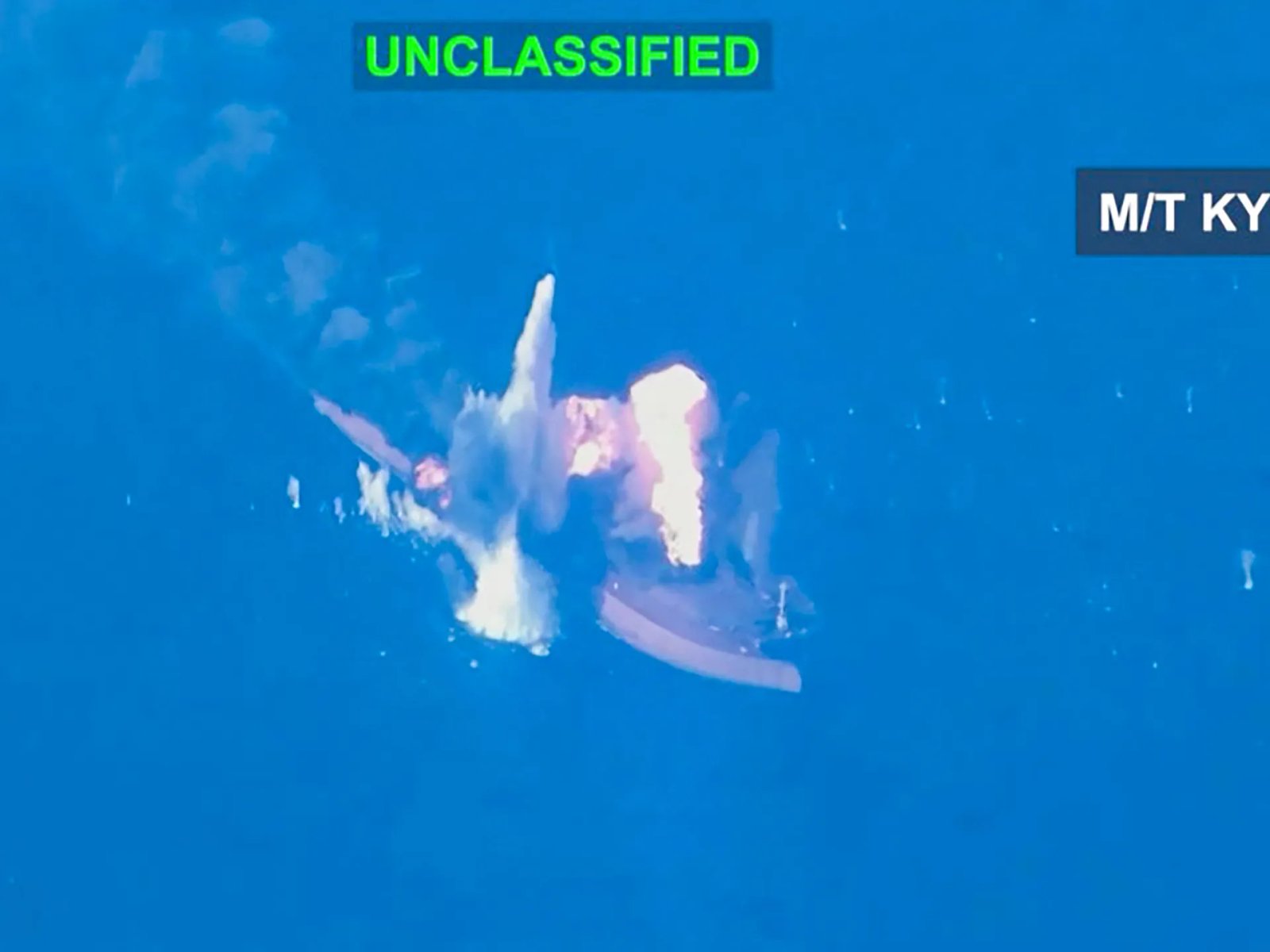
On a recent Saturday, the US Central Command (CENTCOM) broadcast footage showing the destruction of three Iranian oil tankers. One of these incidents occurred near Kharg Island, the primary oil export hub for Iran, while the other two were targeted in the Gulf of Oman. According to CENTCOM, two of these vessels were rendered “permanently disabled,” and a third vessel ultimately sank after being bombarded.
In a show of retaliation, Iran’s Islamic Revolutionary Guard Corps (IRGC) released its own video depicting explosives striking various ships in the Strait of Hormuz. An IRGC statement emphasized that the United States must acknowledge its untenable position in the region, asserting, “Aggressor US must know that it has no way but to leave the region and stop its malignance.” The statement added that a US-operated sea drone was intercepted while attempting to breach Iranian territorial waters in a region critical for global oil and gas transportation.
Challenging US Naval Operations
In statements made on Sunday, the IRGC claimed responsibility for launching a series of ballistic missiles aimed at a US aircraft carrier and another warship involved in enforcing the current naval blockade affecting Iranian ports. While the IRGC asserted that both ships incurred damage and retreated, CENTCOM reported that the vessels successfully evaded the attacks.
The IRGC also interpreted the US acknowledgment of the missile launches as a reflection of their “strategic defeat,” asserting it as evidence of their offensive capabilities. During a private session with parliament members, Speaker Mohammad Bagher Ghalibaf stated that Iran has delivered key strikes against US military bases in the region, expressing confidence that the era of limited responses has concluded. He warned that any further aggression towards Iranian interests would provoke more intense retaliatory measures.
The Blockade and Its Implications
The Iranian Foreign Ministry has labeled US military actions against its ships as illegal, categorizing them as a “war crime” that contradicts the United Nations Charter. The ongoing standoff has prompted differing narratives from US and Iranian officials regarding the situation in the Strait of Hormuz, where a blockade has been in place since mid-July.
The Trump administration claims that maritime traffic through the strategically significant waterway is returning to pre-conflict levels, despite Iranian threats. However, Iranian officials maintain that the strait is effectively closed. The US military has indicated that about 90 commercial vessels have been redirected due to the blockade, with several others disabled or boarded. According to maritime intelligence from TankerTrackers, crude oil exports from the Middle East fell by 39% in August compared to earlier months, resulting in a significant deficit.
Iran’s Oil Export Challenges
Iran has confirmed difficulties in exporting crude oil past the US naval blockade, though officials have pointed out that this does not equate to a complete halt in exports. Recent comments from President Masoud Pezeshkian suggested that Iran has still managed to export up to 90 million barrels of oil during a brief period of compliance with a memorandum of understanding with the US.
Some oil is stored in floating tanks beyond the blockade zone, allowing Iran to continue selling it at discounted rates to China, its primary customer. However, US sources indicate that this supply is dwindling, with Treasury Secretary Scott Bessent stating there are likely fewer than 30 million barrels left that China has yet to procure.
Iran’s Economic Strategy Amidst Pressure
The Trump administration heralds its strategy as “Operation Economic Outcast,” a plan aimed at crippling Iran’s economy through concerted sanctions and blockades. While Iran’s authorities have not specified how long they anticipate maintaining oil sales, they have begun exploring alternative routes for oil transport, even though experts assert that overland routes cannot replace the volume typically moved through the Strait of Hormuz.
In response to the mounting pressure, Iran’s Economy Ministry established an “economic war headquarters” to manage challenges, including soaring inflation and unemployment. Despite external stressors, IRGC spokesman Hossein Mohebbi claimed that the US is suffering greater economic repercussions from the ongoing conflict, indicating that for every dollar of damage inflicted on Iran, the US incurs several dollars in costs.
Conclusion
The ongoing hostilities between the United States and Iran highlight a complex intertwining of military actions and economic sanctions affecting both nations. As tensions continue to rise, the implications for global oil supply and regional stability remain pressing concerns.
Key Takeaways
- The US continues its military actions and sanctions against Iran, prompting a robust response from Tehran.
- Iranian claims of successful strikes against US naval forces highlight rising tensions in the Strait of Hormuz.
- Despite difficulties, Iran manages to export some oil while searching for alternative delivery routes.
- The US and Iran present conflicting narratives regarding the status of maritime traffic in the region.