

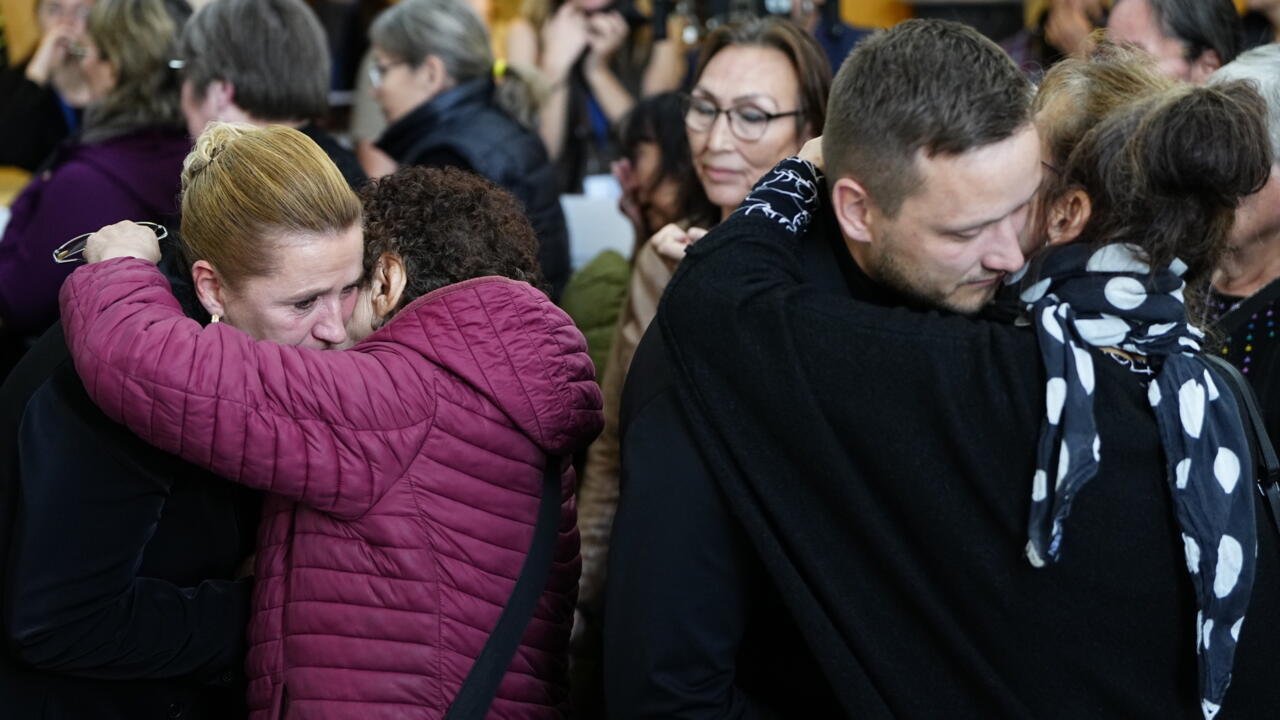
Greenland’s Truth and Reconciliation Commission on Forced Contraception
On Friday, Greenland announced the establishment of a Truth and Reconciliation Commission to address the traumatic history of forced contraception imposed on thousands of indigenous Inuit women by Denmark. This initiative comes after experts could not reach a consensus on whether these actions amounted to “genocide.” The campaign has shaded Greenland’s past with deep scars, particularly during its time as a colony under Danish rule.
The Dark History of Forced Contraception
Between the 1960s and 1990s, over 4,000 women in Greenland were compelled to use an intrauterine device (IUD)—often without consent, and in some cases without the knowledge of their parents if they were minors. This practice affected girls as young as 12, some of whom faced lifelong consequences and were unable to conceive in the future.
Government Responses
Greenland’s Justice Minister, Marianne Paviasen, emphasized the importance of ongoing dialogue regarding the event’s classification, stating, “We cannot say, on behalf of the government, whether there was genocide. This is something we can continue to debate.”
In a similar vein, Greenland’s Prime Minister, Jens-Frederik Nielsen, highlighted the urgency to initiate the healing process and committed to creating a reconciliation commission in collaboration with Denmark.
A Shared Path Forward
Danish Prime Minister Mette Frederiksen echoed this sentiment, stressing that the political response would be a joint effort with Greenland. “The most important thing for me is that we find the right path together,” she expressed during discussions on the matter.
Expert Findings
A four-member committee commissioned in August 2024 aimed to clarify the issues surrounding the forced contraception scheme. However, the experts presented two contradictory findings: one asserting that no genocide occurred, while the other suggested that it might have. Both reports did acknowledge that the contraceptive program likely infringed upon numerous human rights, particularly those of Indigenous populations.
Voices of the Victims
Among the victims, Henriette Berthelsen shared her concerns with AFP prior to the report’s release. She believed the findings were skewed, as none of the experts were Inuit. “For me, this is not just about history or politics. It’s my body, my life, and my right to self-determination,” she stated. Berthelsen lamented the fact that decisions regarding their trauma were still being handled by others.
Compensation Measures
On Thursday, the Danish parliament sanctioned a plan allowing women affected by the forced contraception campaign to seek compensation from the Danish government. This initiative, advocated by Frederiksen who had previously issued an official apology, marks a significant step toward reconciliation.
Reviving Past Trauma
The media’s examination of this case has resurfaced long-buried trauma. Victim Kirstine Najarak Berthelsen reflected on her experiences, stating, “I realized everything it had cost me—all those hospitalizations, surgeries, missed schooling, and pains I had never connected to that IUD.” She articulated that the depth of this suffering is unimaginable for those who have not endured it themselves.
By the late 1970s, it was reported that at least half of Greenlandic women of childbearing age—around 4,070—had been fitted with an IUD. The shocking narrative surfaced when a victim courageously shared her story with the media. A podcast series in 2022 further illuminated the extensive scope of the campaign.
Path to Healing
Berthelsen has been a staunch advocate for the Truth and Reconciliation Commission, arguing that this acknowledgment is critical for healing. “I believe that only then will we be able to begin to heal and move forward—not as adversaries, but as human beings and as peoples equal in dignity,” she stated.
Greenland and Denmark are also committed to addressing other painful historical events, including cases of children adopted without parental consent.
Conclusion
As Greenland takes significant steps toward healing and reconciliation, the establishment of this commission marks a crucial moment in acknowledging the wrongs of the past. By facing history head-on, both Greenland and Denmark aim to foster understanding and dignity for all involved.
Key Takeaways
- Greenland is forming a Truth and Reconciliation Commission to address the forced contraception of Inuit women by Denmark.
- Expert reports are divided on whether the forced contraception campaign constituted genocide, but human rights violations are acknowledged.
- Victims are advocating for their rights and demanding acknowledgment of their suffering.
- Compensation measures have been approved by Denmark for affected women, indicating a move toward justice.