

The Unusual Tactics of Iran in the US-Iran Conflict
In an unexpected twist in the ongoing tension between the US and Iran, Tehran has resorted to unusual measures beyond military might, even utilizing mathematical concepts to convey political messages. Recent statements from Iranian officials highlight a complex interplay between economics and warfare, underscoring how international conflicts can have broader implications on global economic conditions.
Iran’s Military Impact on US Forces
Iran’s missile and drone capabilities have significantly impacted US military operations in the Middle East. According to recent Pentagon reports, Iran’s actions have resulted in the destruction or damage of numerous American aircraft and installations, costing the US billions in military resources. The ongoing conflict has not only strained military inventories but has altered the dynamics of geopolitical relations in the region.
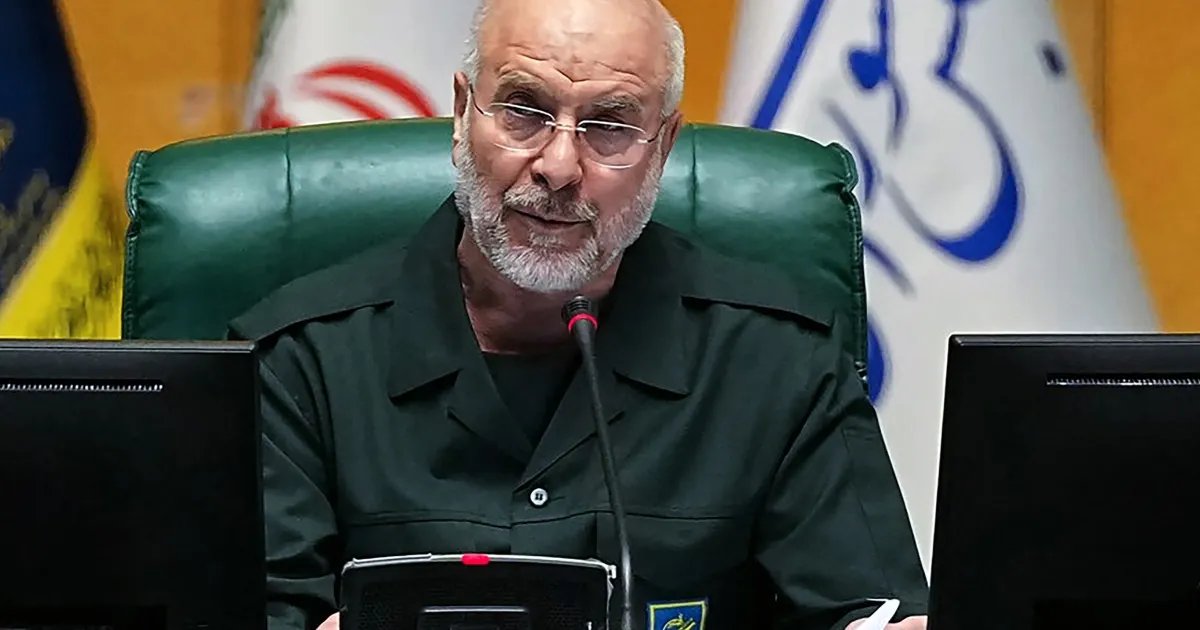
In a surprising move this past Wednesday, Iranian Parliament Speaker Mohammad Bagher Ghalibaf shared a mathematical equation on social media, seemingly linking it to the ongoing economic pressure between the two nations.
The Taylor Equation: A Financial Twist
Ghalibaf referenced the Taylor equation, a formula used by central banks to guide interest rate decisions based on inflation and economic performance. This equation, formulated by economist John Taylor in the early 1990s, connects the US federal funds rate with inflation and the “output gap”—the disparity between actual economic performance and potential output. In its most straightforward form, the equation can be stated as:
Interest rate = inflation + 0.5(output gap) + 0.5(inflation − 2%) + 2%.
This formula indicates that the recommended interest rate increases when inflation surpasses the target of 2% or when economic performance exceeds potential. Conversely, it decreases under opposite conditions. While this equation serves as a guideline, policymakers often consider a range of economic factors when making decisions.
The Influence of War on US Interest Rates
Considering the broader economic landscape, various factors, including tariffs imposed during former President Donald Trump’s administration and the recent conflict, have contributed to heightened inflation rates in the US. After the Federal Reserve raised interest rates by 25 basis points recently—the first increase in three years—it became evident that global conflicts, particularly the one involving Iran, have fueled economic uncertainty.
Fed Chairman Kevin Warsh acknowledged that the renewed hostilities with Iran and the subsequent rise in fuel prices were key contributors to the Federal Reserve’s decision to raise interest rates. Analysts like Chris Beauchamp noted that while the Iran war plays a significant role in driving economic conditions, it should not be viewed in isolation.
Debunking the Myth: Is Iran ‘Setting’ US Interest Rates?
Despite Ghalibaf’s claims, experts contend that Iran does not dictate US interest rates. While the geopolitical situation may influence monetary policy, the Federal Reserve considers a vast array of factors beyond just the conflict with Iran. Economists stress that variables such as robust domestic demand and the surge of investments in the tech sector are equally important.
Susannah Streeter, chief investment strategist at the Wealth Club, emphasized that although Iran’s actions have affected economic forecasts, the ultimate decisions regarding interest rates rest with the Federal Reserve. The equation put forth by Ghalibaf may serve more as a political jab rather than a factual basis for policy-making.
The Implications of Ghalibaf’s Statements
Historically, Ghalibaf has used social media to express criticisms of American economic maneuvers and the impact of sanctions on Iranian society. With witty remarks and counter-narratives about American economic challenges, Ghalibaf’s recent equations seem to follow a pattern of using financial terminology as a form of psychological warfare against the US.
In a previous instance, he even coined the phrase “Make America Hungry Again,” echoing a famous political slogan while pointing out food insecurity in the United States. His mathematical commentary appears to serve multiple purposes: it acts as a form of propaganda while engaging in a psychological battle over economic narratives.
Conclusion
The ongoing conflict between Iran and the US continues to transcend mere military exchanges, entering the realms of economics and social commentary. As both nations navigate this complex landscape, it becomes clear that mathematics, economics, and warfare are becoming increasingly intertwined in modern geopolitical disputes.
- Iran has utilized military capabilities to disrupt US operations, costing billions.
- Ghalibaf’s reference to the Taylor equation highlights a blend of economics and political messaging.
- While the Iran conflict influences US monetary policy, it does not solely determine interest rates.
- Ghalibaf’s statements reflect a broader strategy of psychological engagement against the US.