

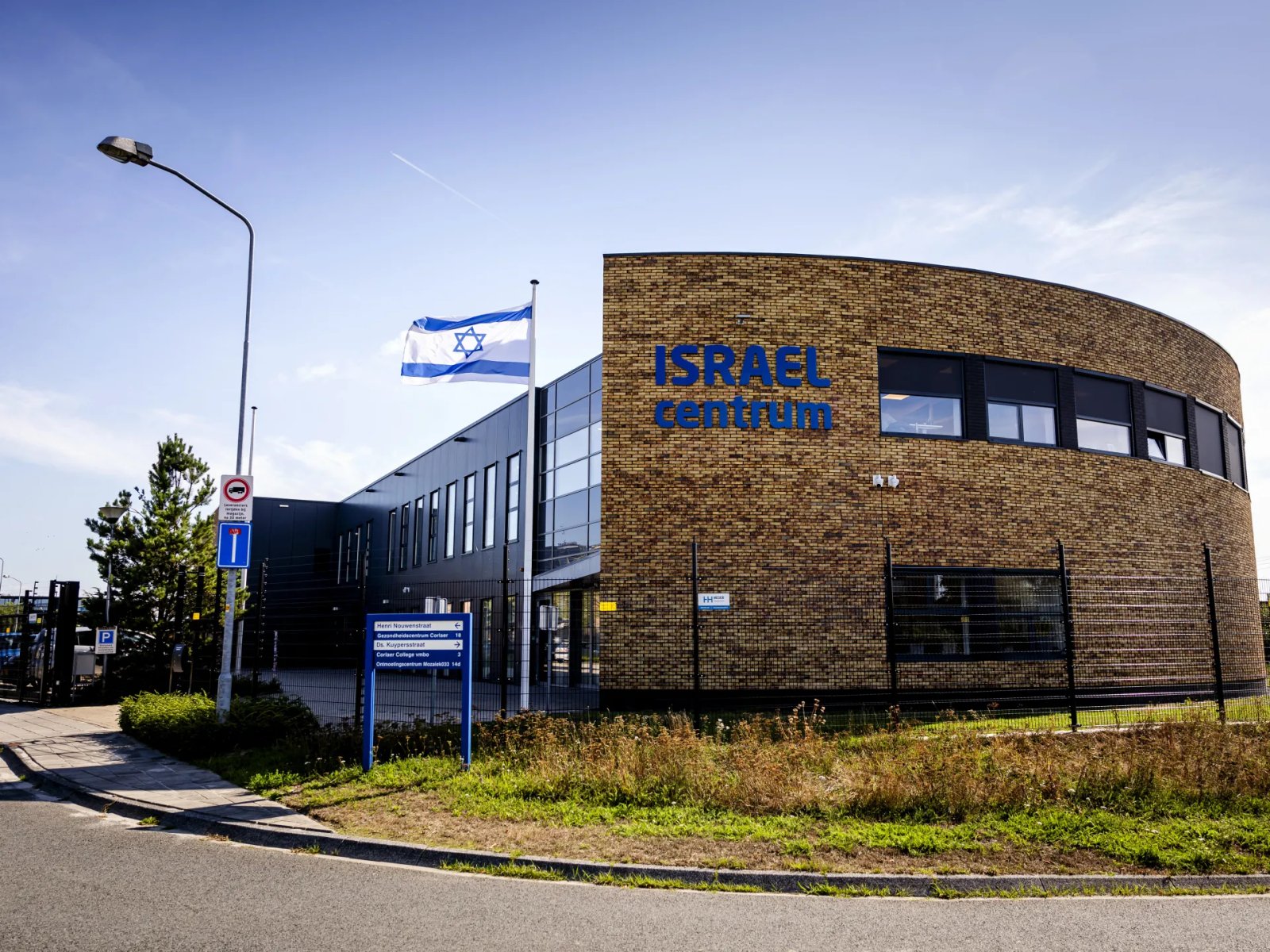
Christians for Israel Challenges Dutch Import Ban on Goods from Settlements
In a significant legal development, the Dutch group Christians for Israel is contesting the Netherlands government’s recent decision to impose a ban on the importation of goods produced in illegal Israeli settlements located in the occupied West Bank and Golan Heights. This ban, announced in July and set to take effect on September 22, aims to last for three years and prohibits the importing, purchasing, and selling of goods produced in these settlements, along with any intermediary services designed to bypass these regulations.
The Case at Hand
The Israel Product Centre (IPC), a segment of Christians for Israel (CvI), has initiated summary proceedings against the Dutch state to hinder the enforcement of this latest decree. The IPC contends that the ruling is “one-sided” and insists that the timeframe allocated to deplete its existing stock—comprising approximately 20,000 bottles of wine—is unreasonably short. Furthermore, they argue that the national ban contradicts the European Union’s principle of free movement of goods. A verdict on this matter is expected in about two weeks.
The Background of the Case
For some time, EU regulations have mandated that products from illegal settlements in the occupied West Bank must be labeled as originating from “Palestine” instead of being designated as “product of Israel.” However, the EU has not implemented an overall prohibition on trading with these Israeli settlements; that responsibility has fallen to individual nations. In February 2020, the Dutch advocacy group DocP urged consumers to report incidents of mislabeling related to wine and Dead Sea cosmetics.
As a result of these complaints, the IPC adjusted its labeling to read “product uit een Israelisch dorp in Judea & Samaria” (product from an Israeli village in Judea and Samaria), claiming it accurately shared the geographic and administrative background of the products without misleading potential buyers. Nevertheless, DocP maintained that this was insufficient under proper labeling requirements, leading to the IPC being fined €2,100 (around $2,500) by the Dutch food safety authority, NVWA, in 2021 for mislabeling goods.
The landscape changed in July 2024 when the International Court of Justice (ICJ) declared that Israel’s presence in the occupied Palestinian territories is unlawful and should come to an end “as rapidly as possible.” This statement expanded the legal narrative, emphasizing that nations ought to take measures to avoid trade or investment relationships that reinforce Israel’s unlawful settlement presence. Following this, the lower house of the Dutch parliament proposed the import ban in September 2025, leading to the July 2026 decree being established.
CvI’s Perspective on the West Bank
Christians for Israel refers to the West Bank as “disputed territory,” rejecting the international categorization as “occupied Palestinian territory.” They argue that Israel holds strong claims to sovereignty in that region and believe that Jewish individuals possess the right to reside there. This choice of terminology carries legal implications, as “disputed territory” differs from “annexed territory,” which complicates the applicability of legal standards against settlement trade.
On its website, CvI outlines its motivations for funding projects in these areas, citing biblical principles, particularly Ezekiel 47:21-23, which speaks to “peace for the Jewish people and resident foreigners inheriting alongside the tribes of Israel.” However, the ICJ’s advisory opinion underscores that the Fourth Geneva Convention’s Article 49(6) and various Security Council resolutions classify the territories as occupied and the settlements as illegal.
Responses from Other Christian Organizations
The stance regarding trade with Israeli settlements among Western churches is varied, with CvI positioned at one spectrum’s end. Mainline Protestant denominations, including the Presbyterian Church in the United States, divested from companies like Caterpillar and HP as early as 2014 and eliminated holdings in Israeli bonds in 2025. Meanwhile, the United Methodist Church has expressed opposition to Israeli settlements since 1996 and sold its Israeli bond assets last summer. The World Council of Churches called for sanctions against illegal Israeli settlements in 2025, advocating for divestment and an arms embargo, while the Vatican regards settlements as a barrier to peace but has not yet pursued divestment.
In contrast, Christian Zionist organizations, such as Christians United for Israel and the International Christian Embassy Jerusalem, continue to fund settlements and stand against boycott measures.
The Implications of the Ban
The import ban is particularly noteworthy, as the Netherlands is one of only four EU nations presently enforcing such a restriction against trade with illegal Israeli settlements. The trade value of these products in the EU is estimated to reach up to $400 million annually, with the Netherlands identified as a key market. An investigation by legal advocacy group Global Echo revealed that around 30% of goods from illegal settlements found their way to or transited through the Dutch market between 2017 and 2026.
European Countries’ Approaches to the Ban
Countries such as Spain have enforced a complete prohibition of imports from illegal Israeli settlements in the occupied territories since September 2025, alongside a comprehensive embargo on defense exports to Israel. Ireland has similarly instituted legislation banning imports from settlements, while Belgium is in the process of establishing a framework for trade regulation concerning these goods. Slovenia imposed restrictions in the past, but recent government shifts have reversed those measures.
However, the EU remains divided on whether such bans fall under foreign policy, necessitating consensus, or trade policy, which requires only a qualified majority to decide. Israeli Foreign Minister Gideon Saar condemned the advocacy for implementing the ICJ’s advisory opinions as “shameful.”
Ongoing Trade with West Bank Settlements
Most European countries currently permit trade with West Bank settlements, with the exception of the nations that have enacted bans. In the July 2026 assembly of EU foreign ministers, countries like Germany, Austria, Czechia, and Hungary opposed a bloc-wide ban. Outside of the EU, the United Kingdom has not implemented a ban on trade with illegal settlements. However, new discussions around a potential ban have emerged under the leadership of Prime Minister Andy Burnham, as organizations like Amnesty International advocate for stronger action against settlement expansion and annexation.
Conclusion
The legal battle initiated by Christians for Israel underscores the complexity surrounding trade practices and regulations concerning goods from settlements, revealing deeper political and theological divides. As this case unfolds, the implications for international law and trade remain significant, highlighting both local and global perspectives on the Israeli-Palestinian conflict.
- The Dutch group Christians for Israel is challenging a government ban on importing goods from illegal Israeli settlements.
- The IPC claims the ban is unfair and contradicts EU principles of free trade.
- Responses to settlement trade among Christian organizations vary widely.
- The Netherlands ranks among just four EU countries with a current import ban on these goods.