

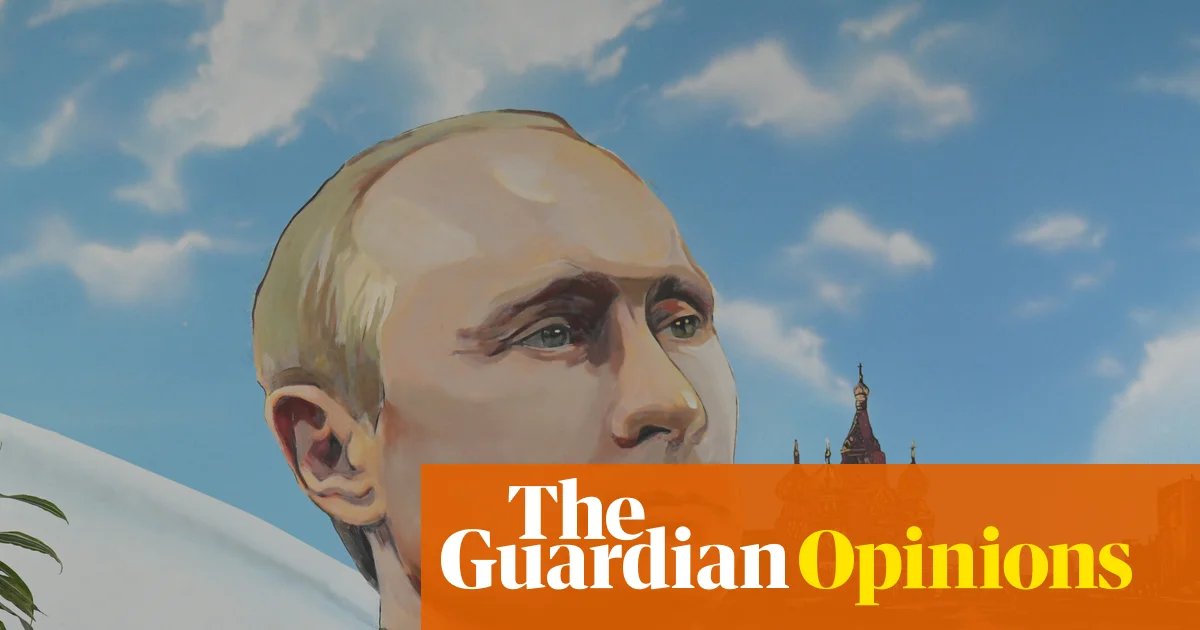
Putin’s War: Understanding the Stakes for Europe and Ukraine
In the current geopolitical landscape, Vladimir Putin is intensifying his full-scale aggression against Ukraine while simultaneously waging a covert battle against the rest of Europe. His primary aim is to weaken European support for Ukraine, a nation he views as vital to both Russia’s future and his personal ambitions. As we in Europe brace ourselves for various forms of hybrid warfare, the cornerstone of our response should be unwavering support for Ukraine. It is here, on Ukrainian soil, where Putin’s ambitions can be meaningfully confronted and deterred.
The Historical Context of Putin’s Expansionism
A thought-provoking new book by German historian Martin Schulze Wessel, titled Warum Russland nicht aufhören wird (Why Russia Won’t Stop), delves into the roots of Putin’s policies, linking them to a historical pattern of Russian territorial expansionism influenced by a blend of imperial ideology and religious fervor. Schulze Wessel reminds us of Putin’s striking declarations: “Russia’s frontier ends nowhere” and “wherever the boot of a Russian soldier steps, that is ours.” While many in Western Europe may dismiss this as a relic of history, countries like Finland, Estonia, and Poland recognize the looming threat. According to Schulze Wessel, despite Russia’s vulnerabilities, it remains “the most dangerous country in the world” for Europe.
Europe’s Responsibility and Response
Wessel highlights a crucial element in Russia’s historical expansion: it has often found facilitation from other major powers but has been curtailed by the presence of opposing forces. With Donald Trump’s return to the White House, the United States has shifted roles, sometimes appearing more as an ally to Russia than a counterbalance. This has placed Europe in a position where it must rise to the challenge of being that opposing force.
Support for Ukraine
In terms of support for Ukraine, Europe—including the UK—has contributed more aid than the United States itself. Europe’s collective economic strength is ten times that of Russia’s, with Germany alone having an economy twice that size. Since the onset of the full-scale war in 2022, Germany has emerged as a key player in this European initiative. According to the Kiel Institute’s Ukraine support tracker, Germany has donated more than twice the amount provided by Britain or France, illustrating a commitment that goes beyond mere financial support.
Germany’s Role in Defense
Germany has provided significant military aid to Ukraine, including 19 air defense systems, which consist of five critical US-built Patriot batteries—outpacing even the contributions from the United States. In previous discussions, I articulated that Germany has a historical obligation to assist Ukraine, and today, that obligation is being met with substantial actions and resources. With Germany’s defense spending projected to reach €154 billion (£130 billion) by 2028, this commitment reflects not just financial readiness but also political will.
Political Will and Historical Echoes
Chancellor Friedrich Merz has demonstrated this political resolve by visiting Ukraine on October 3, accompanied by a delegation from the defense sector. Notably, despite the ongoing bombardment of Kyiv, this act underscored Germany’s commitment to Ukraine’s sovereignty. While history reminds us of Germany’s complex and often troubling relationship with Russia, the current scenario reveals a renewed dedication to support Ukraine’s quest for independence and its rightful place within the European community.
The Challenges Ahead
However, questions remain regarding the sustainability of this support. As Putin targets Germany through hybrid warfare tactics—including drone strikes and political interference—three interconnected challenges will arise: Germany’s resolve to remain a steadfast ally, the capacity of democracies to persist against authoritarianism, and the unity of European nations in this critical struggle.
The Pessimism in Europe
Within Europe, there exists a troubling sense of pessimism. Merz faces unpopularity domestically, and parties like Alternative für Deutschland (AfD) advocate for abandoning Ukraine. Similarly, in France, Marine Le Pen’s National Rally questions the sustainability of continuous support for Ukraine, while right-wing sentiments in Poland and Italy are wavering. Moreover, a recent discussion in Brussels revealed hesitance when the topic of utilizing frozen Russian assets for support came up. This highlights the complexities surrounding European solidarity with Ukraine at a time when the country requires additional support estimated at €100 billion by 2027.
Putin perceives a weakness among European democracies, believing that they will falter before his iron-fisted approach. It is essential for us to prove him wrong.
Conclusion
As Europe’s role in supporting Ukraine evolves, the collective efforts of nations like Germany are paramount. The ongoing conflict reminds us of the delicate balance between history, political will, and the fight for sovereignty in the face of imperial ambitions.
Key Takeaways
- Putin’s war against Ukraine is coupled with a covert attack on European unity and support for Ukraine.
- Germany has become a pivotal player in aiding Ukraine, surpassing other European nations in military support.
- The historical context of Russia’s expansionism remains crucial to understanding current conflicts.
- European unity and resolve will be tested as challenges to support Ukraine persist.