

The Path to Peace: Ceasefire Developments in Oleshky and the Black Sea
Recent developments surrounding a ceasefire in Oleshky have sparked discussions about the potential for de-escalation with Russia. Ukrainian President Volodymyr Zelenskyy has highlighted the significance of humanitarian efforts in the Russian-occupied city, showcasing that steps toward peace may be viable. Meanwhile, the U.S. is observing an increasing interest in facilitating a truce in the Black Sea region to ensure the continued transportation of energy and grain shipments from both Ukraine and Russia.
Fostering Peace through Ceasefires
During a press conference in Istanbul with Turkish President Recep Tayyip Erdoğan, Zelenskyy emphasized that the operations in Oleshky “clearly demonstrate that de-escalation steps are possible when Russia is positioned to take those steps.” He stressed the need for decisive actions to usher in peace, asserting that all signals must indicate to Russia that there is no viable alternative to resolution and that support for Ukraine remains unwavering. This comes on the heels of a significant humanitarian operation in Oleshky, reinforcing the urgency for peace.
International Interest in a Ceasefire
In the United States, the Secretary of State mentioned a growing interest within the international community to facilitate a limited ceasefire in the Black Sea. This initiative aims to ensure unhindered energy and grain shipping operations by both Russia and Ukraine. Senator Marco Rubio noted that proposals from Turkey and India are under consideration to help resume grain shipments, even as the U.S. continues to advocate for a comprehensive peace agreement. He stated, “There is an increasing interest, if not momentum, in partial agreements, such as preventing attacks on vessels transporting grain and, in some cases, energy in the Black Sea,” highlighting the global impact on food and energy security.
Trilateral Talks on the Horizon
Zelenskyy revealed that he and Erdoğan discussed the possibility of trilateral negotiations involving Ukraine, Russia, and the U.S. in early November, exploring potential ways for Türkiye and Europe to participate as well. Erdoğan condemned any attacks on civilian vessels in the Black Sea, urging both Russia and Ukraine to “act responsibly,” emphasizing that these attacks are inexcusable regardless of the perpetrator or justification. Discussions are set to continue to ensure safer navigation in the Black Sea, with Zelenskyy accusing Russia of exacerbating tensions in the region.
Humanitarian Efforts and Evacuee Stories
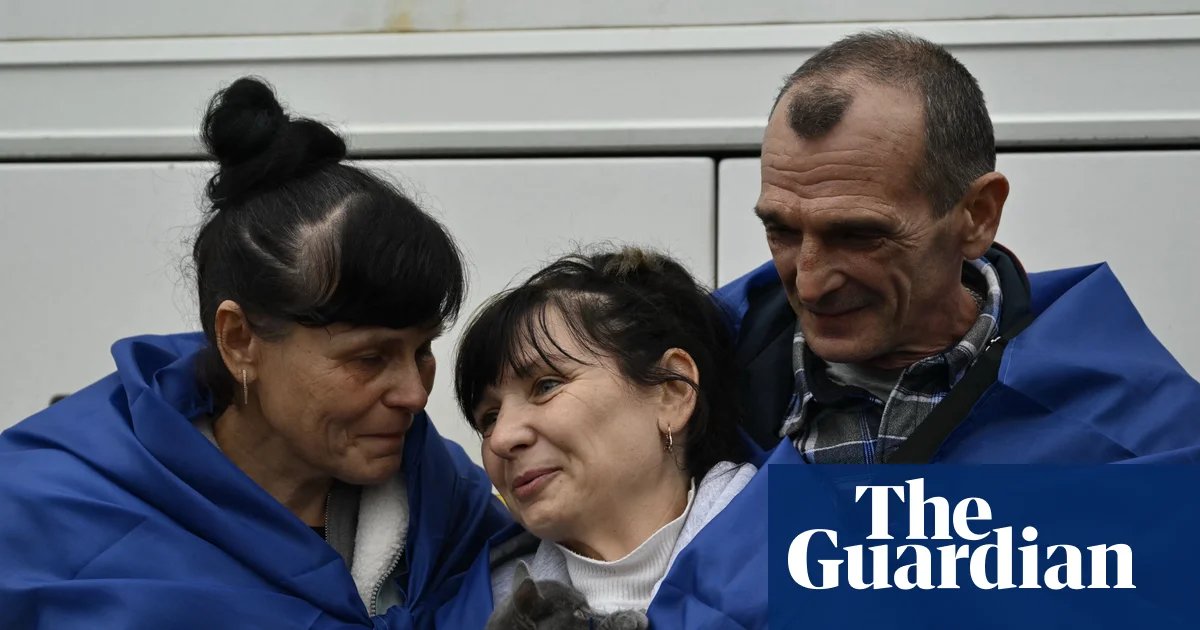
As a result of the localized ceasefire brokered by the U.S., evacuees from Oleshky were able to reunite with family members after crossing into Ukrainian-held territory. Wrapped in Ukrainian flags, these individuals shared harrowing tales of survival, noting that some had resorted to eating grass and animals to endure. One former resident named Valera recounted, “People were cooking grass… Lots of people were blown up. There were piles of bodies on the roads. In short, it was brutal… terrifying.” The truce in the southern Kherson region was projected to extend until Sunday evening, highlighting the dire circumstances faced by residents.
Drones and Conflict Escalation
On another front, Russia reported that drones targeted an industrial site east of Moscow, while Ukraine claimed responsibility for an attack on a major oil refinery. Gleb Nikitin, the governor of Nizhny Novgorod, indicated that a “massive drone attack” resulted in significant damage to an industrial facility, though preliminary assessments suggested no casualties. Ukrainian media referred to the site as “one of Russia’s largest oil refineries, producing fuel and lubricants.” Additionally, reports from Ukraine’s military claimed they successfully struck a missile fuel producer in Russia’s Rostov region, leading to a fire and structural damage to several production facilities.
Conclusion
The situation in Oleshky and the Black Sea underscores the complex dynamics between Ukraine, Russia, and the global community regarding peace negotiations. With ongoing humanitarian efforts and international discussions, there remains hope for a sustainable resolution to the conflict.
- The humanitarian operation in Oleshky illustrates the potential for de-escalation with Russia.
- The U.S. is observing increasing interest in a ceasefire to facilitate grain and energy transport.
- Trilateral talks involving Ukraine, Russia, and the U.S. could take place in early November.
- Evacuees from Oleshky share harrowing stories of survival amid the conflict.