

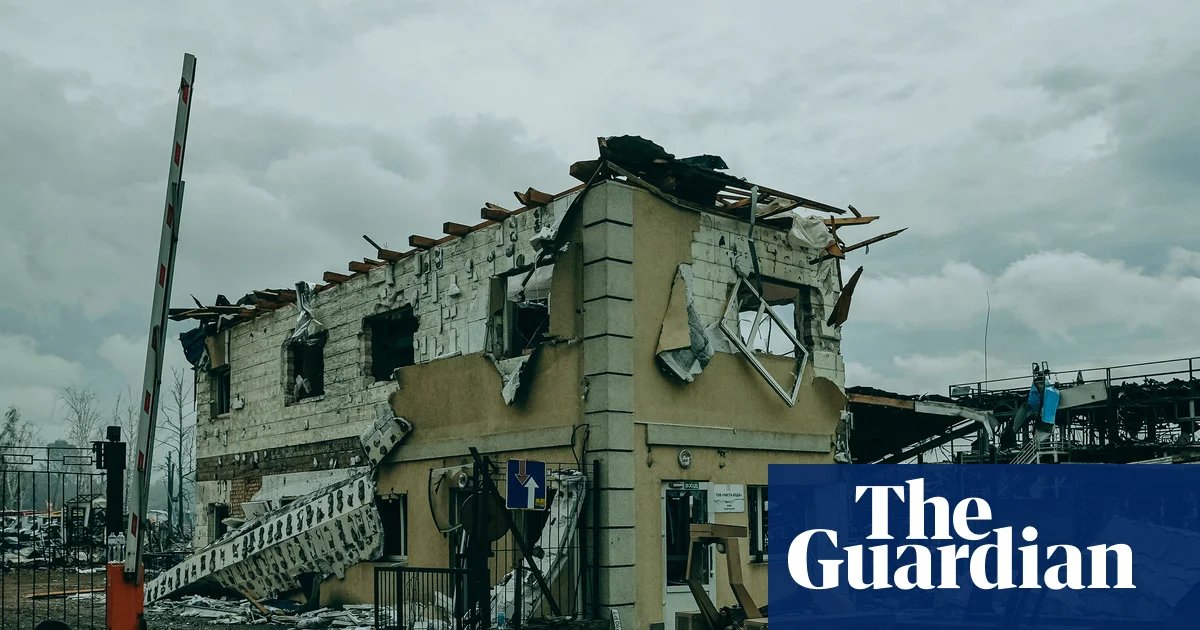
Destruction in Myla: A Community Reacts to Devastating Drone Strike
In the aftermath of a catastrophic drone strike in Myla, a small village just outside Kyiv, the impact on the local community is profound. Volodymyr, a 61-year-old security guard, guides guests through his family’s severely damaged home to the nearby grounds where an ammunition depot suffered a direct hit. The garden, once a vibrant allotment, has now turned into a scene of desolation, with shattered greenhouses and charred vegetable patches marking the site of destruction.
The Immediate Aftermath
The blast that occurred a day and a half ago left Volodymyr’s family without electricity or water. Despite their circumstances, he still presents two surviving bunches of grapes to visitors, showcasing an unexpected spirit of generosity amid hardship. The death toll from the attack has risen to 38, with four individuals still unaccounted for, igniting urgent discussions about the dangers of storing munitions near populated areas.
Voices of the Community
Vira, a 65-year-old resident, speaks with frustration about the situation: “Those responsible for the depot’s location are to blame. This is a village—such items shouldn’t be stored here.” She and her son, Serhii, were forced to take refuge in a small bunker during the relentless explosions that followed the initial strike. “I assumed it was humanitarian supplies stored nearby,” Serhii shares, highlighting the community’s shock over the hidden munitions.
Facing the Clean-Up Challenge
In addition to grappling with the emotional toll, the family now faces the overwhelming task of cleaning up the debris. They currently rely on charging their phones from a car battery to stay connected. Upon inspecting their property, Serhii found remnants of a Grad rocket shell and other unexploded ordnance. While some dangerous items have been removed by cleanup crews, others remain, posing ongoing risks to safety.
A Tour of Destruction
Volodymyr leads visitors through the scorched landscape, revealing where fires once blazed and indicating more remnants of munitions. The air is heavy with a lingering odor of smoke, and sporadic explosions can still be heard—some possibly controlled detonations as authorities work to mitigate further risks.
The Broader Context
On the night of the attack, Volodymyr was on duty at a nearby lumber yard. Although he escaped the initial blast, the intense urgency to revisit the site drove him back repeatedly. The tragedy particularly struck home, as 30 of the deceased were residents of a nearby care home, prompting investigations by Ukraine’s intelligence service into why explosives were stored so close to civilians.
This incident is not isolated; communities across Ukraine have faced similar attacks targeting poorly located munitions. Liudmyla, who resides a few doors down, recounts her frightening experience on the night of the strike, as her home was significantly damaged as well. “Everything is wrecked. They are placing explosives too close to our homes,” she laments.
A Grim Reality
As the community grapples with the aftermath, the cloud of danger remains, with more munitions yet to be cleared. With previous incidents causing fatalities and widespread destruction, the residents are left to ponder the accountability of those responsible for the storage decisions. Liudmyla’s words resonate with many: “Putin! Who else? And those who allowed the depot to be established here.”
Conclusion
The devastation in Myla serves as a heartbreaking reminder of the ongoing conflict’s toll on civilians. As the community starts to pick up the pieces, crucial questions about safety and responsibility are raised, compelling a reevaluation of how and where munitions are stored in densely populated areas.
Key Takeaways
- A drone strike in Myla resulted in significant casualties and damage, raising concerns over ammunition storage policies.
- Residents face immense challenges in recovering from the destruction while navigating ongoing safety risks from unexploded munitions.
- The incident has ignited urgent discussions about the dangers of housing military supplies near civilian homes.
- Community voices emphasize the need for accountability from those responsible for the hazardous storage locations.