

The Journey of the Concrete Deer: Art and Resilience in Ukraine
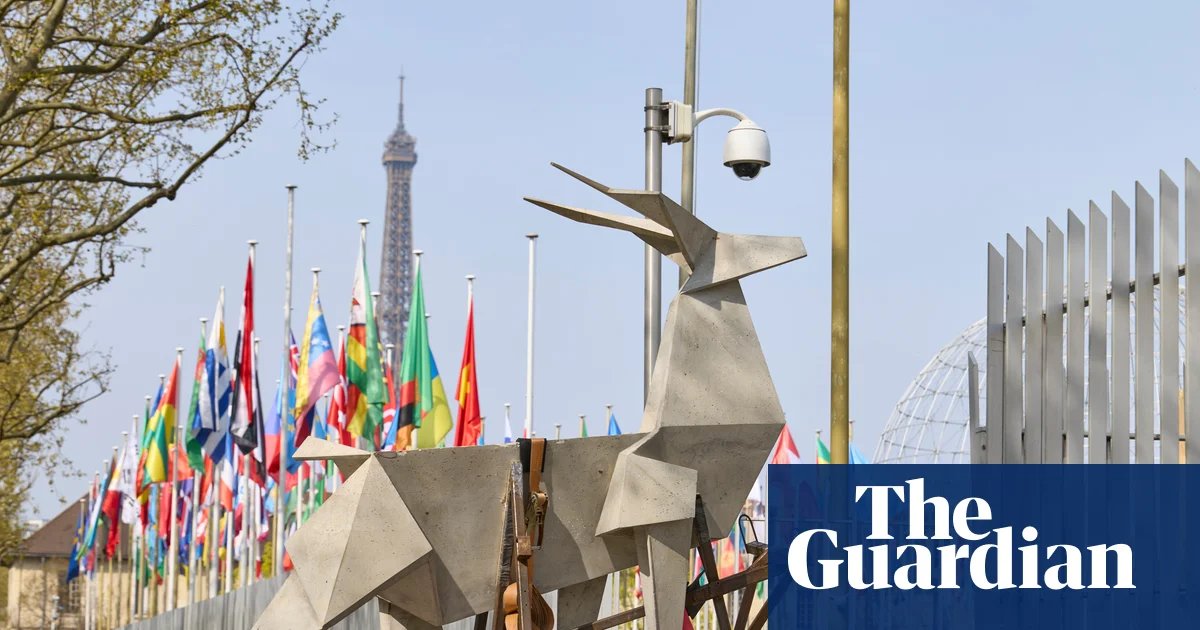
On a delightful spring day in Paris, a concrete deer captures the eye, gracefully positioned among the budding plane trees in the 7th arrondissement. Its head is lifted, and its body is poised as if it were a wild creature in its natural habitat. In truth, this distinctive sculpture, which resembles origami, is a large concrete installation being transported on a flat-bed truck to the impressive modernist headquarters of UNESCO. This fleeting stop is part of a remarkable journey across Europe, leading to its eventual revealing at the 2026 art biennale in Venice, where it will be a central figure in Ukraine’s national pavilion.
The Creation of the Deer
The deer is the brainchild of Kyiv-based artist Zhanna Kadyrova. Known for her impactful works that resonate with the ongoing violence stemming from Russia’s aggression toward Ukraine, Kadyrova originally conceived this piece in 2018. The city of Pokrovsk, located in the Donetsk region, commissioned her to rejuvenate a park that had fallen into disrepair following territorial conflicts instigated by Russian-backed separatists.
Building a Symbol of Hope
Kadyrova, alongside her partner Denys Ruban, invested months in the city, ultimately constructing a permanent sculpture atop a plinth that previously supported a decommissioned Su-7 fighter-bomber. She submerged much of the old structure in earth and grass, allowing the delicate deer to rise from the peak, embodying beauty and peace.
“It wasn’t something too conceptual. I wanted to make something for local people that they would love.”
Initially met with mixed reactions, the sculpture gradually became a beloved landmark, representing a gentle alternative to the shadows of military power and aggression.
The Deer’s Journey Under Duress
Fast forward to summer 2024, when Pokrovsk found itself on the brink of conflict. Kadyrova’s friend, Leonid Marushchak, was engaged in perilous evacuations of museum collections as warfare intensified. When he learned the deer remained in the city, he contacted Kadyrova about its potential evacuation. With the danger looming ever closer, arrangements were made to save the sculpture.
A Difficult Evacuation
Negotiations with local authorities began, but priority was understandably on the inhabitants’ safety rather than a contemporary art piece. However, Marushchak cleverly linked the evacuation of the deer with that of a revered statue of Mykola Leontovych, a celebrated Ukrainian composer. Eventually, on August 30, with the help of cranes and tools, the deer was safely loaded onto a truck.
A documentary capturing this daring mission will also be displayed in Venice, showcasing the emotional responses of locals saying farewell to the beloved sculpture. While some remained indifferent, many expressed a deep affection for the work. Touching stories emerged, including that of a mother who wept as she recalled the joy the deer had brought to her community.
Art as a Beacon of Resilience
As Kadyrova and Marushchak, together with curator Ksenia Malykh, prepared for the Venice Biennale, they aimed to portray the deer’s journey as a metaphor for the plight of many Ukrainian refugees scattered across the globe. Titled “Security Guarantees,” the exhibition ironically comments on the absence of such assurances for Ukraine and transforms the deer into a potent symbol of upheaval and resilience.
During its travels through cities including Warsaw, Prague, and Vienna, the deer evoked emotional responses. Many refugees and locals returned to visit it, establishing a new tradition of touching the sculpture and making wishes—a testament to its inspirational power.
A Symbol of Hope
According to Kateryna Khimei, who helps organize events related to the deer’s exhibit, it serves as a poignant reminder. “As many are the people who survived, it’s crucial to remember those who did not, as well as the cultural artifacts that have also been lost,” she notes, highlighting the “new mythology” that envelops this artwork.
Facing Complexities in Venice
This year’s Venice Biennale presents a contentious situation, with Russia’s reentry into the national pavilion stirring frustrations in the global art community. Event organizers are keen to avoid being labeled merely as an anti-Russian exhibition; they prefer to emphasize a shared struggle against the backdrop of cultural destruction.
Conclusion: A Night of Celebration Amid Tension
As the sun shines warmly on the deer outside UNESCO’s headquarters, it stands as a poignant reminder of beauty amidst the shadows of conflict. The installation in Venice will feature it suspended from a crane, compelling viewers to ponder its uncertain future—caught between hope and loss. Tonight, however, Paris will celebrate its arrival with music and dancing, resilient joy found even in the darkest moments.
- The concrete deer symbolizes resilience and beauty in a region affected by conflict.
- Originally created to beautify Pokrovsk, it has evolved into a powerful emblem of hope.
- Ironic contrasts emerge as it prepares for display in Venice amid complex geopolitical dynamics.
- The deer has sparked new traditions among those displaced by war, reinforcing community bonds.