

Russian Attacks on Ukraine: Civilian Casualties Rise
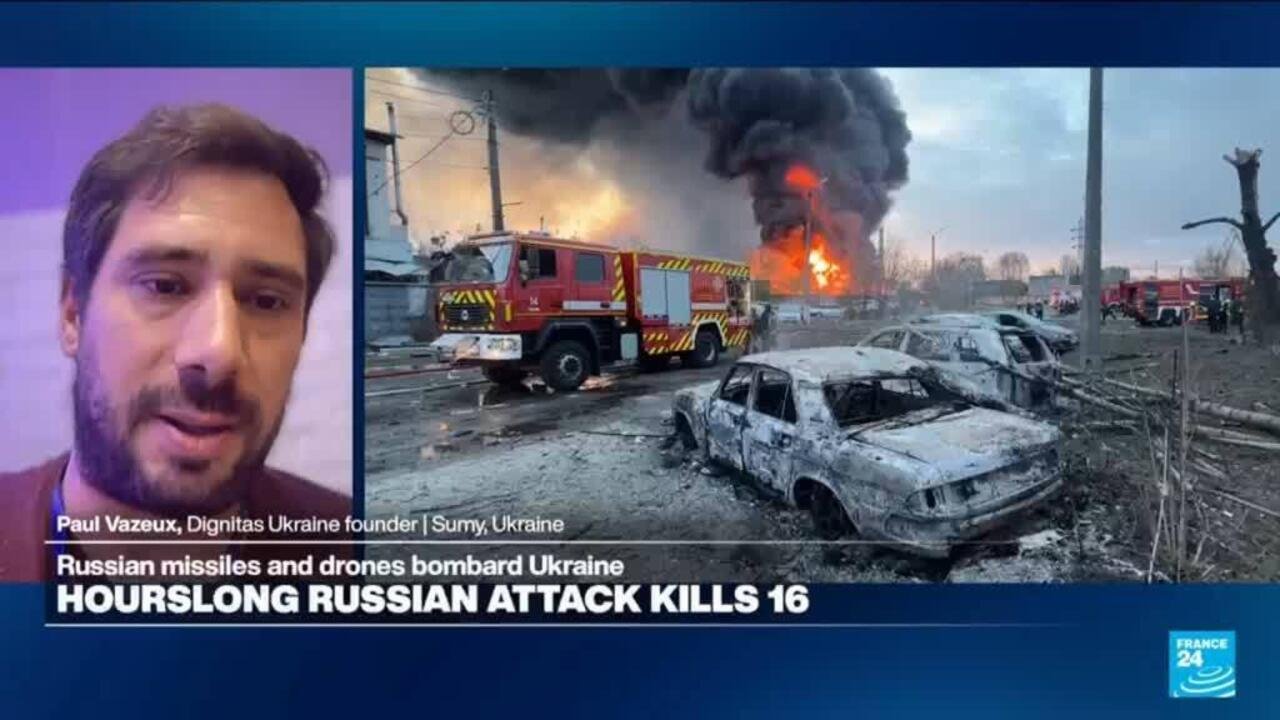
In a recent escalation of violence, Russia has launched extensive attacks on civilian areas in Ukraine, employing hundreds of drones and numerous missiles. The devastating consequences of these strikes have resulted in the tragic loss of at least 16 lives, with over 100 individuals suffering injuries, as reported by officials on Thursday. This article explores the ongoing conflict and its impact on humanitarian efforts in the region.
The Scale of the Attacks
Latest reports indicate a significant increase in the scale of the attacks on Ukraine. Civilian structures have borne the brunt of these assaults, leading to widespread devastation and fear among the population. Each drone and missile launched adds to the toll, both in human lives and the overall humanitarian crisis.
Humanitarian Challenges in Eastern Ukraine
As the conflict intensifies, organizations on the ground face mounting challenges. In an interview with FRANCE 24, Paul Vazeux, the founder of Dignitas Ukraine, revealed the pressing needs of their operations. His NGO is committed to delivering essential medical services through mobile clinics in Eastern Ukraine.
The Need for Armored Vehicles
With emergency workers increasingly targeted in these attacks, Dignitas Ukraine is now in urgent need of armored vehicles. Vazeux highlighted that these vehicles are essential for ensuring the safety of their medical teams as they provide critical assistance to those affected by the ongoing hostilities. The constant threat to these workers has made the situation more perilous than ever.
Conclusion
The recent surge in Russian drone and missile attacks on Ukraine has resulted in substantial civilian casualties and poses significant challenges for humanitarian aid organizations. As the conflict deepens, the urgency for proper protective measures for emergency responders becomes more critical.
- Recent attacks on Ukraine have left at least 16 dead and over 100 injured.
- Dignitas Ukraine focuses on providing medical aid through mobile clinics.
- The organization urgently requires armored vehicles to protect their teams.
- The targeting of emergency workers continues to hinder humanitarian efforts.