

UEFA and FIFA’s Dilemma: Addressing Russia’s Football Integration Challenges
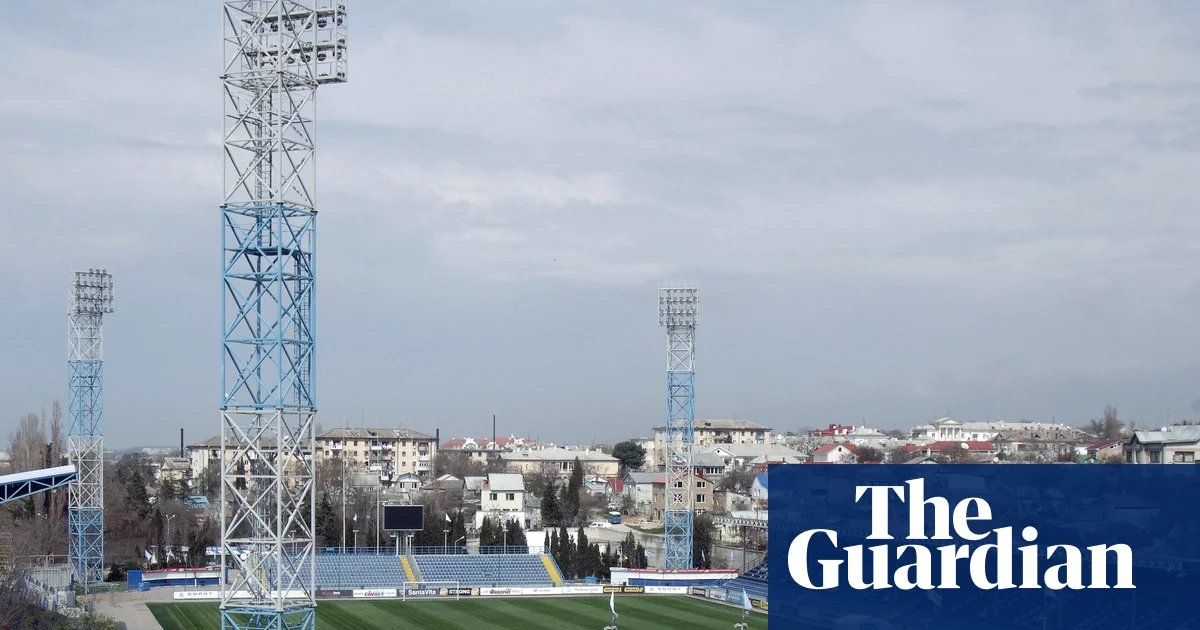
The landscape of football governance is facing a crucial challenge as UEFA and FIFA consider how to respond to Russia’s inclusion of teams from illegally annexed Ukrainian territories. A prime example is FC Sevastopol, a club from Crimea that recently achieved promotion to the country’s third-tier professional league. This situation puts these governing bodies’ commitment to ethical guidelines and international law under the spotlight, especially following Sevastopol’s recent championship declaration in Football National League (FNL) 2B, which essentially constitutes Russia’s fourth division.
A Complex Situation Unfolds
FC Sevastopol was recognized as the champion of group one in FNL 2B last month and is purported to have applied for a license to compete at the next division level, FNL 2A. If granted, this move would conflict with UEFA regulations that prohibit Crimean teams from participating in events organized by the Russian Football Union (RFU). Such action would likely intensify scrutiny on UEFA and FIFA, which have already banned Russian clubs and national teams from international competition.
Statements from Sevastopol’s Leadership
Valery Chaly, the CEO of FC Sevastopol, expressed confidence in the club’s advancement, stating, “Of course, we plan to submit documents. According to the regulations we should advance to the next stage.” With the RFU still affiliated with UEFA and FIFA, calls are mounting for its expulsion if Sevastopol’s promotion isn’t halted. However, no definitive decision regarding this issue has been made public.
The 2023 Considerations
This isn’t the first time football governing bodies have faced this predicament. In 2023, both FC Sevastopol and Rubin Yalta, another Crimean club, were admitted into FNL 2B, prompting protests from the Ukrainian Association of Football (UAF). They highlighted what they termed a “gross violation” of regulations that have been in place since 2014, prohibiting Crimean clubs from participating in RFU events. Despite UEFA’s promise to evaluate the situation, little action was taken as the RFU devised a workaround by categorizing FNL 2B as an amateur league.
Recent Developments
Further complicating matters arose in April 2024 when an imitation of the Ukrainian club Zorya Luhansk, which occurs in a region illegally occupied by Russia, joined FNL 2B. This year, they were joined by a faux Shakhtar Donetsk, mirroring the established Champions League team displaced since 2014. Out of the 15 teams that participated in the recent FNL 2B season, five claimed ties to occupied areas, including Kyzyltash Bakhchisaray from Simferopol.
Implications for Future Promotions
Should the RFU choose to exclude FC Sevastopol from promotion—whether independently or under international pressure—another problem may arise: the imitation Shakhtar Donetsk, having just secured their runner-up position by defeating Sevastopol, is next in line for advancement. Unlike Sevastopol, Shakhtar’s games take place in Taganrog, which is located on Russian soil, though the club is officially registered in Donetsk.
Request for Review
In October 2025, the UAF called for UEFA to scrutinize the legal standing of these imitation clubs, but as with previous evaluations regarding Crimean teams, outcomes have yet to be disclosed. The UAF has signaled concerns about a “coordinated political attempt to legitimize the occupation and erase the identity of Ukrainian football.”
Recent Matches and Participation
Remarkably, Russia made its competitive return in a FIFA event last month for the first time since the onset of the conflict in Ukraine, finishing 19th in a newly established under-15 World Cup. Meanwhile, under-15 and under-16 teams have continued to participate in smaller UEFA development events, primarily against invited teams on home turf, throughout the ongoing war.
In Conclusion
As the situation unfolds, key governing bodies of football must confront significant ethical and regulatory challenges. The outcome will likely define both the future of these organizations and their roles in maintaining the integrity of international sports.
Key Takeaways
- FC Sevastopol’s promotion raises concerns about UEFA’s regulations regarding Crimean teams.
- The RFU’s membership with UEFA and FIFA comes under scrutiny amidst calls for expulsion.
- Imitation clubs are complicating the legitimacy of competitions involving teams from occupied territories.
- Russia’s recent participation in FIFA events highlights ongoing tensions and the international sporting community’s response.