

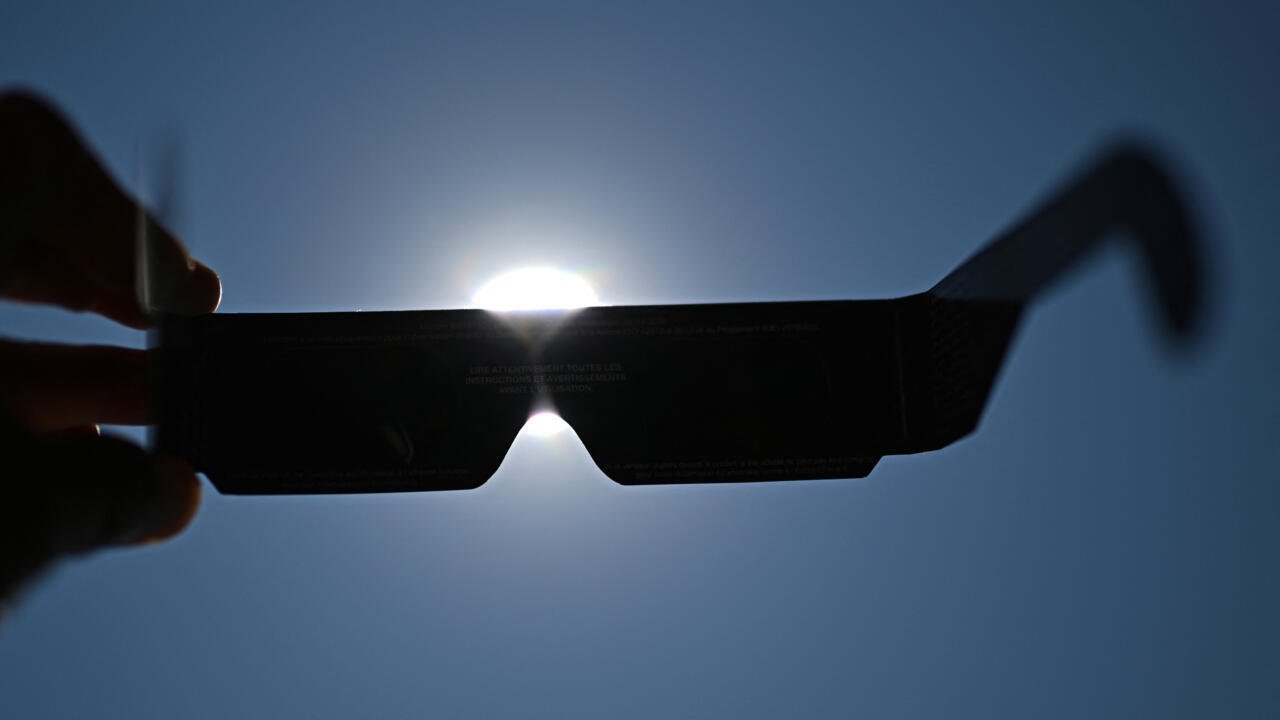
A Rare Total Solar Eclipse Awaits Europe
On Wednesday, millions of Europeans will look to the skies in wonder as a rare total solar eclipse casts its shadow across parts of the continent, enveloping a swath of Spain in unexpected daytime darkness. This fascinating event will commence in the remote Arctic regions of Russia around 1700 GMT, progressing in an arc over Greenland and Iceland.
Viewing the Solar Eclipse in Spain
In Spain, where the total eclipse can be most vividly witnessed, the shadow will sweep diagonally from the northern Atlantic coast down to the Mediterranean Sea, disappearing around 1830 GMT. While many will experience only a partial eclipse visible across much of Europe, Canada, the northern United States, and northwest Africa, this marks mainland Europe’s first total eclipse since 2006.
What Can We Learn from Eclipses?
Eclipses throughout history have evoked a mix of awe, fear, and reverence, appearing to temporarily disrupt the regular rhythm of nature. This rare alignment of the Sun and Moon creates an unusual twilight phenomenon, dropping temperatures, distorting shadows, and even causing certain animals to nestle into slumber. However, this spectacle will be brief: for viewers in Spain, the totality phase will last under two minutes just before sunset, while regions in Russia and Greenland may enjoy slightly longer durations of under two-and-a-half minutes. The partial eclipse, however, will maintain visibility for approximately one hour and 45 minutes.
Science Meets Spectacle
This celestial event provides scientists with a unique opportunity to study the Sun’s atmosphere and its outer layers, as they strive to uncover secrets about solar winds and the magnetic field of our star.
Eclipse Chasers Prepare
As enthusiasts gear up for this once-in-a-lifetime experience, many are eager to find the perfect location with an unobstructed view of the setting Sun while hoping for clear weather conditions. Unfortunately, clouds and rain are predicted in the Westfjords of northwestern Iceland, though the capital, Reykjavik, will witness its first total eclipse since 1433. Meanwhile, the AEMET weather agency has forecast clear skies for much of Spain, with only northern and eastern areas seeing potential cloud cover.
The excitement over the eclipse has sparked a surge in tourism, especially in rural northern regions of Spain that have experienced declining populations in recent years. The anticipated economic impact is estimated to contribute around €347 million ($400 million), with over 446,000 additional tourists expected in key areas affected by the eclipse.
Towns that typically don’t attract heavy tourism, such as Benavente, are seeing a sudden influx of eclipse chasers from around the globe. Laura del Teso, a tourism office worker in Benavente, shared, “We’re getting 50 calls daily asking about accommodation, best viewing spots, and parking.” She noted this is the first time the town has seen so many international visitors, including tourists from Belgium, Britain, Australia, New Zealand, the Netherlands, and Germany.
Safety Concerns Amidst the Excitement
Authorities are concerned about the potential challenges posed by the anticipated crowds. With temperatures expected to soar above 35°C in many parts of mainland Spain, and even hitting 40°C in some northeastern areas, public safety is a priority for those spending long hours outdoors. Additionally, the AEMET has warned of a “very high” or “extreme” wildfire risk across much of the country, heightened by the large number of visitors flocking to the dry countryside.
Officials are bracing for approximately 1.5 million extra road trips leading to the path of totality. Communities are establishing dedicated viewing points and strengthening security, emergency, and transport measures in preparation for what will be mainland Spain’s first total eclipse in over a century. Looking forward, another total eclipse is set to traverse southern Spain and northern Africa in August 2027, alongside an annular eclipse expected to create a “ring of fire” effect over the Iberian Peninsula in 2028.
Conclusion
This rare total solar eclipse presents a unique opportunity for scientific study and tourism, igniting excitement among enthusiasts across Europe. As everyone prepares to witness this remarkable event, safety and preparedness remain at the forefront of officials’ minds.
Key Takeaways
- A total solar eclipse will sweep through parts of Europe, notably Spain, providing a rare viewing opportunity.
- The event marks mainland Europe’s first total eclipse since 2006.
- Tourism is expected to boost local economies significantly, particularly in rural areas.
- Safety measures are in place to manage the influx of visitors amid high temperatures and wildfire risks.