

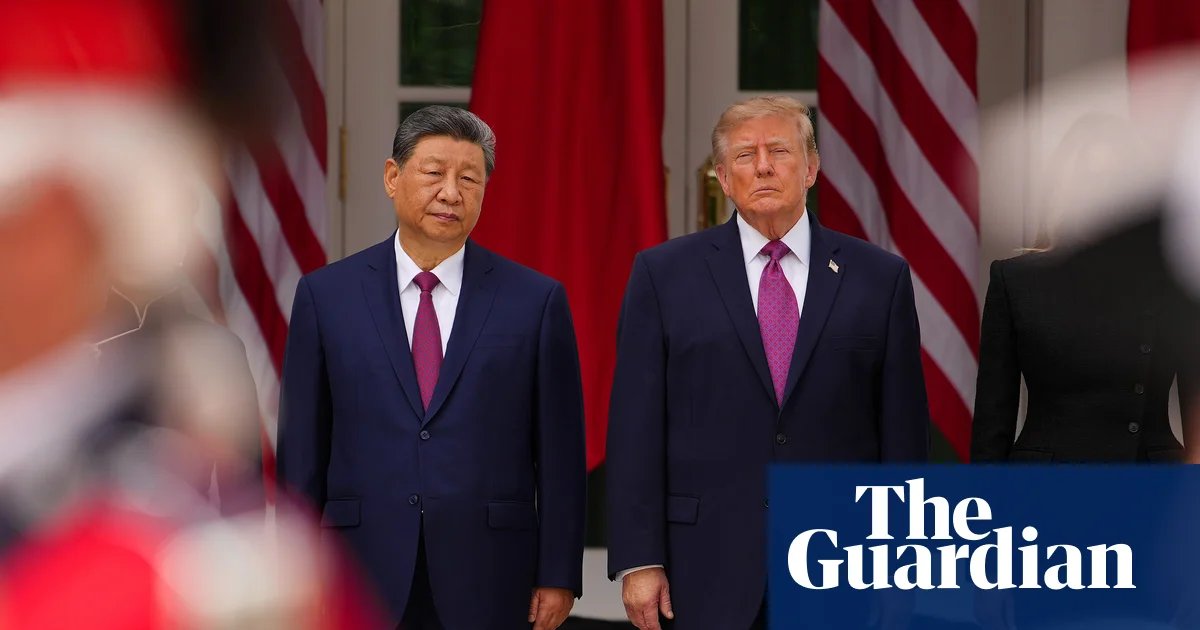
The Looming Economic Conflict: Analyzing the US-China Supply Chain Wars
In recent months, news surrounding Donald Trump’s trade wars has diminished, making way for other pressing issues in global politics. However, beneath this veneer of calm, an economic conflict is brewing between the United States and China that could escalate into a significant confrontation. This piece explores the roots, current dynamics, and potential implications of this ongoing supply chain dispute.
A False Sense of Security
Last year, a truce between Washington and Beijing alleviated tensions in their escalating trade conflict, postponing the threat of new tariffs until January. Though this temporary peace seemed to lower hostilities, it did not foster any substantial guarantees to prevent future economic confrontations. Instead, both nations are preparing for the next stage, considering this standoff crucial for their national security and economic, technological, and military dominance.
Shifts in Competitive Strategies
The current rivalry marks a departure from traditional arms races. Rather than focusing on military weaponry, both the US and China are dedicated to ensuring the resilience of their international supply chains. They also aim to exert control over supply chains that are pivotal for each other’s economic and technological advancement. This strategy traces back to the Covid pandemic, when China’s leadership called for enhancing reliance on domestic production capabilities as a countermeasure against potential global supply disruptions.
In the early days of the Biden administration, national security adviser Jake Sullivan outlined US objectives: to restrict China’s access to advanced military technologies while avoiding a complete upheaval of the global economy. He referred to this approach as creating a “small yard” surrounded by a “high fence” of trade and investment restrictions.
Escalation of Tech Restrictions
Over the past five years, the lack of clear rationale has led to increasingly stringent restrictions on American technology exports to China. This has not only stymied China’s military capabilities but also significantly hampered its technological growth. The previous administration’s broad application of tariffs has added further complications to the landscape.
Conversely, China is asserting itself with renewed vigor. It leverages its substantial control over critical minerals essential for high-tech industries, impacting both civilian and military sectors. Retaliating against US tariffs, China has begun to limit exports of rare earth elements, which caught many by surprise, highlighting its pivotal role in the global supply chain.
The Economic Stakes
The potential fallout of these supply chain battles is significant. Experts estimate that if China were to cut off access to rare earth magnets for the US and Europe, the economic damage could reach roughly $1.5 trillion annually. While the Trump administration pushes significant investments into domestic mining projects to reduce reliance on China, Beijing has announced its own set of high-tech export restrictions, targeting crucial industries like solar technology and semiconductor manufacturing.
Searching for a Balanced Resolution
The possibility of a peaceful resolution hinges on mutual understanding regarding what constitutes legitimate national security risks associated with supply chains. Establishing a sensible framework for trade that avoids wartime thinking is imperative. The stakes are too high for both nations to remain on a path that could lead to outright conflict.
While China appears poised for dominance in renewable energy technologies and electric vehicles, this does not necessitate a militarized response. Its mercantilist economic stance, characterized by aggressive export growth paired with minimal import growth, is unsustainable on a global scale. Both sides must recognize that cooperation over isolation may lead to more stable economic conditions.
The Road Ahead
Historically, economic conflict precedes actual warfare, as seen in past global conflicts where nations sought to preemptively secure resources due to foreign restrictions. Today, with the presence of advanced technologies reliant on rare earth elements in military applications, the potential ramifications of supply chain limitations loom larger than ever.
The dichotomy of trade serving as a facilitator for peace versus becoming a battleground for economic dominance remains ever-present. As the US and China navigate this evolving landscape of trade and technology, one thing is clear: the quest for technological advancement is reshaping the very fabric of international relations, and the stakes have never been higher.
- The US and China are caught in an economic conflict that could escalate into a significant confrontation, despite recent trade truces.
- Supply chain resilience is becoming a priority, with both nations investing in their domestic capabilities while restricting each other’s access to vital technologies.
- The potential economic damage from limiting access to critical minerals could reach over $1.5 trillion annually.
- A peaceful resolution may depend on clear definitions of national security risks and moving away from wartime economic thinking.