

Spain’s Migration Dilemma: A Closer Look
Spain’s recent approaches to migration have drawn scrutiny from several EU nations, notably Italy. A call for an urgent meeting among interior ministers has sparked discussions on migration policies that some believe may invite further influxes of migrants into Europe. This article delves into the implications of Spain’s controversial policies and their repercussions in the ongoing migration debate.
Understanding the Current Situation
Spanish Prime Minister Pedro Sanchez is advocating for strategies to address the growing migration challenges. Recently, nearly twenty EU leaders backed Meloni’s initiative for a meeting slated for Tuesday, intending to review measures that might be perceived as “pull factors” for migration to Europe. At the heart of the contention lies Spain’s decision to grant residence and work permits to a large number of undocumented migrants, effectively seeking to “regularize” their status.
The Government’s Practical Approach
Spain’s government justifies these actions by pointing to a pressing labor need, as the country faces an aging population. However, the influx of migrants is not merely a response to policy; many recent arrivals are not looking to engage with formal processes. Instead, they are seeking immediate entry into Spain, evident from recent events in Ceuta.
The Ceuta Incident: A Closer Look
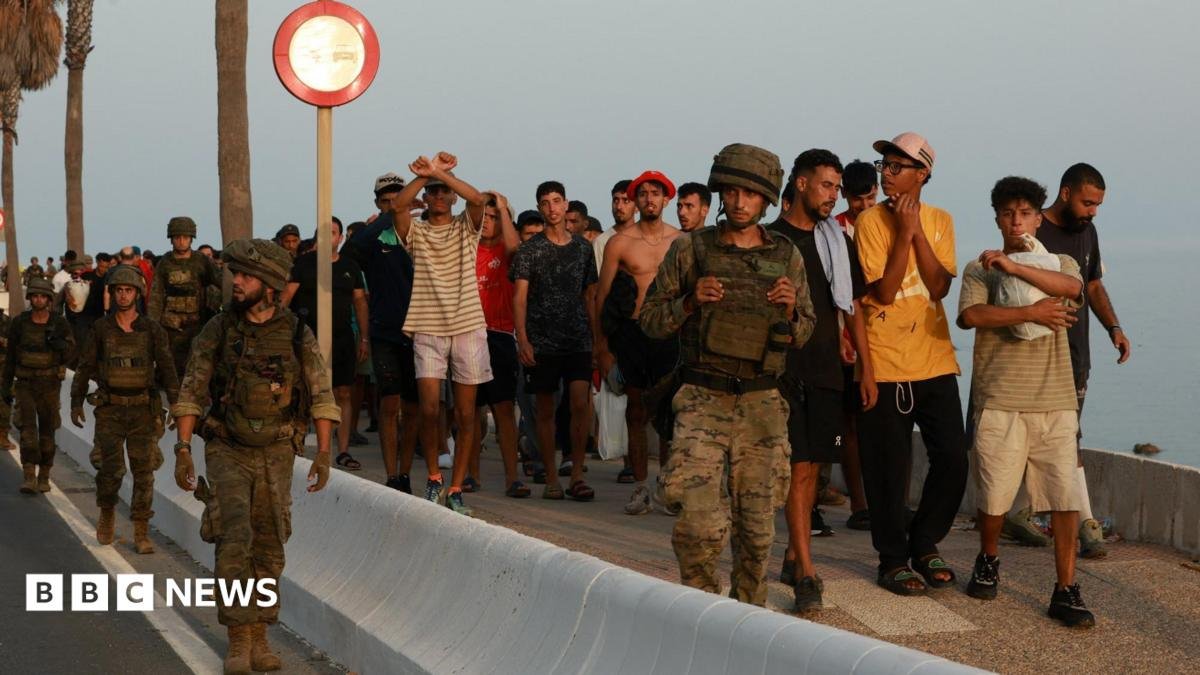
This past week, numerous individuals gathered at the beaches of Ceuta, but their intentions were far from the established protocols. Instead of applying for permits, many sought to capitalize on the well-known maritime routes. Sanchez highlighted a recent decision by Spain’s Supreme Court, which determined that those arriving by sea could not be expelled immediately. He argues that smugglers misrepresented this ruling, luring individuals with false promises of an easy entry into Europe.
The Role of Social Media in Migration
The surge of migrants arriving at Ceuta was significantly influenced by social media. Reports indicate that migrants shared posts depicting scenes of excitement, with slogans like “Spain is Open,” alongside videos of individuals confidently traversing the waves. These shares depicted a burgeoning trend among the youth, with some profiles recently emerging yet garnering tens of thousands of likes.
The Reality Facing New Arrivals
Amidst the joyous arrival of many to the shores of Ceuta, the reality quickly set in. Those who reached the beach were met with stark challenges—no food, inadequate shelter, and no clear pathway to enter continental Europe. As conditions deteriorated, the majority found themselves retreating back to where they began, confronting the grim truth behind their hopes.
Conclusion
Spain’s migration policies are under intense scrutiny as they navigate the complexities of an aging workforce alongside rising migration. The situation in Ceuta exemplifies the challenges both migrants and the Spanish government face, highlighting the vital need for a coherent and compassionate approach to migration.
Key Takeaways
- Spain’s government is seeking to regularize undocumented migrants amidst workforce needs.
- A recent Supreme Court ruling has complicated immediate expulsion policies for migrants arriving by sea.
- Social media has played a significant role in influencing migration patterns, with many misled by false promises.
- New arrivals at Ceuta faced harsh realities, lacking resources and support upon their arrival.