

Singapore’s Economic Strategy: Adapting to Global Challenges
In today’s rapidly changing world, geopolitical tensions and economic fragmentation are reshaping trade and investment landscapes. Recognizing this reality, Singapore is taking proactive steps to adapt its economy. As explained by Dr. Tan, Singapore has laid a solid foundation but now faces the imperative of evolving alongside global shifts. With the completion of the Economic Strategy Review in June, the country is poised to enhance its value proposition while building agility, resilience, and efficiency in its economic framework.
Decisions in Uncertainty
Dr. Tan emphasized the importance of making informed decisions in an environment fraught with challenges. “Achieving our goals will necessitate tough choices amid uncertain conditions,” he noted. As the complexities of the global economy deepen, Singapore must sharpen its decision-making skills. The government faces critical questions: Which sectors should be prioritized? When should intervention occur, and when should markets function independently? Additionally, the cost of building resilience must be weighed against the necessity to adapt when situations evolve.
“Navigating these issues demands rigorous analysis, supported by evidence and sound judgment,” Dr. Tan stated, highlighting the analytical discipline required in these strategic decisions.
Exploring New Opportunities
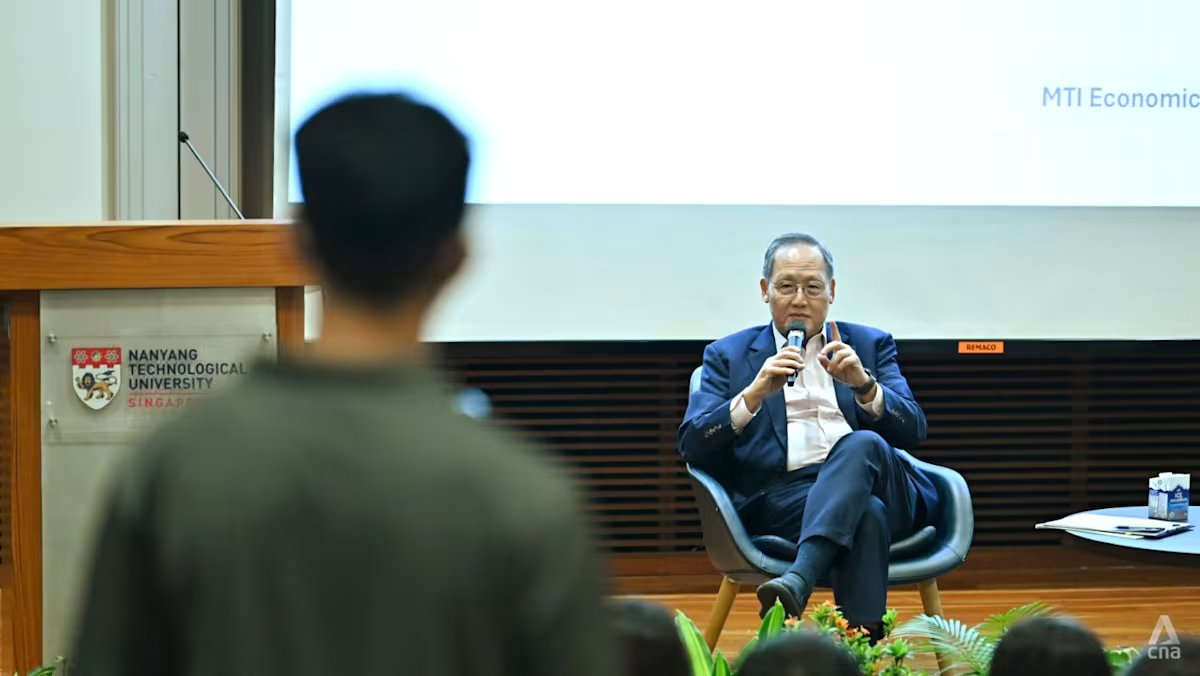
During a recent dialogue, one student raised an inquiry about the cost-benefit analysis related to the government’s proposal to merge several western islands for the development of new industries. It was noted that the region hosts coral reefs that have been thriving for over 8,000 years. Dr. Tan reassured the audience that detailed environmental assessments would precede any developmental initiatives. “We will not compromise our heritage, reefs, or environment,” he affirmed.
However, Dr. Tan acknowledged the pressing need for expansion of Singapore’s airports and marine ports, creating a delicate balance of aspirations and constraints. The potential for development on the mainland also comes with significant costs, as existing structures may need to be dismantled to make way for new projects. “We must ensure that we maintain, if not enhance, the greenery in our urban environment,” he added, referencing discussions around Maju Forest as an example of competing land-use priorities.
The Future of Energy in Singapore
Particularly regarding the proposed western island, speculation has circulated about its suitability for nuclear power facilities. In response, Dr. Tan clarified that a final decision has yet to be made, as advancements in technology offer various possibilities. “If I manage to unlock the potential of geothermal energy, I might not require constructing many supplementary facilities on reclaimed land,” he explained, underscoring the importance of staying abreast of rapidly evolving technology.
“There are numerous uncertainties in development timelines, and ongoing advancements may steer our decisions in new directions,” he concluded.
- Singapore’s Economic Strategy Review aims to adapt to global changes in trade and investment.
- Dr. Tan emphasizes the need for informed decision-making amid uncertainty.
- Environmental studies will guide development decisions surrounding new western islands.
- Technological advancements may reshape Singapore’s energy landscape in the future.