

The Struggles of Opposition Parties in Russia Amid War in Ukraine
Recent developments in Russia have highlighted the challenges faced by opposition parties, particularly the Yabloko party, amidst the ongoing conflict in Ukraine. A court ruling has effectively barred dissenting voices from participating in significant electoral processes, leaving voters with limited options.
Court Ruling Against Yabloko
A pro-Kremlin nationalist party successfully brought a suit that led to a ruling stripping the Yabloko political party of its candidates for the upcoming State Duma elections. Judge Vyacheslav Kirillov announced, “The claims seeking to annul the registration of the federal list of candidates for the State Duma of the ninth convocation, nominated by the Yabloko political party, were granted.”
Public Response
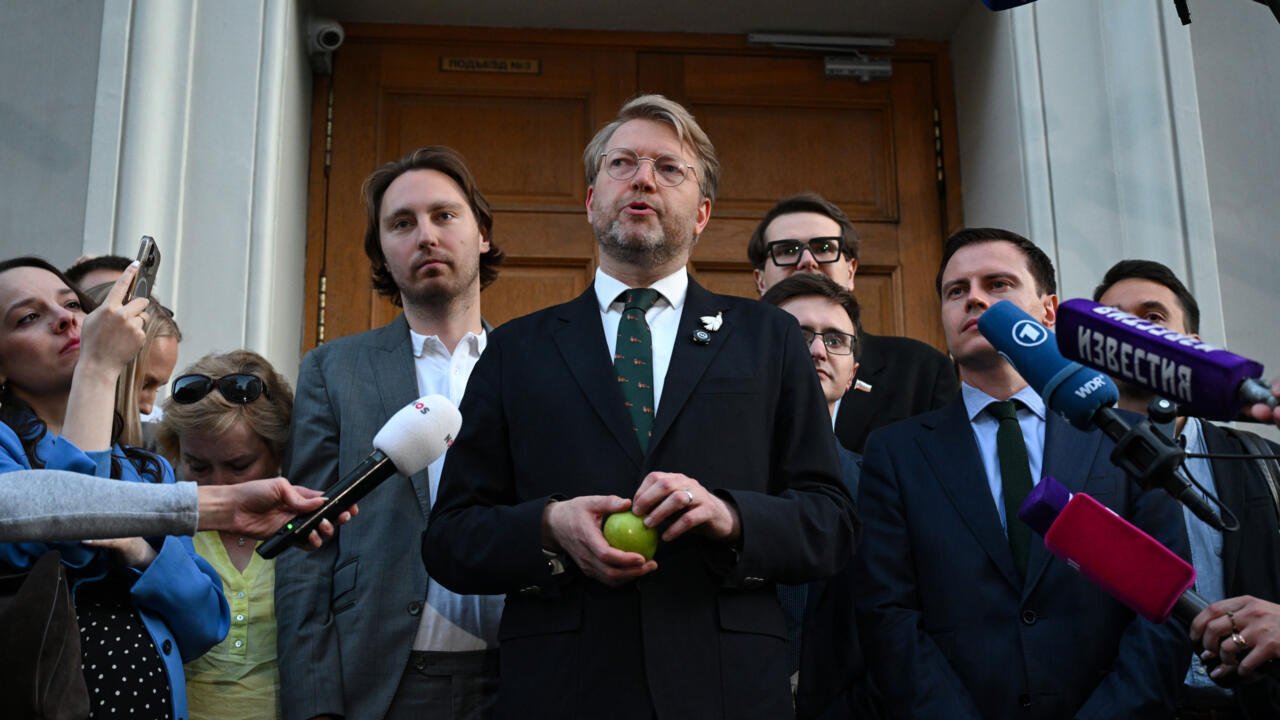
Following the court’s decision, around a hundred supporters, predominantly young activists, gathered outside the courthouse, voicing their discontent by chanting “Shame! Shame!” Yabloko’s leader, Nikolay Rybakov, addressed the crowd, asserting that the party plans to appeal the ruling. “We have a long way ahead and we have a big and important task: to stop deaths and bring peace back,” Rybakov stated. “Everything we do should be dedicated to that.”
Challenges for Opposition Figures
The landscape for opposition figures in Russia has dramatically changed in recent years, with many jailed, exiled, or deceased. In 2024, a criminal case was opened against Lev Shlosberg, a prominent anti-war critic and member of Yabloko, further illustrating the risks faced by dissenters. Facing additional charges just days before his release from house arrest, Shlosberg’s situation highlights the government’s zero-tolerance approach towards opposition.
Remaining in the Fight
With most prominent critics of President Vladimir Putin either imprisoned or living in exile, Yabloko stands as one of the last liberal parties in Russia. The party has garnered support from various exiled opposition figures, including Yulia Navalnaya, the wife of the late opposition leader Alexei Navalny, both classified as “extremists” by the Russian government.
Public Support and Political Landscape
Recent polling indicates that Yabloko, which translates to “apple” in Russian, has only about 3 percent support, falling short of the 5 percent needed to secure representation in the lower house of parliament. The ruling United Russia party, consistently loyal to Putin, has maintained a monopoly on parliamentary votes since 2003.
Search for Peace
Efforts to resolve the war in Ukraine through diplomatic channels have yet to yield results. Putin has steadfastly maintained hardline territorial demands and dismissed opportunities for negotiations with Ukraine’s President Volodymyr Zelensky. Notably, independent surveys reveal that a majority of Russians advocate for peace talks with Kyiv.
Conclusion
The current political climate in Russia poses significant hurdles for opposition parties like Yabloko, which continue to fight for their voices in a repressive environment. The struggle not only encapsulates the challenges of fostering democracy but also highlights the urgent need for peace in the ongoing conflict.
- The Yabloko party faces significant legal challenges that impede its electoral participation.
- Public dissent remains strong, despite increasing government repression.
- Opposition figures are often subjected to harsh penalties, creating a precarious environment for dissent.
- There is a notable public desire for peace negotiations surrounding the Ukraine war.