

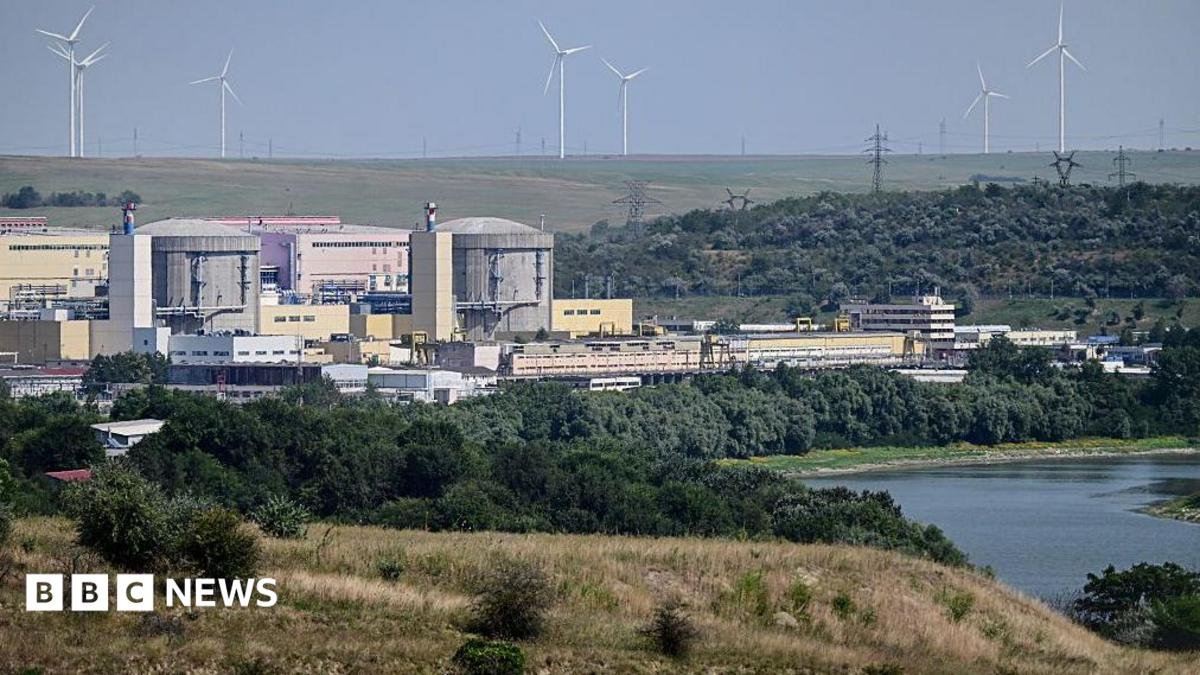
Romania’s Nuclear Power Station Temporarily Shuts Down Due to Low Danube Water Levels
Romania has recently halted operations at its sole nuclear power station following historically low water levels in the Danube River, a situation stemming from an extended period of hot weather impacting much of Europe. The Cernavodă facility, which consists of two reactors that contribute approximately 20% of the country’s electricity supply, is unlikely to resume operations in the coming days.
The Situation at Cernavodă
This week, efforts were made by authorities to enhance the water flow to the Cernavodă plant, which relies on the Danube for cooling purposes. These measures included sinking barges filled with rocks into the river to attempt to redirect water. However, the second reactor at Cernavodă was disconnected from Romania’s electricity grid just before midday on Thursday, with plant director Romeo Urjan stating, “We do not foresee a restart within the next 10 days.” The first reactor had already been taken offline in July.
Impact of Low Water Levels
The Danube has reached its lowest levels in 30 years across multiple countries, and while Hungary’s Paks nuclear plant, which also depends on the river for cooling, has thus far avoided a complete shutdown, concerns remain. Hungarian Prime Minister Péter Magyar cautioned last month that the aging Paks facility, which houses four nuclear reactors, could face a total shutdown for the first time if conditions do not improve. Officials at the plant noted that the low water levels have made it challenging for the suction nozzles used to draw in water to function properly.
Power Supply Solutions
Typically, any shortfall in power generated from the Cernavodă plant is compensated by solar and wind energy during sunny, breezy days. However, as evening falls, traditional coal and gas power generation will need to be supplemented by electricity imports. Although Romania possesses significant hydropower capabilities, these too have been adversely affected by the same low river levels impacting nuclear operations.
Conclusion
The situation at Romania’s Cernavodă nuclear power station underscores the growing challenges posed by climate change and its effects on energy production systems. As the region grapples with these unprecedented conditions, the reliance on alternative energy sources and imports will be crucial in meeting the nation’s electricity demands.
- Romania’s only nuclear power plant is temporarily closed due to low water levels in the Danube.
- The shutdown is expected to last for at least 10 days, impacting 20% of the country’s electricity supply.
- Authorities attempted to alleviate the situation by increasing river water flow using sunk barges.
- Solar, wind power, and electricity imports will be essential to meet energy needs during this outage.