

Geopolitical Dynamics: Russia, Iran, and the West
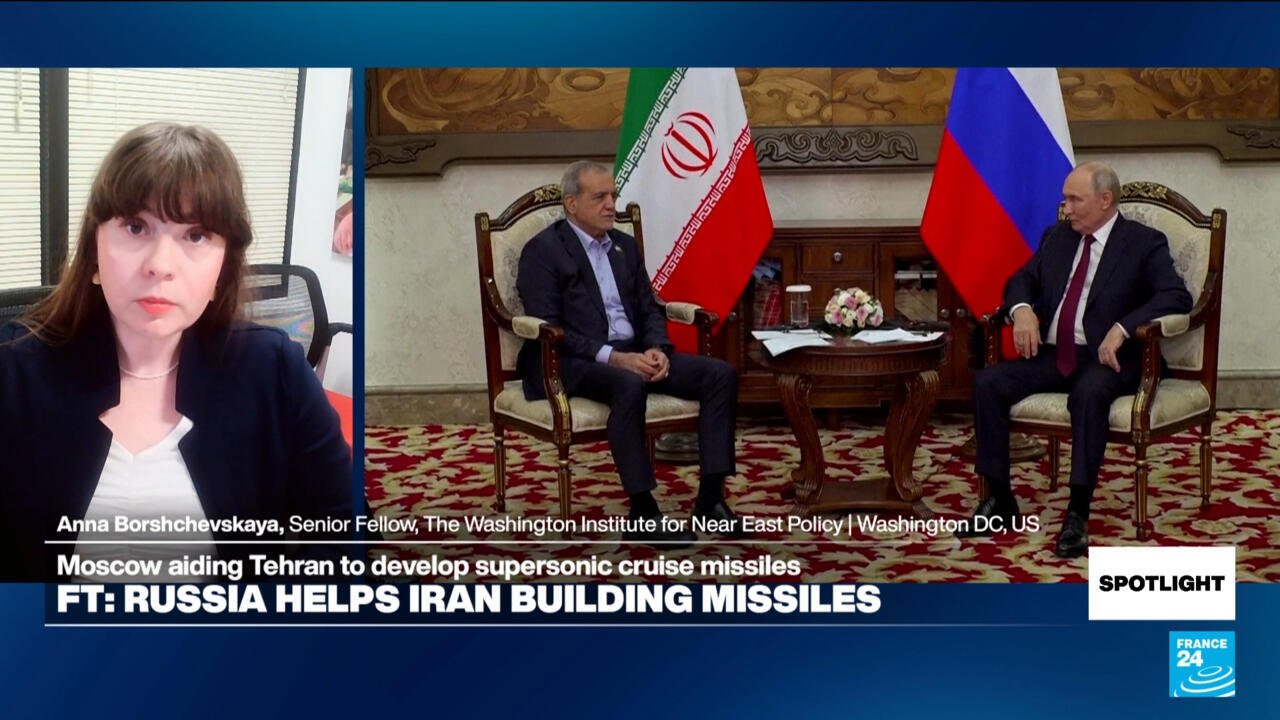
In a thought-provoking discussion, Anna Borshchevskaya, Senior Fellow at The Washington Institute, shares her insights regarding Russia’s missile support for Iran. Rather than viewing this as a mere arms deal, Borshchevskaya frames it within a larger geopolitical context where Moscow intertwines its strategies involving Ukraine, Iran, NATO, and the United States. Her analysis suggests that Vladimir Putin’s goals extend beyond direct military conflict with Washington; instead, he seeks to reshape the strategic landscape to strengthen adversaries, increase the costs of military actions against American interests, and continuously probe the limits of Western tolerance.
Testing Western Boundaries
Borshchevskaya highlights Putin’s relentless effort to assess the actual boundaries of Western nations, which diverge from their stated positions. Incidents such as Russian drones crossing into NATO airspace, cyber operations, propaganda campaigns, and ongoing military actions in Ukraine exemplify a unified strategic approach. Her analogy of a “bigger chessboard” effectively encapsulates this concept, showing how Putin interlinks geographically separate conflicts through a shared strategy of pressure, escalation, and opportunity.
The Political Stakes
Moreover, Borshchevskaya underscores the vital political implications of this dynamic. She posits that Moscow has a vested interest in the longevity of the current Iranian regime, as a shift towards a pro-Western government in Tehran would constitute a significant blow to Russian interests. In this framework, Russia’s military support enhances not only Iran’s defense capabilities but also helps maintain a regional order that favors Moscow. Her broader caution is that inadequately enforced Western boundaries can become strategically significant in their own right, incentivizing Russia to evaluate just how far it can push its agenda.
Conclusion
Ultimately, the complex interplay between Russia, Iran, and the West reveals a sophisticated geopolitical strategy driven by a desire to reshape regional power dynamics. Understanding this interconnectedness is essential for effectively responding to current and future challenges in international relations.
Key Takeaways:
- Russia’s missile support for Iran is seen as part of a broader geopolitical strategy, not just an arms transaction.
- Putin is focused on altering the strategic environment rather than seeking direct confrontation with the U.S.
- A resilient Iranian regime serves Russia’s interests, as a shift toward a pro-Western government would be detrimental.
- Weak enforcement of Western boundaries could encourage further Russian provocations.