

North Korea Launches Ballistic Missile Amid Rising Tensions
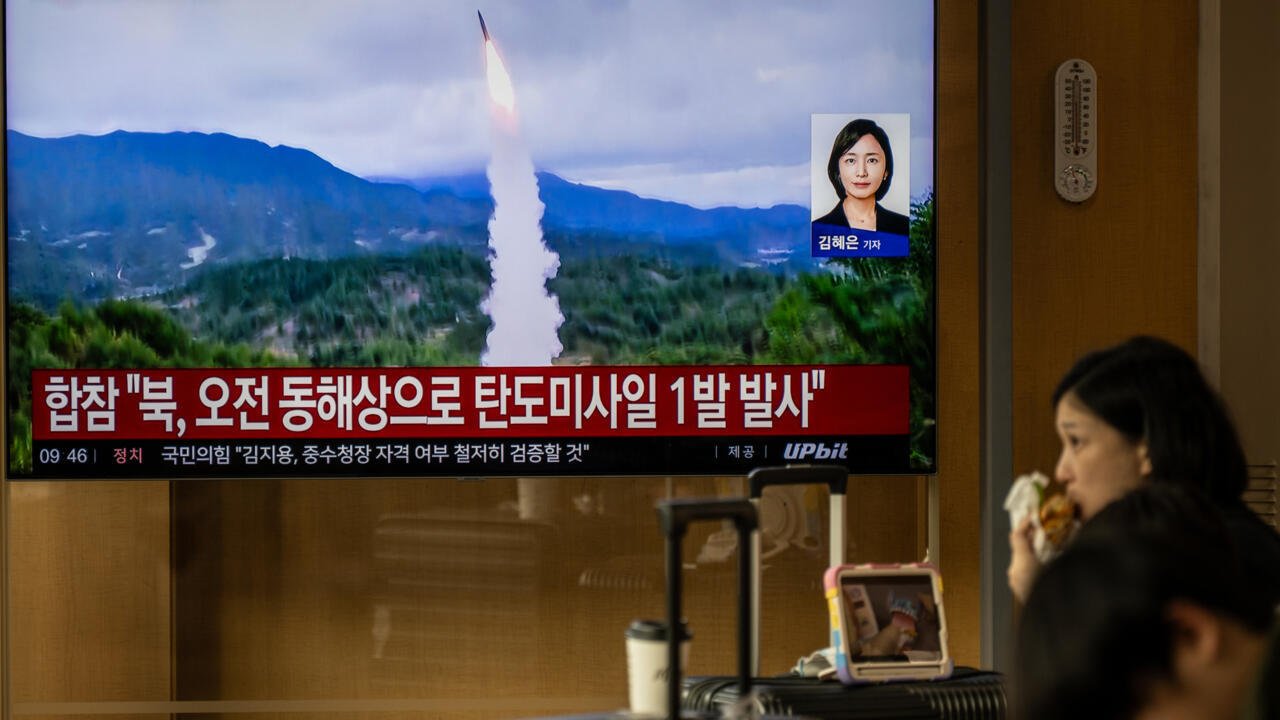
In a striking turn of events, North Korea launched a ballistic missile on Saturday, as reported by Seoul’s military. This follows a recent demand for an apology from Pyongyang regarding a mine explosion in the Demilitarized Zone (DMZ) that injured three South Korean soldiers. North Korea has consistently denied any involvement in the explosion, which it attributes to South Korean actions.
On Friday, the North branded South Korea as “despicable,” undermining the attempts by Seoul’s leadership to resume diplomatic dialogue. The missile was fired from the Wonsan area towards the East Sea, also known as the Sea of Japan, traveling over 700 kilometers (about 435 miles), according to the South’s Joint Chiefs of Staff.
Details of the Recent Explosion
Investigations by Seoul and the United Nations Command concluded that the recent explosion in the DMZ was caused by North Korean mines placed on the South’s side of the border. The DMZ has served as a heavily fortified strip separating the two Koreas since the armistice in 1953.
North Korea has fortified its border, laying mines and constructing barriers following Kim Jong Un’s declaration of South Korea as the “principal enemy” in 2024. According to South Korea’s defense minister, the mines responsible for the injuries to soldiers were deployed as part of North Korea’s efforts to solidify its defenses.
Despite the military’s demand for an apology, South Korea’s President Lee Jae Myung made a call for renewed dialogue on Thursday. Kim Yo Jong, sister of North Korean leader Kim Jong Un, criticized this approach, labeling it as “ridiculous” and describing the military’s request for an apology as absurd. She reiterated that North Korea is “ready for anything” in response to the recent tensions, culminating in the missile launch on Saturday.
Escalating Tensions
Analysts see the missile launch as a deliberate display of force against South Korea’s attempts to lower tensions. Yang Moo-jin, a former president of the University of North Korean Studies, remarked that while Seoul reached out for dialogue, Pyongyang escalated the situation instead. This pattern suggests that the North may be pursuing confrontation rather than cooperation.
In light of the situation, South Korea’s defense minister indicated the military possesses a range of response measures, which will be implemented progressively, although specific details were withheld.
The Unification Minister of South Korea, Chung Dong-young, recently suggested discussions on border issues to Pyongyang, which was promptly dismissed by Kim Yo Jong, who deemed it “unilateral jargon.”
This spike in hostilities comes at a crucial juncture, with U.S. President Donald Trump’s outreach to North Korea raising concerns about Seoul’s role in future negotiations concerning nuclear discussions involving the North.
The opposition People Power Party in South Korea accused President Lee of failing to adequately criticize North Korea, particularly after publicizing details about the transfer of North Korean prisoners of war—an issue many considered sensitive. The party stated, “We fail to see how selectively turning a blind eye to North Korea serves South Korea’s dignity or the safety of its people.”
- North Korea launched a ballistic missile after demanding an apology from South Korea over a mine explosion.
- The DMZ incident injured three South Korean soldiers, attributed to mines laid by North Korea.
- Calls for dialogue from South Korea were met with dismissal and criticism from North Korean officials.
- The recent missile launch escalates tensions between the two nations amidst broader geopolitical concerns.