

Myanmar’s Leader Seeks Legitimacy in Thailand Amid Ongoing Civil Conflict
The head of Myanmar’s military-backed government, Min Aung Hlaing, is making headlines with his recent visit to Thailand, his first official trip since the military coup that destabilized Myanmar in 2021. Amidst ongoing civil unrest and efforts to reclaim international standing, this visit signifies a crucial moment for both countries as they explore economic cooperation while addressing pressing humanitarian concerns.
High-Level Meeting in Bangkok
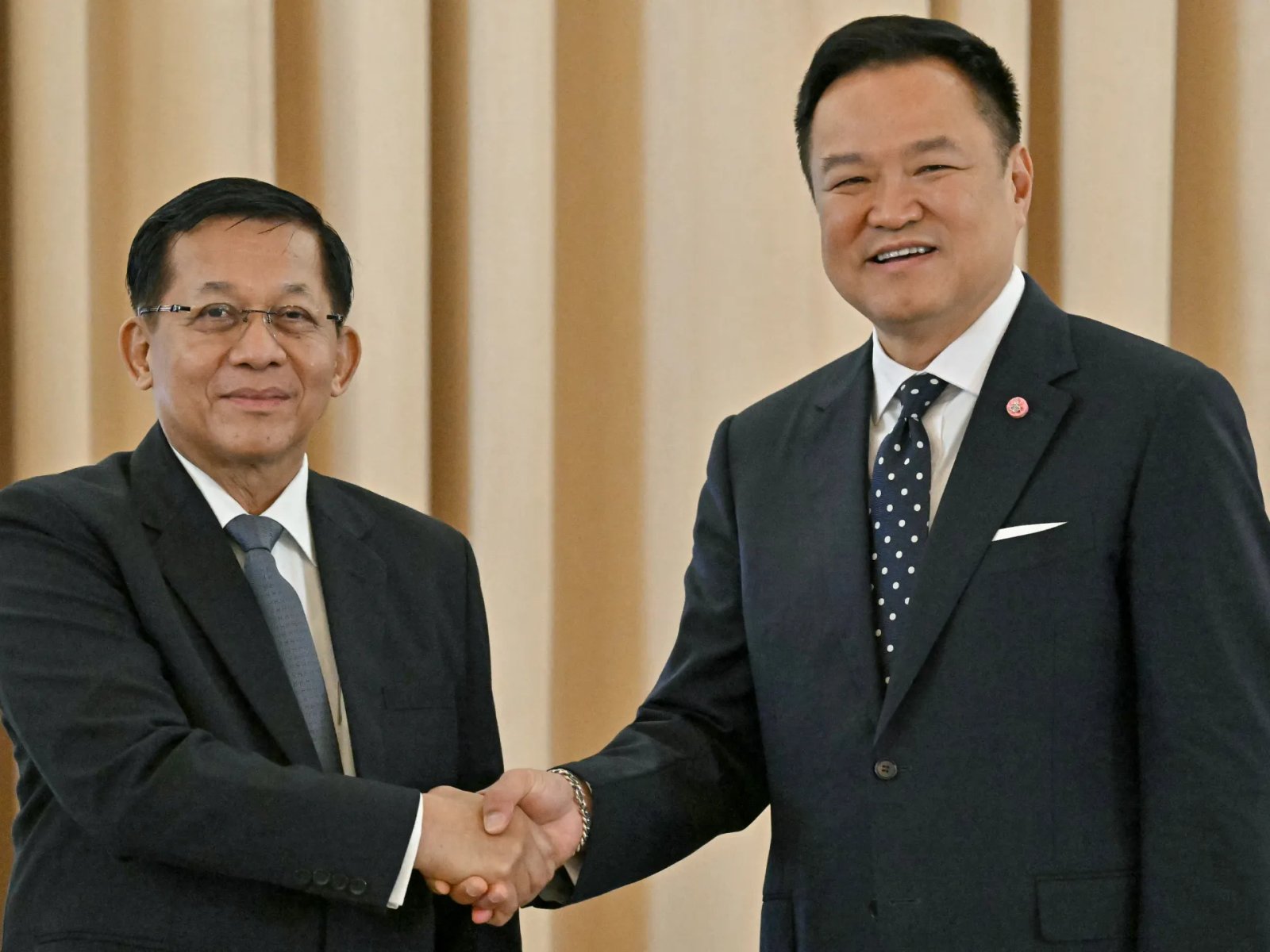
Arriving in Bangkok, Min Aung Hlaing met with Thai Prime Minister Anutin Charnvirakul to discuss matters of mutual interest. The backdrop of their meeting is a Myanmar rife with conflict, following the coup that has claimed over 100,000 lives according to monitoring groups like Armed Conflict Location & Event Data (ACLED).
In this meeting, Min Aung Hlaing emphasized his administration’s commitment to ending the civil war and restoring peace in Myanmar. “Myanmar has now reestablished itself on the path to democracy and is moving toward a better future,” he stated, asserting that the new government is dedicated to national stability and reconciliation.
Push for Re-Admission to ASEAN
Min Aung Hlaing’s agenda includes efforts to re-enter the Association of Southeast Asian Nations (ASEAN), from which Myanmar was suspended after failing to adhere to a peace framework proposed by member states in 2021. As Thailand stands as one of Myanmar’s leading foreign investors, the relationship is pivotal, especially given their lengthy shared border of 2,400 kilometers (about 1,500 miles).
During the Thailand-Myanmar Business Forum, both leaders expressed optimism about future economic collaboration. Anutin highlighted that they were poised to “step into a new chapter of economic cooperation built upon mutual trust and benefit for the people of both countries.” Min Aung Hlaing encouraged attendees to “invest with confidence” across various sectors, including energy and technology.
Criticism of the Diplomatic Engagement
Despite the optimistic rhetoric surrounding the visit, it has drawn significant criticism from activist groups. Organizations like Justice For Myanmar argue that this meeting grants “false legitimacy” to Min Aung Hlaing and his military regime. Protests erupted outside the United Nations regional headquarters in Bangkok, with demonstrators condemning the visit and referring to him as a “criminal” who should not be welcomed.
Internationally, Min Aung Hlaing faces ongoing sanctions and criticism from Western governments for unseating Aung San Suu Kyi’s administration, which has led to widespread human rights violations and sparked a nationwide resistance movement. Meanwhile, Suu Kyi, still under house arrest, recently met with a representative from the International Committee of the Red Cross (ICRC), a development welcomed by her son, though he remains cautious about his mother’s overall condition.
Conclusion
The intricate dynamics of Myanmar’s political landscape continue to unfold. Min Aung Hlaing’s visit to Thailand marks a strategic move to reinforce diplomatic ties and seek economic partnerships, even as the shadow of civil conflict looms large. As the region navigates these challenges, the implications for both Myanmar and its neighbors are profound and far-reaching.
- Min Aung Hlaing’s first official visit to Thailand aims to bolster his government’s legitimacy.
- The meeting with Thai PM Anutin focused on economic cooperation and peace efforts in Myanmar.
- Activists criticize the visit as affording undue legitimacy to the military regime.
- Ongoing civil conflict in Myanmar complicates international relations and humanitarian responses.