

The Economic Impact of Missile Alerts in Ukraine
Missile alerts are currently costing Ukraine a staggering $45 million (£34 million) for every hour they disrupt business operations, as stated by the nation’s Economy Minister. As Kyiv grapples with escalating Russian attacks, finding ways to keep the economy afloat has become increasingly crucial.
Russia’s Targeting of Economic Infrastructure
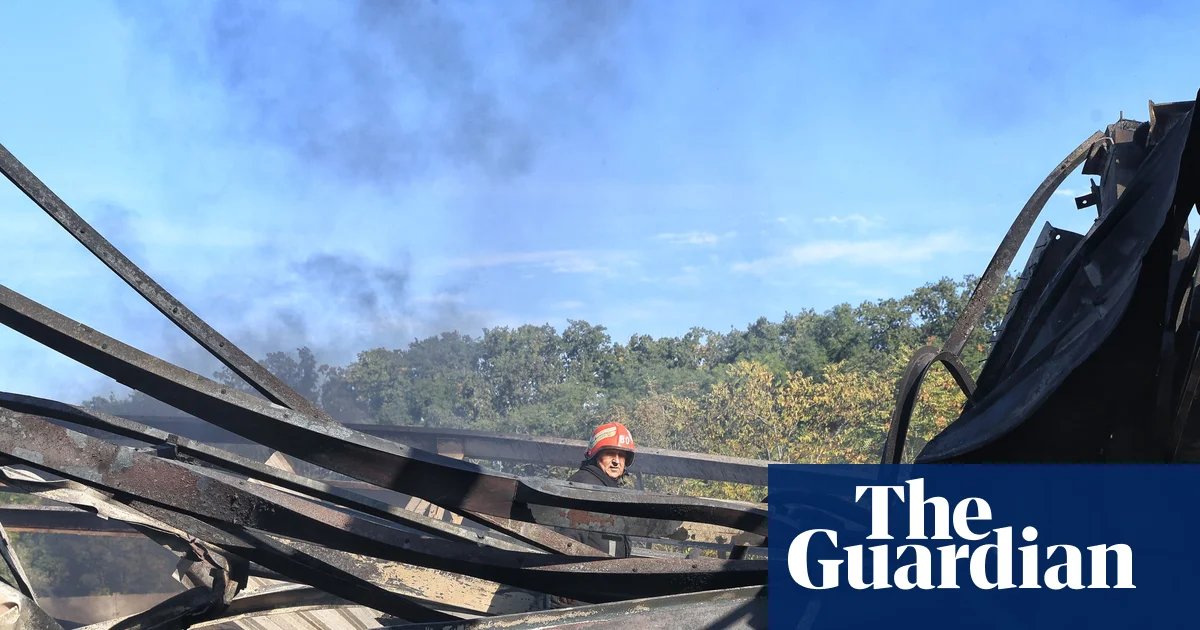
The recent surge in attacks by Russia has focused heavily on the infrastructure critical to Ukraine’s economy. Industrial facilities, warehouses, logistics centers, and data centers have all been systematically struck, in an effort described by Oleksandr Kravchenko, the Economy and Environment Minister, as an aim to “destroy almost the entire economy.”
Reacting to Evolving Threats
Kravchenko noted the unexpected speed at which Russia has deployed jet-powered drones, which have significantly intensified the threat level in Kyiv over recent weeks. Speaking from a fortified government building in the capital, he highlighted that these attacks are causing widespread disruptions as workers are frequently compelled to seek shelter, with air raid sirens sounding for as long as 10 hours a day.
“If people are in a bunker, business stops,” Kravchenko stated.
A New Warning System
To mitigate the economic fallout, the Ukrainian government has introduced a two-tier warning system. A “red” alert indicates an imminent missile threat, prompting individuals to take shelter, while a “yellow” alert is designated for drone threats, allowing many businesses to continue functioning. According to Kravchenko, more than half of businesses have remained operational during yellow alerts.
However, the yellow alert status does not eliminate risk. This was tragically underscored when a Russian drone hit the National Academy of Sciences in central Kyiv during a yellow alert, resulting in two fatalities while employees were still at work.
Challenges Ahead
As Ukraine strives to maintain a sense of normalcy amid these challenges, the ongoing Russian assaults have caused an estimated $10 billion in damage to various assets this year alone. Key targets have included steel plants, logistics facilities, and data centers. Compounding these issues is the blockade of Ukraine’s Black Sea ports, which had previously been vital for the nation’s exports.
Kravchenko noted that this winter could be one of the most difficult yet, with further strain anticipated on energy supplies and weakened infrastructure. To enhance defense capabilities, the government is exploring options to allow more private enterprises to acquire air-defense systems, even though Kravchenko acknowledged that complete protection from Russian missiles and drones is unattainable.
Budget Shortfalls and Future Funding
The aftermath of the ongoing strikes has severely impacted state finances. President Volodymyr Zelenskyy recently projected a budget shortfall of around $27 billion for the year, raising questions about its causes, despite a €90 billion loan package already approved by the EU for 2026 and 2027. Kravchenko mentioned that the government has managed to reduce this gap to $20 billion through budget cuts and by identifying new domestic resources.
Kyiv is now focusing on securing additional support from the EU, Japan, Canada, and the UK, including possibly accelerating loans scheduled for next year. “We are actively engaging with our international partners to explore additional funding sources,” Kravchenko commented.
Addressing Corruption and Public Trust
Kravchenko dismissed accusations that the budget shortfall was due to mismanagement or corruption. He emphasized that it was not the result of overspending by the previous defense minister, whose strategies had made substantial changes to military procurement before his removal triggered protests. Instead, he attributed the financial gap to underwhelming state revenues and increasing costs associated with the war.
Despite recent high-profile corruption scandals reaching Zelenskyy’s circle, which have strained trust among citizens and Western supporters, a poll indicated that corruption remains a top concern among Ukrainians, with 50% pointing to government corruption over missile threats.
Looking Ahead
As Ukraine’s financing needs for 2027 are estimated at $52.6 billion, only about $20 billion has been secured. Discussions about further tax increases and spending cuts are underway. Kravchenko expressed concerns about the potential impact of rising skepticism towards support for Ukraine in European countries like France and Germany, admitting, “Am I worried? I think I should be, probably.”
Conclusion
The situation in Ukraine reflects an ongoing struggle to maintain economic stability amid relentless external threats. Balancing the urgent need for defense with the imperative of facilitating business operations continues to present a daunting challenge for the government and its citizens.
Key Takeaways:
- Missile alerts are costing Ukraine approximately $45 million per hour in business disruptions.
- A new warning system has been introduced to help businesses operate during drone threats.
- The economic damage from Russian attacks is projected at $10 billion this year.
- Ukraine’s budget shortfall has been reduced to $20 billion through cuts and resource identification.