

Migrants at El Trampolín Beach: A Struggle for Hope and Identity
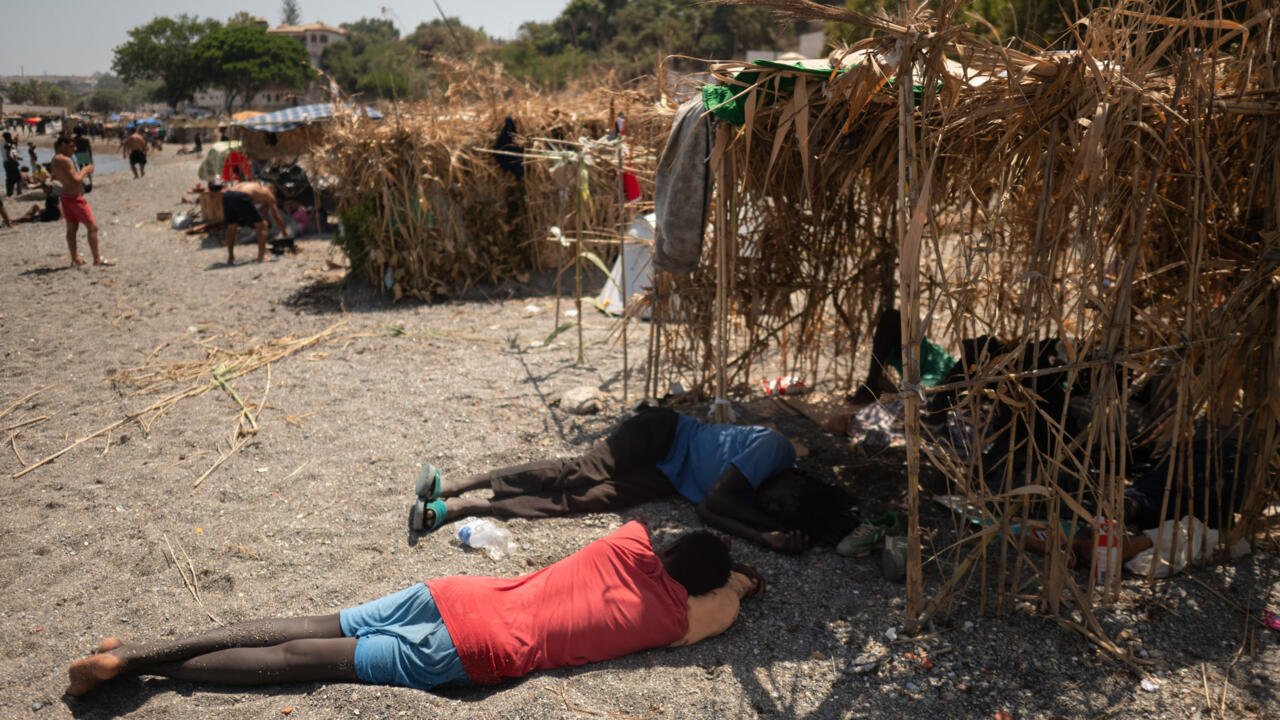
From a distance, the reed huts along the shore in Ceuta, a Spanish enclave in North Africa, create an illusion of a tranquil summer getaway. The laughter of children mingles with the calming sounds of waves and the aroma of what appears to be beach barbecues. Yet, as you draw closer, the reality comes into sharp focus. Torn clothing flutters in the breeze as weary travelers, exhausted from arduous journeys, gather on the beach. This is not a vacation; these individuals are part of an estimated 2,000 to 5,000 migrants who linger after a record influx of over 70,000 individuals crossed the border between Morocco and Ceuta in late July. Most returned home shortly after, but for those who remained, it has been more than two weeks of waiting along this stretch of coastline, hoping for a legal resolution. Each has their story, their aspirations, and dreams, but they all find themselves on the same beach: El Trampolín.
A Melting Pot of Cultures
The scene on the beach is striking, a melting pot of languages and nationalities. Alongside migrants from North Africa and sub-Saharan Africa, you’ll find individuals from Bangladesh, Iraq, India, Palestine, Syria, and Yemen. The makeshift tents appear to be grouped by nationality or language, constructed from reeds and scraps, offering minimal shelter for personal belongings and a few pieces of cardboard for sleeping. Basic necessities, such as food and water, are shared amongst this community, while police patrol the area, ready to respond to any incidents.
A Shared Dream
One such individual is Kamara, a 35-year-old from Nigeria. After nearly 24 hours without food, he prepares his first meal, relying on the kindness of others and a bit of begging to secure daily sustenance. “I’m worn out by this whole situation, but returning to Morocco isn’t an option,” Kamara says. Like many others from sub-Saharan Africa, he journeyed through Morocco before arriving in Ceuta in late July, yet the life he envisioned remains out of reach. Although Ceuta is part of the EU, it lies outside the Schengen zone.
Mamadou, a Senegalese national, echoes similar sentiments. Having submitted an asylum claim, he urges Spanish authorities to act. “At 35, I feel my life is going up in smoke. I see others my age living normal lives, enjoying freedoms I can only dream of, while I’m trapped in these worsening conditions,” he reflects. Yet he holds onto hope, wishing to reach France, where his brother speaks of opportunities in Paris. “The real dilemma now isn’t just arriving in Europe, but the uncertainties that follow: How long will I be here? Will my application be accepted? Will I be able to continue my journey or be forced back to Morocco? I have no idea,” he admits.
Enduring Hardships
Abdelmajid, a Yemeni national, made a daunting swim of nearly eight kilometers to reach Ceuta. When he arrived just before the surge of migrants, he was welcomed with a stark reality far removed from his dreams. “Once the large influx began, we were removed from the city shelter and found ourselves homeless,” he recounts. Living conditions have proved challenging, but he clings to hope that his asylum request will be approved. “Yemen is engulfed in war, and even basic human needs are unmet: no water, electricity, or safety,” he says.
Nearby, Tarek and Ramadan, two Egyptians, share tales of their treacherous journey from Egypt through Libya, Tunisia, and Algeria before landing in Morocco. “We trekked long distances only to be turned back at border fences, only to try again,” Tarek explains. “In Libya, we faced violence and trauma that still haunt us.” Ramadan estimates that around 55 Egyptians have made it to Ceuta, all hoping to regularize their status and move forward.
Young Dreams and Uncertain Futures
Despite the overwhelming number of men, there are young women like Sabah, an 18-year-old Moroccan who stands in line for her daily meal provided by the Red Cross. Unlike some, she managed to find a spot in a temporary shelter, yet her anxiety about the future looms large. “I still have no idea what will happen to me. Being away from my family deepens my fear and sadness,” she states.
Sabri, a young Tunisian, has been in Morocco for eight months and hoped that Ceuta would pave his way to Europe. “What do they plan to do with us?” he asks urgently. “It’s vital for me to know—will we be deported, or will they move us to other centers in Spain?”
The Harsh Reality
Rachid, a 45-year-old Algerian, arrived on July 27, surviving on just one meal a day under dire circumstances. His attempt to return to Morocco was thwarted due to his nationality. “I sought a more organized, progressive society, but instead, I am considering going back to Algeria,” he says, advising fellow Moroccans that returning home is better than enduring the current conditions.
Urgent Intervention Required
Many migrants have traversed numerous borders, yet the challenges they face are not depicted on maps. Legal hurdles, lack of housing, hunger, and the dread of uncertainty compound their struggles. Lawyer Mohamed Sano emphasizes that the living conditions in Ceuta demand “immediate intervention,” noting that local and national authorities find themselves in a situation without apparent solutions so far.
While seeking asylum is a right, Sano clarifies that it does not guarantee approval. Immigration authorities scrutinize each application, and although conflict in a person’s home country can be a consideration, it doesn’t guarantee a favorable decision. Bassim Salem, another expert in the field, notes that every asylum application involves identity checks and assessments to establish eligibility for protection. Those from “safe countries” often face more significant challenges in getting their applications accepted. If denied, they may be returned to their home countries or sent to third countries based on agreements in place.
The recent migration crisis in Ceuta has tragically resulted in 141 deaths, primarily from drowning. For the survivors, Ramses Mohamed Azoumik, an activist with the Elin association, describes the ongoing situation as “extremely difficult” for those who remain. “The authorities have yet to provide a solution that ensures minimum standards for a dignified reception,” he explains, insisting that their rights, dignity, and access to essential resources must be respected.
Conclusion
Geographically, Europe may be just a short distance away from El Trampolín beach, but for those who have arrived, the dream of a better life remains painfully elusive.
- El Trampolín beach hosts thousands of migrants seeking a better life in Europe.
- Many have faced treacherous journeys, fleeing war, violence, and poverty.
- Legal status and asylum applications create uncertainty for migrants in Ceuta.
- Immediate action is needed to improve the living conditions of these individuals.