

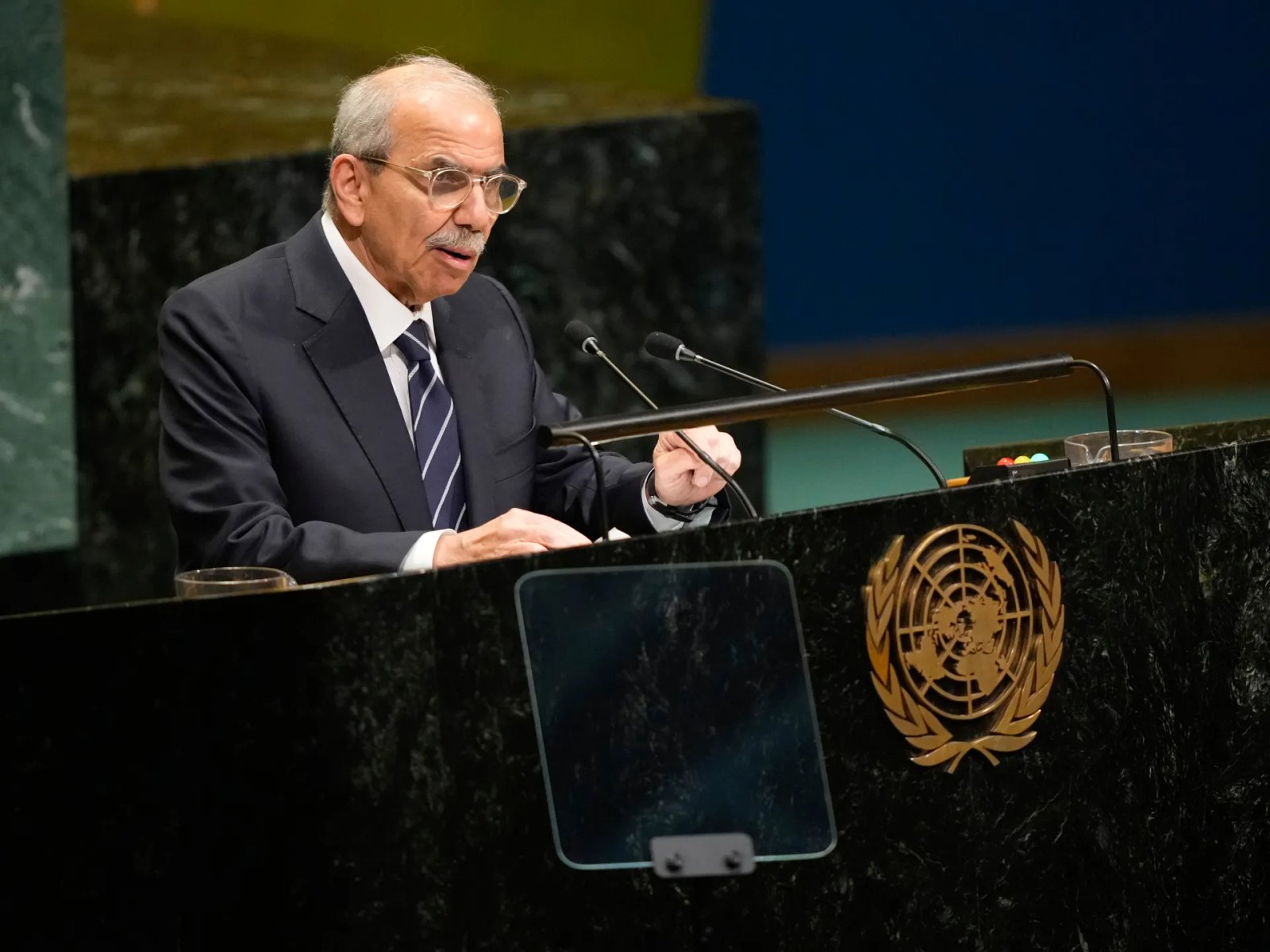
The Call for Peace: Lebanese Prime Minister’s Appeal at the UN
In a powerful address to the United Nations General Assembly, Lebanese Prime Minister Nawaf Salam urged the international community to support a ceasefire with Israel while demanding an end to the ongoing Israeli occupation of southern Lebanon. His plea reflects the urgent need for peace as violence continues to escalate in the region.
Ceasefire and Withdrawal Demands
Prime Minister Salam emphasized the necessity of solidifying the ceasefire and called for the complete withdrawal of Israeli troops from Lebanese territory, ensuring adherence to internationally recognized borders. “We want the war to end and we want the ceasefire consolidated,” he stated, underscoring the importance of stability for the Lebanese people.
Continued Violence in Lebanon
As Salam addressed delegates, explosions rang out in Lebanon. Eyewitness reports described Israeli airstrikes between Froun and Ghandourieh, igniting large fires and causing destruction. Al Jazeera reporter Zeina Khodr highlighted the tense reality, stating, “We can still see Israeli warplanes and drones flying at low altitudes above, and the shelling is causing uncontrollable fires. Lebanese civil defense teams are being blocked from extinguishing the flames.”
Khodr further noted that over 60 towns remain under Israeli occupation, with a systematic campaign of demolitions in progress. “Israeli forces are blowing up people’s homes, despite the ceasefire agreement in place with the Lebanese government,” she added, painting a grim picture of the situation on the ground.
Casualties and Territorial Occupation
Since the onset of hostilities on March 2, the conflict has resulted in at least 4,386 deaths and more than 12,407 injuries, according to reports. Israeli troops have occupied approximately 600 square kilometers of Lebanese land up to the Litani River, further exacerbating tensions in the region.
US-Mediated Negotiations
Salam’s address also touched on the negotiations facilitated by the United States, designed to foster a sustainable ceasefire and restore Lebanon’s sovereignty. “What is required is to complete the translation of this agreement into practical steps within a clear timetable,” he insisted, advocating for accountability and verification in implementing commitments.
The Importance of State Sovereignty
Emphasizing the importance of sovereignty, Salam stated, “It cannot be untouchable in one place and negotiable in another.” He firmly believes that the application of international law should be consistent for all parties involved.
He also addressed the disarmament of Hezbollah, arguing that the state should maintain exclusive control over weaponry. “Decisions on war and peace must rest solely with our constitutional institutions,” he asserted, marking a clear stance on the issue.
Long-Term Stability and Palestinian Rights
In closing, Salam connected the need for regional stability to the respect for Palestinian rights. “There can be no lasting stability in Lebanon without lasting stability in our region, and there can be no stability as long as the UN remains unable to enable the Palestinian people to exercise their inalienable right to self-determination,” he stated, emphasizing the interconnectedness of peace efforts.
Conclusion
Prime Minister Nawaf Salam’s address at the UN serves as a significant call for peace and resolution in Lebanon. His strong demands for a ceasefire and Israeli withdrawal highlight the urgent need for a harmonious existence in a region plagued by conflict.
Key Takeaways
- Lebanese Prime Minister Nawaf Salam calls for an end to Israeli occupation and a solidified ceasefire.
- The ongoing violence has resulted in significant casualties and destruction in southern Lebanon.
- US-brokered negotiations aim to restore Lebanese sovereignty and facilitate a ceasefire.
- Salam emphasizes state control over arms and the importance of Palestinian rights for regional stability.