

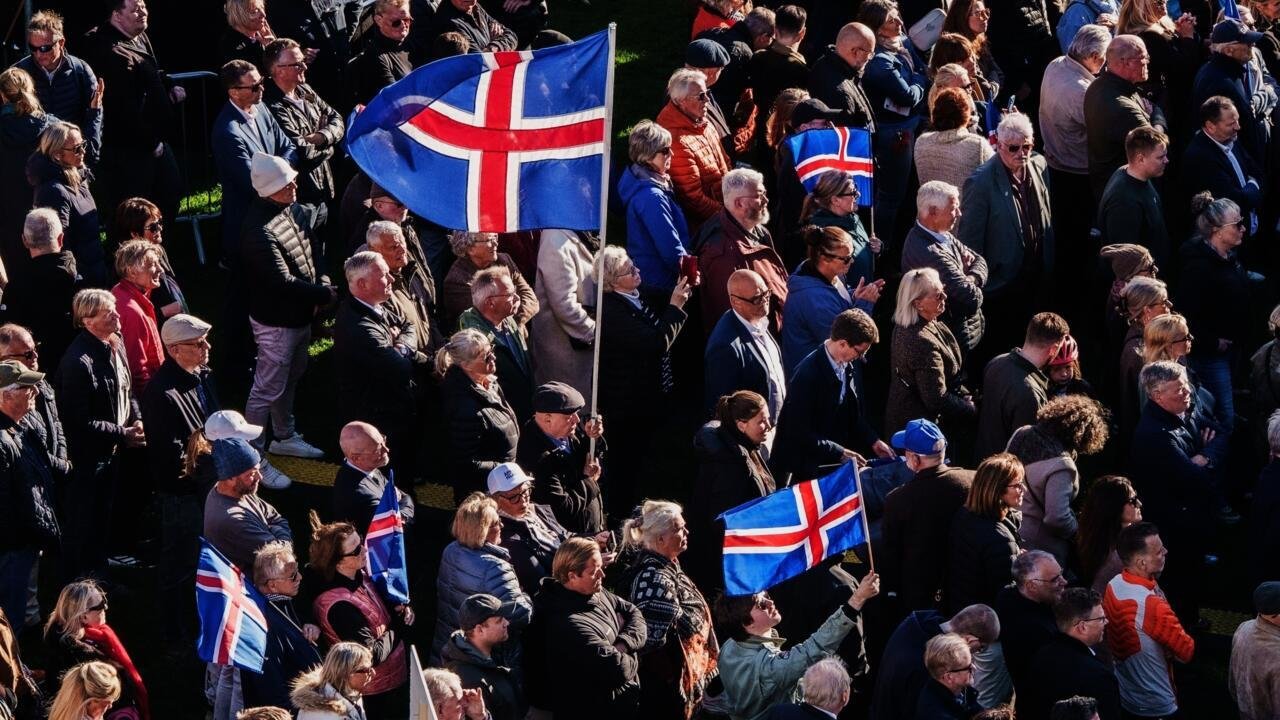
Iceland Votes on EU Membership Negotiations
This Saturday, Icelanders head to the polls for a referendum that will determine whether to restart negotiations for European Union membership. With a population of nearly 400,000, Iceland previously applied to join the EU following a financial crisis in 2009 that severely impacted its economy. However, discussions were halted in 2013 after a eurosceptic government took office. As the referendum approaches, polls indicate a very close contest between those in favor and those against resuming talks.
The Current Landscape
Foreign Minister Thorgerdur Katrin Gunnarsdottir, a prominent supporter of EU membership, expressed optimism about the outcome, stating, “It’s tight, but I’m always hopeful. It’s not over until it’s over.” Voting will commence at 9:00 AM (0900 GMT) and will close at 10:00 PM, with the first reliable results expected late Saturday evening.
The Referendum Question
Voters will answer ‘Yes’ or ‘No’ to the question: “Should Iceland resume accession negotiations with the European Union?” A favorable result would lead to negotiations on an accession agreement with the EU, which would later be put to another referendum regarding full membership. A critical aspect of these talks will involve fisheries, an important sector for Iceland’s economy, where Reykjavik seeks to retain control. Reports suggest that the EU may be more open to negotiations this time around.
Domestic vs. Global Factors
Political scientist Eirikur Bergmann from Bifrost University highlighted that while domestic concerns dominate the debate, international factors—particularly geopolitical shifts spurred by events like Russia’s invasion of Ukraine—are also significant. These developments have raised questions about Iceland’s security, especially given that the nation relies on NATO and a bilateral defense agreement with the United States.
Economic Considerations
While Iceland’s economy has seen a resurgence, soaring inflation and high-interest rates have put a strain on many households. Some individuals are facing mortgage rates of up to nine percent, making the potential transition to the eurozone—where rates are considerably lower—appealing. University administrator Alexandra Yr van Erven noted, “There’s a significant gap, and it would mean a lot for my household.” She believes it is wise to allow the government to negotiate with the EU to explore possible benefits before making a final decision.
Concerns About Security
The ongoing war in Europe, coupled with unpredictable actions from U.S. leadership, has fueled concerns among Icelanders about their safety. With no military of its own, Iceland’s security heavily relies on international agreements. “People are questioning the validity of these agreements,” commented Bergmann.
The Broader Implications
The outcome of this referendum will not only shape Iceland’s future but will also be closely monitored by EU officials. An Icelandic membership could serve as a positive example for the EU’s expansion strategy, potentially smoothing the way for the inclusion of other countries.
Key Takeaways
- Icelanders vote on resuming EU membership negotiations this Saturday.
- The outcome of the referendum is expected to be very close, reflecting a divided public opinion.
- Key issues include fisheries control and economic benefits related to joining the eurozone.
- The referendum holds significance not only for Iceland but also for EU expansion strategies.
In conclusion, the referendum stands as a pivotal moment for Iceland, balancing domestic aspirations against the backdrop of international dynamics. The decision made by voters will significantly impact the nation’s future relations with the European Union.