

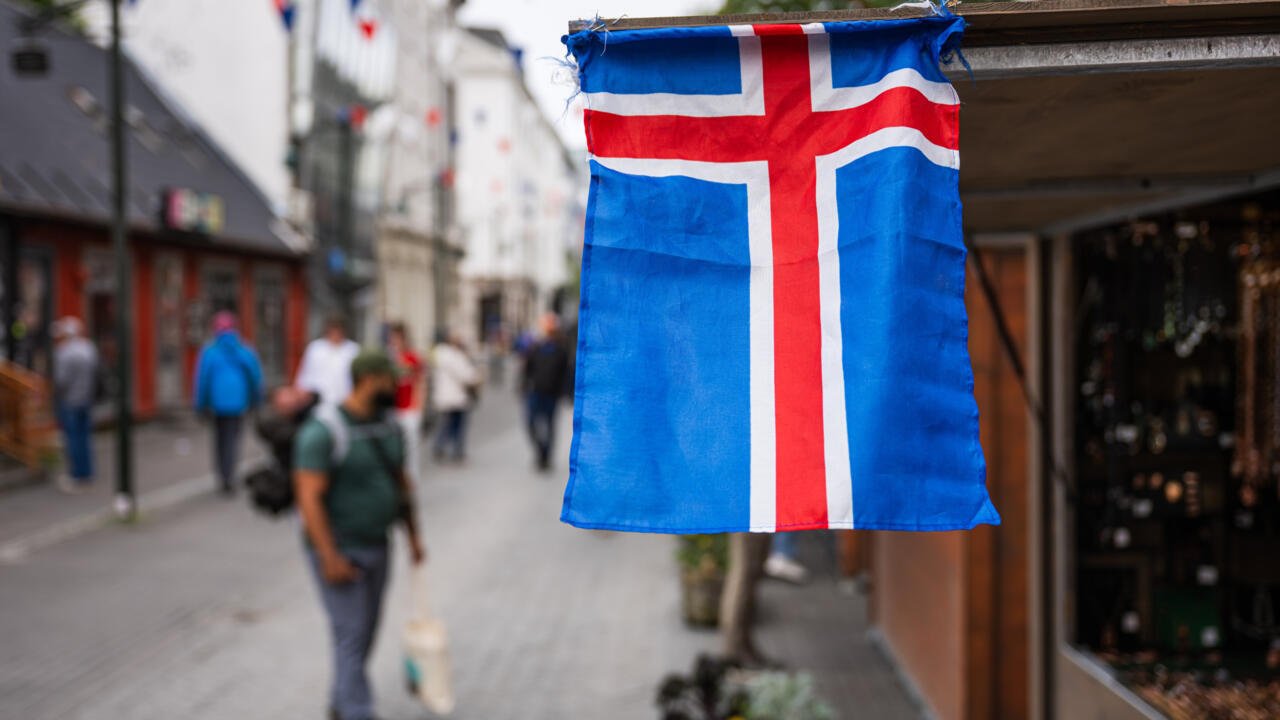
Iceland to Vote on EU Entry Talks Amid Growing Global Tensions
This Saturday, Icelanders will cast their votes on whether to restart negotiations for potential membership in the European Union. This referendum occurs against a backdrop of increasing global uncertainty and is viewed as a pivotal moment for the nation. However, voters are not being asked to decide if they want to join the EU at this stage; the focus is on whether they’d like their government to initiate discussions, particularly regarding the contentious fishing rights issue.
Prime Minister Kristrun Frostadottir expressed to AFP that this referendum is “an opportunity, not a final decision.” She emphasized that participating in negotiations could lead to a better understanding of the potential implications for Iceland. “This way, you get a deal on the table, and you can see all the questions and the answers that arise from them,” she elaborated after attending a community meeting in Selfoss, where she listened to the public’s concerns about the EU.
The Crucial Vote
Voters will respond with either a “Yes” or “No” to the question, “Should Iceland resume accession negotiations with the European Union?” The referendum encompasses deeper considerations about whether the nation of approximately 400,000 prefers to maintain its independence or align with the EU. Should the “Yes” votes prevail, any forthcoming accession agreement would undergo another referendum, likely necessitating constitutional amendments and ratification by EU members.
In 2009, post the financial crisis, Iceland applied to join the EU, and while negotiations began in 2010, they were halted in 2013 due to a eurosceptic government taking office. “The world has changed significantly since then,” noted Frostadottir.
Shifting Global Dynamics
With global dynamics shifting rapidly, including the EU expanding its trade agreements with countries like India and Mercosur, and the use of tariffs becoming more aggressive, Frostadottir pointed out that these factors have reshaped discussions around EU membership for Iceland.
The Icelandic economy is currently rebounding, yet households face challenges due to rising inflation and increasing interest rates. The central bank has raised rates three times this year, bringing them to eight percent, making the euro an appealing option for families burdened by debt.
Additionally, the ongoing war in Europe, particularly Russia’s invasion of Ukraine, has upended traditional security paradigms, further complicating Icelanders’ perspectives on defense and sovereignty. Concerns are amplified by geopolitical tensions, including US rhetoric regarding Greenland, which raises questions about Iceland’s strategic position in the sub-Arctic. The island relies on NATO and a bilateral defense agreement with the United States, lacking its own military forces.
Public Sentiment on EU Membership
The notion of EU membership remains a polarizing issue among Icelanders. According to opinion polls, views are split. Some, like office worker Vilborg Inga Magnusdottir, see no reason to alter the current status and question the tangible benefits of EU membership when Iceland is already faring well. “Why would we want to enter the European Union? What would we gain when things are already good?” she remarked.
Conversely, others like Hrafnkell Gudnason advocate for a “Yes” vote, arguing that the risks of remaining outside the EU are increasing for smaller nations. “It’s becoming more dangerous for a small country to stand alone,” he noted, suggesting that being part of a larger entity may offer greater security.
Fishing Rights: A Major Point of Contention
Fishing rights, which constitute about 40 percent of Iceland’s exports, represent a critical issue in any EU negotiations. Given the historical significance of fisheries to Iceland’s identity, many citizens are hesitant to relinquish any control over their national waters. Even Foreign Minister Thorgerdur Katrin Gunnarsdottir, a firm supporter of EU membership, has insisted that future negotiations must ensure Iceland maintains “sovereign control over all fisheries,” a condition that would likely conflict with the EU’s Common Fisheries Policy.
While the EU has remained relatively quiet ahead of the referendum, there have been optimistic signals regarding the fisheries issue, hinting at a willingness to engage constructively if Iceland chooses to rekindle its membership ambitions.
Conclusion
Iceland’s referendum on EU membership talks reflects not only national sentiments but also broader geopolitical shifts. As voters prepare to make their decision, the implications reach far beyond mere economics, touching upon identity, security, and future relations with the European community.
- The referendum is focused on whether to resume EU accession negotiations, not immediate membership.
- Current economic conditions include rising inflation and interest rates, influencing public sentiment.
- Fishing rights represent a significant hurdle in EU negotiations, impacting national identity.
- Geopolitical tensions and security concerns add another layer of complexity to the decision-making process.