

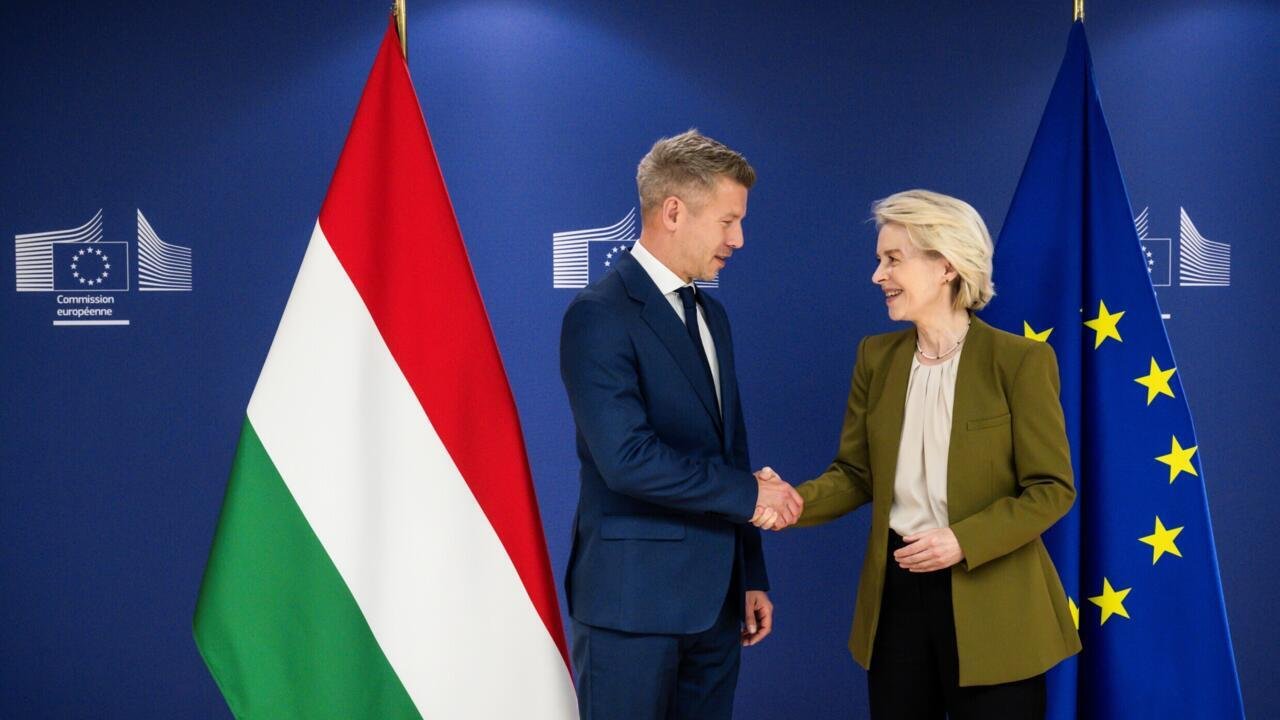
New Beginnings: Peter Magyar’s Vision for Hungary and the EU
Incoming Hungarian Prime Minister Peter Magyar has made headlines after promising that froze EU funds will soon be accessible to Budapest. Following his discussions with key officials during his inaugural visit to Brussels since winning the election against Viktor Orban, Magyar aims to shift the narrative from the past 16 years of Orban’s leadership. This article delves into Magyar’s ambitions and the implications for Hungary’s relationship with the European Union.
A Fresh Start in Brussels
Magyar’s recent visit to the heart of the European Union signals his commitment to repairing ties that have frayed under Orban. He shared details of his “highly constructive” meeting with European Commission President Ursula von der Leyen, expressing optimism about returning in late May to finalize an agreement aimed at releasing approximately 18 billion euros ($21 billion) in funds that had been withheld due to concerns over rule-of-law and corruption issues.
Urgency for Economic Recovery
Magyar is eager to demonstrate the immediate benefits of restoring Hungary’s connection with the EU. He emphasized, “In one sentence: EU funds will soon start arriving in Hungary, enabling us to kick-start the Hungarian economy.” His administration faces tight deadlines, needing to implement reforms by the end of August to secure an additional 10 billion euros in Covid recovery funds before they are permanently lost.
Building Trust with the EU
Von der Leyen acknowledged their fruitful dialogue, detailing the “necessary steps to unlock EU funds.” She reassured Magyar of the European Commission’s support in addressing these critical issues, underscoring the importance of realignment with shared European values.
Anticipation of a Swift Change
EU officials express optimism that Magyar will act quickly, backed by a super-majority in parliament that should facilitate the passage of essential reforms. The proactive approach shown by Magyar has energized hopes in Brussels. “We’ve never seen such a level of commitment from a government that isn’t even in office yet,” remarked EU lawmaker Daniel Freund, a vocal critic of Orban.
Potential for Defense Funding
In addition to the EU funds, there’s discussion around releasing 16 billion euros in preferential defense loans that were previously stalled during the tensions with Orban. However, some EU diplomats urge caution, emphasizing that tangible actions, rather than just positive rhetoric, will demonstrate true change in Hungary.
New Dynamics with Ukraine
As Magyar navigates his new role, leaders in Brussels are encouraging a fresh strategy towards Ukraine, which saw significant delays in support due to Orban’s resistance to EU measures against Russia’s invasion. Magyar has expressed a desire to meet with Ukraine’s President Volodymyr Zelensky in June, aiming to “open a new chapter” in relations.
Recent Developments
Even ahead of taking office, Magyar’s win has already led to unblocking critical EU initiatives. Recently, the 27-nation bloc approved a substantial loan for Ukraine, along with a new sanctions package addressing Russian aggression—previously stalled under Orban’s administration. Although there is consensus on assisting Ukraine, major EU powers remain cautious about rushing the country toward full membership.
Conclusion
Peter Magyar’s inaugural steps as Hungary’s leader indicate a significant shift in the nation’s approach to its European partners. As reforms are anticipated, both the EU and Hungary may be on the brink of a new era characterized by collaboration and shared objectives.
- Peter Magyar’s first visit to Brussels reflects his intent to mend relations with the EU.
- He aims to secure the release of 18 billion euros in frozen funds to boost Hungary’s economy.
- Magyar seeks to establish a positive rapport with Ukraine while addressing EU reforms.
- His super-majority in parliament may facilitate swift legislative changes to align with EU expectations.