

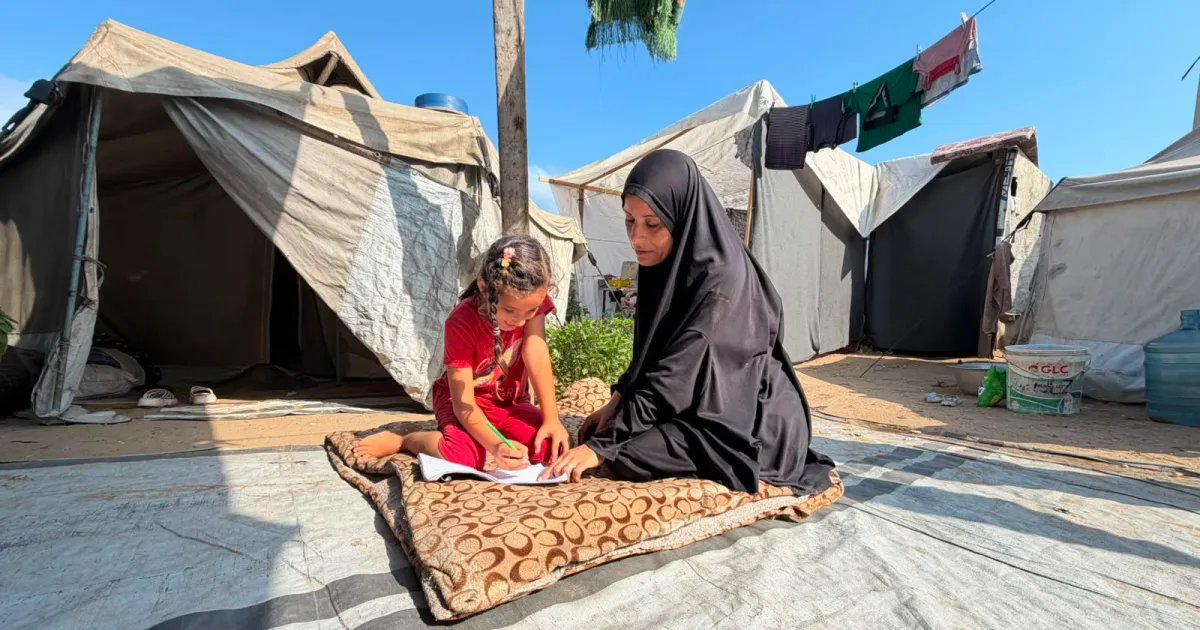
The Struggles of Families in Gaza: A Story of Resilience
In the heart of the Al-Zawaida camp in central Gaza, Sahar Al-Bardini stands at the forefront of her family’s daily battle for survival. A mother of three—six-year-old Omar, four-year-old Sama, and three-year-old Mahmoud—Sahar is their sole provider since losing her husband to Israeli shelling three years prior. This article explores her daily struggles as well as the broader crisis affecting families in Gaza, where food scarcity looms large.
The Daily Challenge of Providing Food
As Sahar prepares breakfast for her children, her mind races with worries about their next meal. Like many families in Gaza, they face skyrocketing food prices, a stark reality exacerbated by the prolonged siege. Reports indicate that the population could be on the brink of famine once again, a worrying scenario reminiscent of last year when the family endured significant food shortages.
Impact of the Recent Famine
During the famine that swept through Gaza, Sahar’s children especially suffered. Omar and Sama experienced severe deficiencies in food and essential nutrients, which left them weak and underweight. “It took them about six months to regain their health and weight after conditions improved,” Sahar recalled, voicing her deepest fear that her children might face similar suffering again.
Growing Food Insecurity in Gaza
Recent reports from the United Nations Office for the Coordination of Humanitarian Affairs (OCHA) paint a grim picture of the food situation in Gaza. A staggering 67% of the population is grappling with food insecurity, with over 200,000 people—roughly 10% of the total population—living in conditions that often precede famine declarations.
The Role of Community Kitchens
For many families in Sahar’s neighborhood, community kitchens have become a lifeline. These kitchens provide basic meals—predominantly rice and occasional meat—but they often fall short of delivering the necessary nutrients crucial for healthy child development. Sahar expressed her concerns about the inadequacy of these meals: “They fill their stomachs but lack the essential variety needed for proper nourishment,” she stated. A more diverse diet, rich in fruits, vegetables, and proteins, is desperately needed to help her children thrive.
Every Meal Counts
With limited financial resources, Sahar maximizes available food vouchers and assistance programs. However, this aid is often insufficient for meeting the family’s needs. Prioritizing food over clothes, medicine, and other basic necessities is a heartbreaking reality for her and many others.
“Everything is expensive, and I feel the weight of responsibility for my three children,” Sahar admitted.
Other Families Facing Similar Struggles
Shimaa, a 25-year-old mother, also expresses the emotional toll of feeding her two-year-old daughter, Selina. During the last famine, finding milk became an almost impossible task, leading her to substitute lentils in hopes of filling Selina’s stomach. Despite her tireless efforts to ensure her daughter receives proper nutrition, the effects of malnutrition linger, leaving Shimaa anxious about Selina’s health.
The Role of Nutrition Specialists
According to Dr. Ghada Jibril, a nutrition specialist, the prevailing food crisis has forced many parents to rely heavily on rice and lentils. While these staples offer some nutritional value, they contribute to a significant gap in necessary dietary components, particularly for children who faced starvation.
Dr. Jibril emphasized that recovering from severe malnutrition is a gradual process that necessitates appropriate dietary support. “The conclusion of acute hunger doesn’t mean that the adverse effects of malnutrition dissipate immediately. Children necessitate more than just enough food to fill their stomachs—they need a balanced diet rich in proteins, iron, vitamins, and minerals for optimal growth and immune health,” she explained.
Conclusion
The challenges faced by families like Sahar’s underscore the urgent need for comprehensive solutions to the food crisis in Gaza. While community support and assistance programs provide some relief, they often fall short of meeting the complex nutritional demands of growing children. Efforts to address food insecurity must focus on delivering a holistic approach, ensuring that every child has access to the diversity of nutrients they need to thrive.
- Many families in Gaza struggle daily to find sufficient food.
- The ongoing food crisis has left a significant portion of the population in precarious conditions.
- Community kitchens provide essential meals but often lack necessary nutrients for children.
- Specialists emphasize the importance of a varied diet for children’s recovery from malnutrition.