

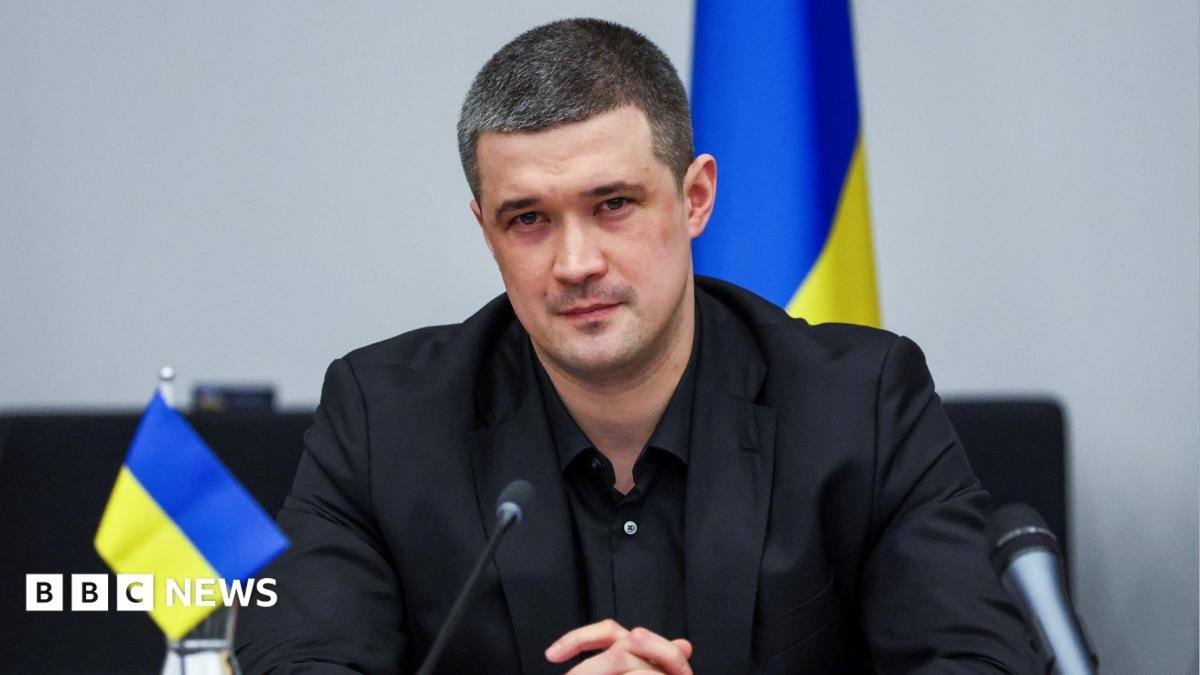
Calls for Wartime Elections in Ukraine Challenge Zelensky’s Leadership
Mykhailo Fedorov, the former Ukrainian defense minister, has recently stirred significant conversation by advocating for elections even during the ongoing war. This bold move is seen as a notable challenge to President Volodymyr Zelensky, marking a critical moment since Russia’s extensive invasion commenced four and a half years ago.
Fedorov’s Bold Statement
In a YouTube video posted on Tuesday, the 35-year-old Fedorov declared, “Democracy cannot be held hostage by Russia.” He emphasized Ukraine’s struggle is fundamentally about preserving its identity as a free European nation. Since the war erupted in 2022, Ukraine has been under martial law, effectively pausing all elections.
Recent Developments
Fedorov, who didn’t directly name Zelensky in his address, was unexpectedly dismissed from his position as defense minister just last month, six months after his appointment. His removal incited protests throughout the nation, highlighting the deep public support he garnered during his term. Fedorov made headlines for introducing reforms aimed at combating corruption and leveraging data to enhance front-line performance.
Internal Tensions
The circumstances surrounding Fedorov’s dismissal are reportedly linked to growing tensions between him and army commander-in-chief Oleksandr Syrskyi. Shortly after Fedorov’s exit, Syrskyi was replaced as well, amid intensifying public demand for Fedorov’s reinstatement. While Fedorov was offered alternative government positions, including deputy prime minister for military innovation, he has expressed a desire to return solely as defense minister.
Zelensky’s Response
Just hours before Fedorov’s video went live, President Zelensky had urged parliament to officially confirm acting defense minister Yevhenii Khmara in the role, with a vote anticipated later that day. In his video, Fedorov did not outline any political ambitions, instead opting to address the necessity for a “legal, safe, and realistic mechanism that will allow Ukraine to restore a full democratic process even amidst a prolonged war.”
Mixed Reactions
Fedorov’s call for elections has sparked backlash from certain segments of the Ukrainian commentary sphere, including advocates for his return as defense minister. One critic of Zelensky pointed out that even the administration’s staunchest opponents acknowledge the impracticality of conducting elections during wartime.
Political Context
Zelensky’s five-year presidential term is slated to conclude in May 2024. However, Ukraine’s constitution prohibits elections while martial law is in effect. Last year, when former US President Donald Trump suggested that Ukraine was “using war” to sidestep elections, Zelensky countered by stating that Ukraine would be “ready for elections” within 60-90 days if security could be assured by allies. Organizing a fair election under conditions of ongoing Russian attacks would pose unprecedented challenges, and many Ukrainians perceived Trump’s comments as aligning with a narrative suggesting Zelensky lacks legitimacy as a leader.
A Call for Change
Fedorov has characterized Ukraine as experiencing a “systemic crisis of governance,” expressing concerns that the nation is apprehensive about change. He highlighted corruption as a significant factor undermining the country’s war efforts.
Conclusion
The discourse surrounding political elections during wartime is complex and contentious, especially in a nation grappling with external aggression and internal challenges. Fedorov’s push for electoral processes could reshape the future dynamics of Ukraine’s governance amidst a critical period.
Key Takeaways
- Mykhailo Fedorov calls for wartime elections in Ukraine, challenging President Zelensky.
- Fedorov emphasizes the need to uphold democracy even amid martial law.
- His dismissal from the defense minister position has sparked nationwide protests.
- Key questions arise regarding the feasibility of conducting elections during ongoing conflict.