

EU Nations Address Russia’s Actions Following Drone Incident
The European Union (EU) countries convened on Wednesday to address Russia’s recent escalation of hostilities, sparked by a drone incident in Germany. The bloc’s foreign policy chief characterized this event as potentially indicative of “state-sponsored terrorism.” This has raised concerns about Russia’s ongoing efforts to destabilize nations supporting Ukraine.
Escalation of Tensions
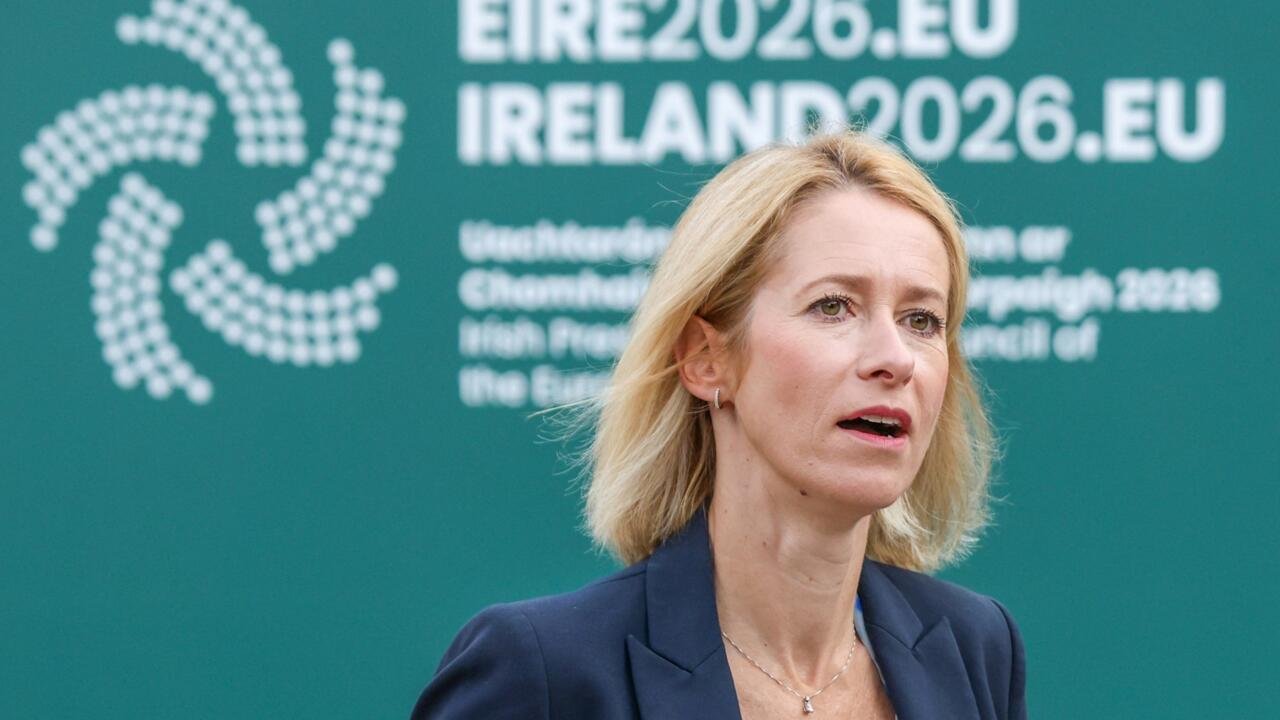
The explosive drone incident at Leipzig airport has intensified worries about a broader campaign of sabotage attributed to Russia, aimed at undermining Ukraine’s allies. Kaja Kallas, the EU High Representative for Foreign Affairs and Security Policy, expressed her concerns during a gathering of foreign ministers in Ireland, stating, “It’s evident that this bears the traits of state-sponsored terrorism.” She went on to ask, “What steps should we take in response?”
Summoning Envoys and Legislative Moves
Kallas revealed that the EU had summoned the Russian envoy, with individual member states following suit. Jean-Noël Barrot, France’s Minister for Europe and Foreign Affairs, declared, “We will not allow such a grave act to go without repercussions,” confirming his own summons of the Russian envoy in Paris. Kallas mentioned that the foreign ministers agreed to work on imposing sanctions against 1,600 individuals and entities associated with Russia’s military sector, aiming for adoption in the coming month.
A Call to Action
Kallas emphasized the importance of unity in the face of these hybrid attacks, stating, “These incidents serve as wake-up calls for nations that may not have responded decisively thus far. To end this conflict, we must all intensify our efforts.” Germany’s government took a firm stance, attributing the Leipzig drone incident to Moscow and announcing the closure of a Russian consulate while terminating a cultural center contract in Berlin.
Reactions from Russian Officials
In a response, President Vladimir Putin criticized Germany’s actions as “another serious mistake,” arguing that such steps contradict the interests of the German public. German Federal Minister for Foreign Affairs Johann Wadephul stated there are now numerous individuals eligible for sanctions. “Russia has escalated matters and must now face the consequences,” he noted from Ireland.
Heightened Concerns Across Europe
Ursula von der Leyen, President of the European Commission, referred to the Leipzig incident as “a new escalation” on European soil. She claimed, “This attack involved military-grade materials used by Russian operatives,” and asserted, “We will not stand for such actions.” Despite this strong rhetoric, she acknowledged that such incidents appear to have become a troubling new normal, as Russia heightens its destabilizing activities in the region.
The Reality of Hybrid Warfare
Poland’s Minister of Foreign Affairs, Radoslaw Sikorski, reflected on the current climate, stating, “We are no longer in typical peacetime, as Russia seems to be conducting a hybrid war against us.” While the discussion intensifies around the EU’s response, critics like Lithuania’s Minister of Foreign Affairs, Kestutis Budrys, argue that the actions taken so far fall short of their strong declarations. “We must evaluate our options thoroughly and respond, as it’s clear Russia perceives no serious political cost for its hybrid activities,” he urged.
Future Measures and Aid for Ukraine
Kallas mentioned a “broad consensus” among ministers to push for a visa ban on Russians who have participated in the war in Ukraine, along with increased restrictions for tourists. She also hinted at new commitments concerning missile defense aid for Ukraine, although specifics were not disclosed. Furthermore, discussions have resumed regarding the potential use of approximately 200 billion euros ($235 billion) of frozen Russian central bank assets to support Ukraine. Andriy Sybiga, Ukraine’s Minister of Foreign Affairs, supported this approach, stating, “This is a reasonable starting point for serious discussions on utilizing immobilized funds.” Last year, the EU could not agree on a plan to use these Russian assets and instead arranged a loan of 90 billion euros, which now seems inadequate for sustaining Kyiv over the intended two years.
Conclusion
The recent drone incident in Germany has acted as a catalyst, prompting EU nations to reassess their strategies to counteract Russian aggression. As tensions rise, there is a clear call for unified action and stronger responses to Russia’s destabilizing tactics against Europe.
- The EU is discussing new sanctions against Russia following a drone attack in Germany.
- There is a consensus among member states for a united response to such hybrid warfare tactics.
- Germany is taking steps to shut down Russian diplomatic presence in response to the incident.
- Discussions are ongoing about utilizing frozen Russian assets to support Ukraine financially.