

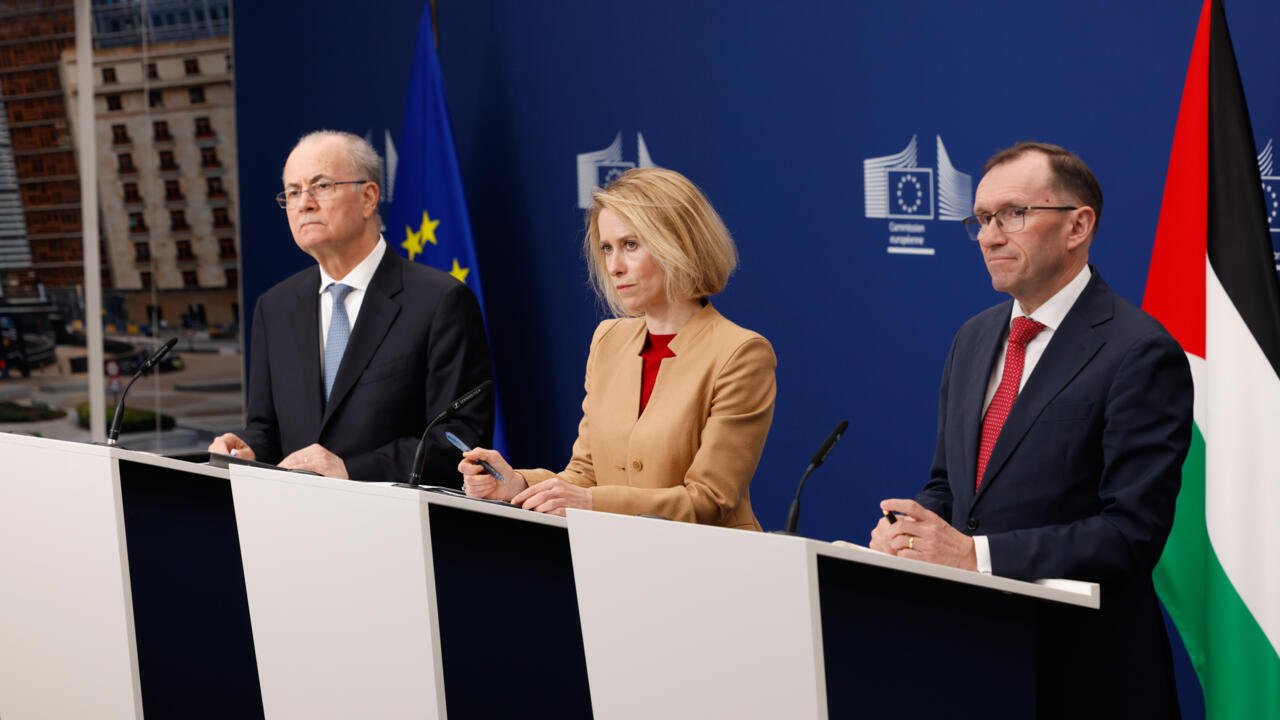
EU’s Response to Israel Amid Gaza Conflict
The European Union’s foreign policy chief, Kaja Kallas, announced on Monday that the bloc will assess the willingness of its member states to take action against Israel. This comes in light of Spain’s renewed calls to suspend an existing cooperation agreement. A meeting of the foreign ministers from the 27 EU nations is set to take place in Luxembourg on Tuesday, following Spanish Prime Minister Pedro Sanchez’s request. Recent events have sparked a shift in attitudes towards Israel, particularly among core EU countries, due to its actions during the Gaza conflict, the invasion of Lebanon, and the implementation of a controversial death penalty law for Palestinians in the West Bank.
EU’s Potential Actions and Member State Support
In response to the escalating situation in Gaza, the EU had previously outlined various potential measures aimed at holding Israel accountable, which included proposals to sever trade ties and impose sanctions on Israeli officials. However, these suggestions have yet to receive the necessary support from member states to be enacted. Full suspension of the EU’s cooperation agreement, which Spain advocates, requires unanimous agreement from all 27 EU nations. This move is likely to encounter opposition from Israel’s allies.
A more viable option could be to suspend specific provisions of the cooperation deal that relate to trade. This would only need approval from a weighted majority of EU members, making it potentially easier to achieve. However, this would hinge on changing positions from key countries like Germany or Italy. Notably, Italy has recently taken a firmer stance by halting a defense agreement with Israel. Kallas remarked, “We already have the measures on the table; some of them that require a qualified (weighted) majority. First, we need to evaluate whether there’s a desire among member states to apply pressure on Israel.”
Political Landscape Influencing EU Decisions
The recent electoral defeat of Viktor Orban, a strong supporter of Israel in Hungary, could influence the EU’s ability to take decisive action. In the past, Hungary had blocked proposals for sanctions targeting so-called “extremist” Israeli settlers in the West Bank. Diplomats and EU officials remain optimistic about the possibility of advancing these measures soon, although they acknowledge that implementation may be delayed until Hungary’s new government assumes power in May.
Conclusion
The evolving situation between Israel and the EU highlights significant tensions, particularly regarding the ongoing Gaza conflict and its aftermath. As member states contemplate their stance, the EU’s potential measures may take shape depending on collective agreement among its nations.
Key Takeaways
- The EU is assessing member states’ willingness to take action against Israel in light of recent events.
- Full suspension of the EU’s cooperation agreement with Israel requires unanimous consent.
- Suspension of specific trade provisions may be more achievable with a weighted majority vote.
- Changes in Hungary’s political landscape could impact future EU decisions on sanctions.