

Renewed Conflicts in Northern Ethiopia: Accusations of External Interference
Recent violence in northern Ethiopia has escalated, with the government alleging that Eritrea, Sudan, and Egypt are providing support to opposition groups. This has sparked concerns that the conflict could draw in neighboring countries, complicating an already tense situation.
Government Accusations
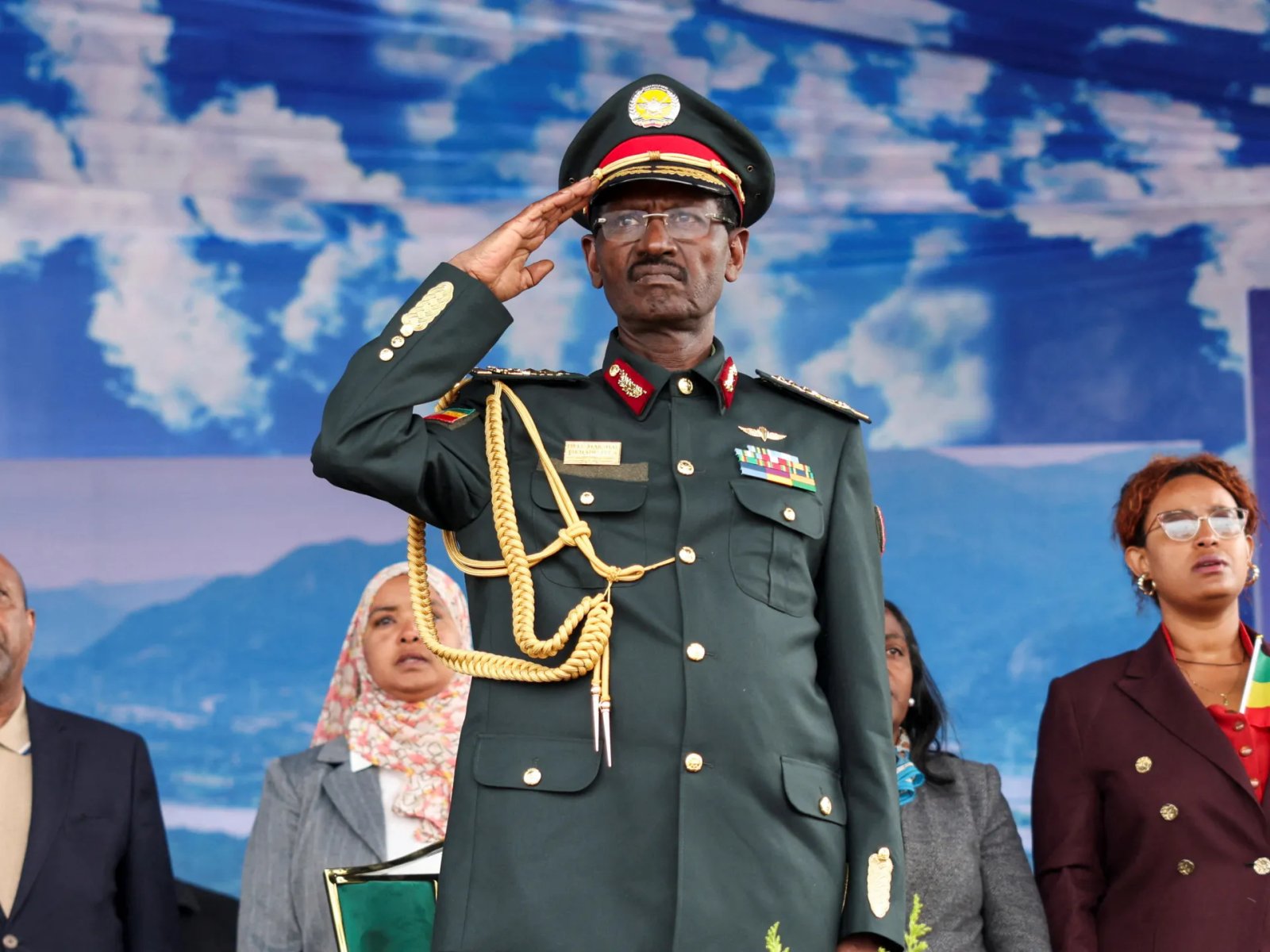
During the weekend, Ethiopian army chief Birhanu Jula attributed the unrest in the country to what he described as Ethiopia’s “historical and contemporary adversaries.” He explicitly named Eritrea, Sudan, and Egypt as external forces linking to armed groups within Ethiopia.
Reactions from Neighboring Nations
In response to these accusations, representatives from Eritrea, Sudan, and Egypt have strongly denied any involvement. Nader Zaki, a spokesperson for the Egyptian Foreign Ministry, reiterated that Egypt’s foreign policy is rooted in “full respect for the sovereignty, unity, and territorial integrity of states,” emphasizing non-interference in the internal affairs of other nations.
Major-General Samir Farag, a former high-ranking Egyptian military official, echoed these sentiments, asserting that Egypt has not historically engaged in interference in regional matters. Sudan’s military has dismissed Ethiopia’s claims as “baseless,” countering that Ethiopia itself has contributed to regional instability by allegedly assisting the paramilitary Rapid Support Forces (RSF), which has been in conflict with Sudanese Armed Forces since 2023.
A History of Tensions
The relationships between Ethiopia and these neighboring nations have long been strained over various disputes. The ongoing disagreement over the Grand Ethiopian Renaissance Dam (GERD) has particularly soured relations between Egypt and Ethiopia, while Sudan has accused Ethiopia of providing support to the RSF amid the ongoing civil war in Sudan.
Historically, Eritrea fought alongside Ethiopia during the previous conflict in Tigray from 2020 to 2022, yet relations have since deteriorated, especially as Ethiopia seeks greater access to the Red Sea.
Domestic Perspectives
Amid these external accusations, some analysts suggest that Ethiopia might be using the rhetoric of foreign interference to consolidate national support for its domestic military efforts. Mohamed Selim, deputy chair of the Egyptian parliament’s African Affairs Committee, remarked that such an approach could deflect attention from internal issues by framing an external enemy to unite the nation.
Amani al-Tawil, director of the Africa Programme at the Al-Ahram Centre for Political and Strategic Studies, viewed these allegations as a tactic to navigate through domestic crises, questioning the rationale behind Egypt’s military intervention at this time given the ongoing GERD dispute.
Wider Impact of Conflict
The renewed fighting has spread from Tigray into the neighboring Amhara and Afar regions, home to a population of over 38 million, and borders close to Djibouti and Eritrea, escalating fears of a broader conflict. Mohammed Hussein, chairman of the Prosperity Party in the Afar region, emphasized the seriousness of the situation.
Writer Ammar Arki noted that Ethiopia has historically placed blame on its neighbors for its internal turmoil. He suggested that the current accusations might be an effort to shift domestic attention towards external threats, potentially rallying support for the federal government. However, he cautioned that framing the crisis as an “external conspiracy” could lead to greater risks of the conflict spilling over into neighboring regions.
Conclusion
The escalating violence in northern Ethiopia and the accusations made against regional powers illustrate a complex web of historic disputes and current tensions. As neighboring countries respond to these allegations, the potential for expanded conflict looms large, posing risks not just to Ethiopia but also to regional stability.
- Ethiopia’s government claims external support for opposition groups.
- Neighboring nations have rejected accusations of interference.
- Ongoing disputes, particularly over the GERD, further complicate relationships.
- Concerns arise that the conflict could spill over into a wider regional crisis.