

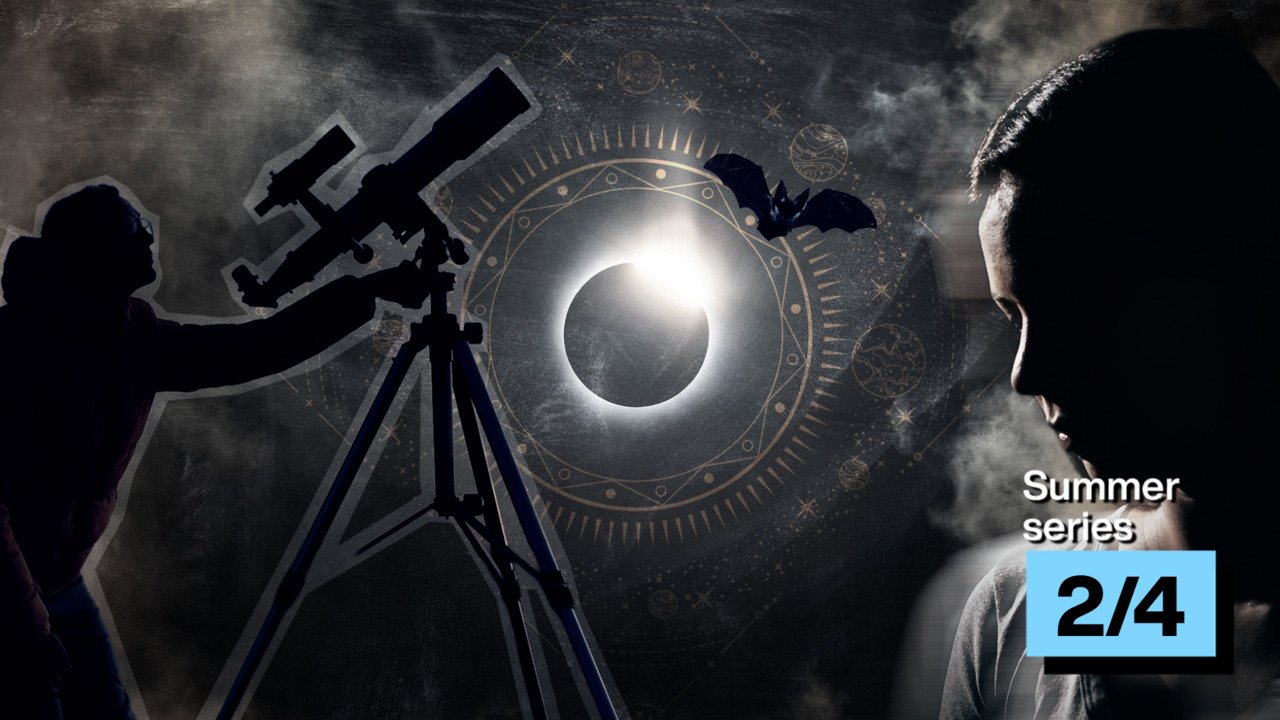
The Fascinating Science Behind Solar Eclipses
Solar eclipses have long captivated humanity, transforming from symbols of fear into valuable opportunities for scientific exploration. As Europe prepares for its first total solar eclipse since 1999, we delve into this remarkable phenomenon, uncovering its impact on our understanding of the cosmos and its effects on our world.
The Historical Perspective on Eclipses
In ancient times, eclipses were viewed with a mix of awe and trepidation. For instance, in ancient China, citizens believed that a dragon was consuming the Sun, prompted by humanity’s failings. To ward off this mythical menace, drums were sounded to restore daylight. Similarly, the Incas perceived these celestial events as expressions of their sun god’s wrath, often resorting to sacrifice in hopes of appeasing the deity. The poet Archilochus vividly captured the mood surrounding a solar eclipse on Paros in 648 BCE, expressing the unsettling feeling that “nothing in the world can surprise me any longer” when darkness engulfed the day.
Advancements in Astronomical Knowledge
Beyond their mythic interpretations, eclipses have played a crucial role in the advancement of scientific understanding. From the earliest observations, they helped people comprehend celestial mechanics and predict future occurrences. A landmark moment occurred in 1868 when helium was discovered in the solar spectrum, long before its existence was confirmed on Earth. Notably, the solar eclipse of May 29, 1919, was instrumental in validating Einstein’s theory of general relativity, as it allowed scientists to measure the bending of starlight by the Sun.
Eclipses as Natural Laboratories
In an age of sophisticated technology and continuous satellite monitoring of the Sun, one might think eclipses have lost their significance. Yet, they remain essential for scientific inquiry, providing unique observational conditions that are otherwise unattainable. Astrophysicist Antoine Strugarek emphasizes the importance of these natural occurrences, noting that “an eclipse is a natural way of masking the Sun,” allowing researchers to study its edges and structure more effectively.
Preparing for the Next Eclipse
As the next total solar eclipse approaches on August 12, astronomers are gearing up to gather valuable data along its path of totality in Spain. The cosmic event offers a fleeting moment for understanding the Sun’s corona—a complex layer surrounding our star that reaches astonishing temperatures far exceeding its surface. These observations could help unravel ongoing mysteries in solar physics and enhance our knowledge of other stars and planetary systems.
Animal Behavior During Eclipses
The impact of eclipses extends beyond the astronomical realm, capturing the interest of biologists as well. A team of researchers in Spain is enlisting volunteers to study how different animal species respond to sudden darkness. The EcoEclipse experiment aims to monitor the vocalizations and behaviors of various species, including birds and bats, around the time of the eclipse. Ecologist Irene Mendoza underscores the significance of this research, noting how understanding animal responses could shed light on their vulnerability to environmental changes like light pollution.
The Effects on Humans
Eclipses also provoke notable reactions in humans, a phenomenon that scientists are only beginning to study deeply. Research stemming from the 2017 eclipse in the United States analyzed social media posts, revealing that those who experienced totality reported heightened feelings of awe and used language reflecting greater humility and connection. Building on this, a citizen science project called “Project Solaris” aims to collect biometric data from thousands of volunteers during the upcoming eclipse, exploring how shared experiences of such events can influence physiological responses.
Conclusion
Solar eclipses are much more than mere celestial spectacles; they are gateways to scientific discovery, offering insights that can reshape our understanding of the cosmos and our place within it. As we continue to explore these phenomena, we also find opportunities to study the interconnectedness of nature, human emotion, and the universe.
Key Takeaways
- Historically, eclipses were feared and interpreted through mythic lenses but have since become valuable scientific phenomena.
- Solar eclipses have facilitated significant discoveries, including the validation of Einstein’s theory of relativity.
- Observations during eclipses are crucial for understanding the Sun’s structure and its effects on Earth’s environment.
- Biological and psychological reactions to eclipses provide insights into the broader impacts of these events on various species, including humans.