

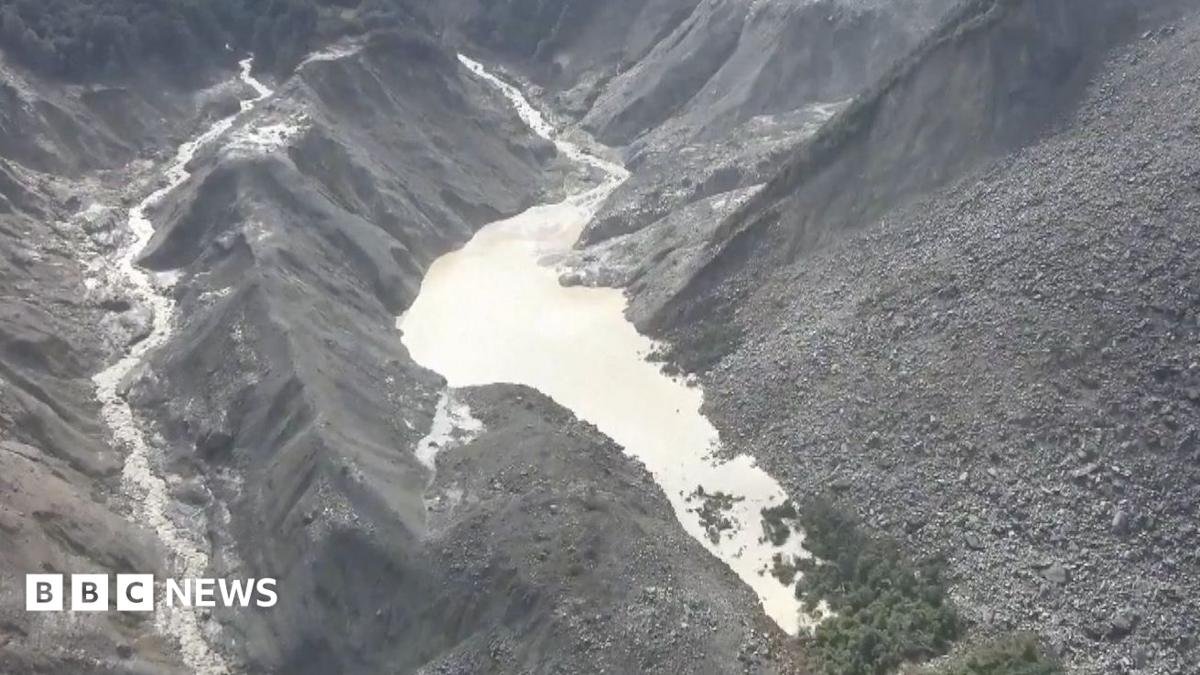
Concerns Rise Over Potential Lake Breach in Nepal
Recent events have sparked alarm surrounding a lake formed by geological activity in Nepal, as experts warn of the risks of an impending breach of its banks. Jakob Steiner, a geoscientist affiliated with the University of Graz, has been closely monitoring the situation and expresses serious concerns regarding the stability of the lake.
Expert Insights on Geology and Erosion Risks
Steiner cautions that not all debris from the surrounding mountains has settled, indicating ongoing instability. “There’s a chance that further material could fall into the lake or upstream, which would create significant problems,” he noted. Such occurrences could potentially exacerbate the risks of erosion and landslides in the valley.
Adding to the situation, reports from Chinese state media forecast heavy rainfall and storms in the region in the coming days. This additional precipitation may contribute to swelling water levels in the lake, raising further alarms.
Impact of a Possible Breach
In the event of a breach, Steiner alleviates some fears by stating that the volume of water released would likely not be as catastrophic as previous events. “The lake is relatively new and shallow, so a massive deluge isn’t expected,” he explained. However, he warns that any outflow could still pose risks by undermining the valley’s slopes, leading to increased erosion and potential landslides.
Mohd Farooq Azam, a glacio-hydrologist at the International Centre for Integrated Mountain Development, echoes this sentiment, advising that authorities should remain highly vigilant in their rescue efforts and be prepared for any secondary waves or post-disaster landslides, given the compromised state of the valley walls.
Challenges in Intervention Efforts
Steiner expressed skepticism about the feasibility of intervention efforts by Chinese authorities. Although there are technical means to drain the lake using excavating machinery, logistical challenges remain. “There are no proper roads to facilitate the transport of heavy equipment to the lake,” he noted, indicating that timely intervention may be difficult.
Potential for Natural Resolution
Both experts offered a glimmer of hope, suggesting that nature might eventually resolve the issue on its own. Azam referred to recent flash floods in India’s Chamoli and Dharali, where similar artificial lakes drained gradually and with minimal downstream impact. Similarly, Steiner remarked, “The best course of action may be to simply hope that the water drains naturally from the barrier lake in Tibet.” He further explained that as the melting season concludes in October, the situation is likely to stabilize, with any remaining water getting frozen over winter.
Conclusion
The situation surrounding the lake in Nepal is a complex interplay of geological risks and climatic conditions. As experts continue to monitor the developments, the hope is that nature will take its course, easing the concerns surrounding potential disasters.
- Geoscientists warn of the potential for a lake breach in Nepal due to unstable geological conditions.
- Heavy rainfall forecasted may exacerbate the lake’s swelling, raising concerns over erosion and landslides.
- Logistical challenges hinder intervention efforts to drain the lake artificially.
- Experts suggest the situation may resolve naturally by the end of the melting season in October.