

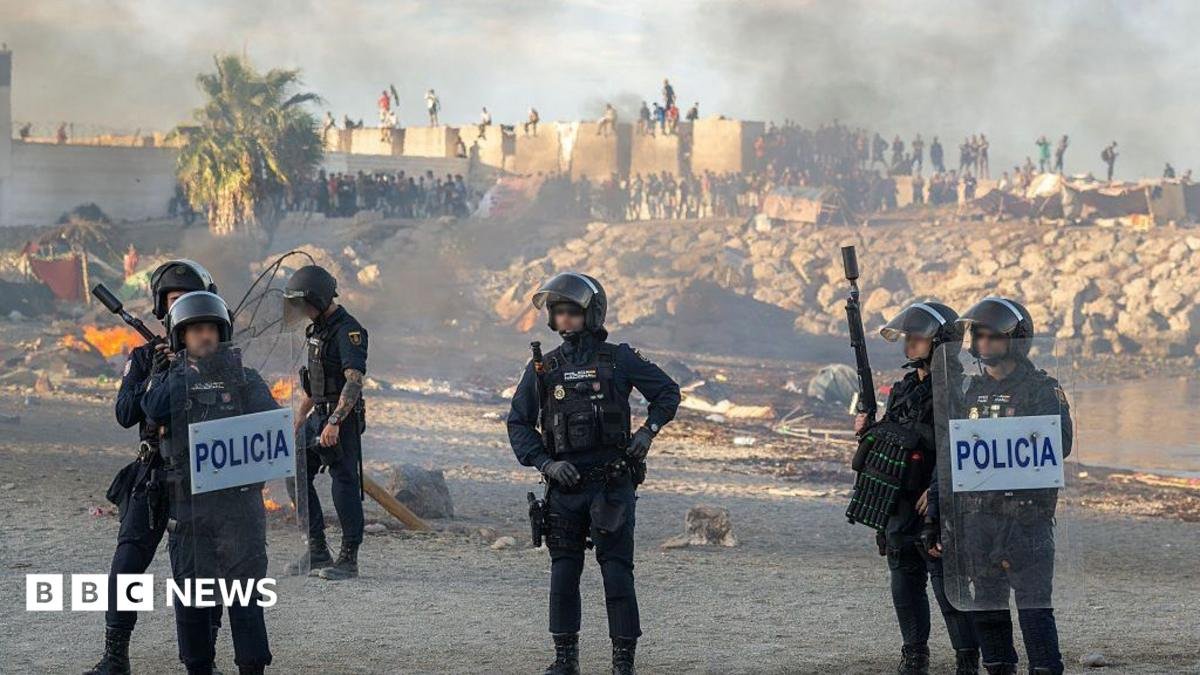
Addressing the Tensions Surrounding Migrant Policy in Ceuta
The recent migrant crisis in Ceuta has sparked a heated political debate, with Spain’s socialist government under Pedro Sánchez calling for calm amidst accusations of tension-building from opposition parties. In this article, we explore the ongoing conflict, the government’s response, and the underlying issues affecting the Ceuta community.
Political Reactions and Accusations
Pedro Sánchez’s administration has accused the People’s Party (PP), led by Vivas, and the far-right Vox party of inciting unrest. The controversy intensified following a provocative statement from José María Figaredo, a Vox congressional member, who suggested that migrants should be “hunted down, one by one.” This remark has led to an investigation for a potential hate crime.
Interior Minister Fernando Grande-Marlaska addressed the issue in a congressional meeting, stating, “We have heard rhetoric and comments in recent weeks that contribute to the stigmatisation of immigrants, which fosters social division when we should be focused on leadership and responsibility.”
In contrast, Javier Celaya of the PP has condemned the current government’s view, arguing that they treat “invaders as victims” while neglecting the concerns of Ceuta residents. This confrontational atmosphere has prompted local parties to come together, signing a declaration condemning violence earlier this week.
Government Intervention and Apologies
This week, the central government took control of the situation, overriding local authority complaints about a slow response. Defence Minister Margarita Robles expressed regret towards Ceuta citizens who may feel “abandoned or insufficiently cared for,” while announcing plans for a comprehensive reform of immigration laws.
Plans for Migrant Accommodation
Amid rising tensions, the government’s intention to house migrants in public facilities like sports centers has drawn significant backlash from local residents and politicians, including Vivas. Many are concerned that relocating migrants closer to residential areas could heighten security worries.
The Root of the Crisis: Political Dynamics
As the crisis unfolds, questions arise around the circumstances leading to a mass influx of migrants. Right-leaning and leftist politicians have suggested Moroccan involvement, referencing its historical leverage of the border with Spain for political maneuvers. However, Sánchez’s administration places the blame on human traffickers, arguing that Morocco is a reliable partner that has facilitated the swift return of many migrants.
Sovereignty and Territorial Integrity
Furthermore, the sovereignty of Ceuta and the nearby Melilla is increasingly scrutinized amid Morocco’s longstanding claims to these territories. Responding to these assertions, Spain’s Foreign Minister José Manuel Albares firmly rejected any discussions regarding Spain’s territorial integrity, emphasizing, “I have never and will never discuss this matter with Morocco or anyone else.”
Conclusion
The situation in Ceuta reflects a complex mix of political tensions and humanitarian concerns. As the government attempts to address the crisis, the discussion surrounding immigration policy remains a divisive issue, eliciting strong reactions across the political spectrum.
Key Takeaways:
- The Spanish government is under fire for its handling of the migrant situation in Ceuta.
- Opposition parties are accused of inciting tensions regarding immigration policy.
- The government has taken measures to centralize control over the migrant crisis.
- Territorial claims by Morocco continue to complicate the situation for Ceuta and Melilla.