

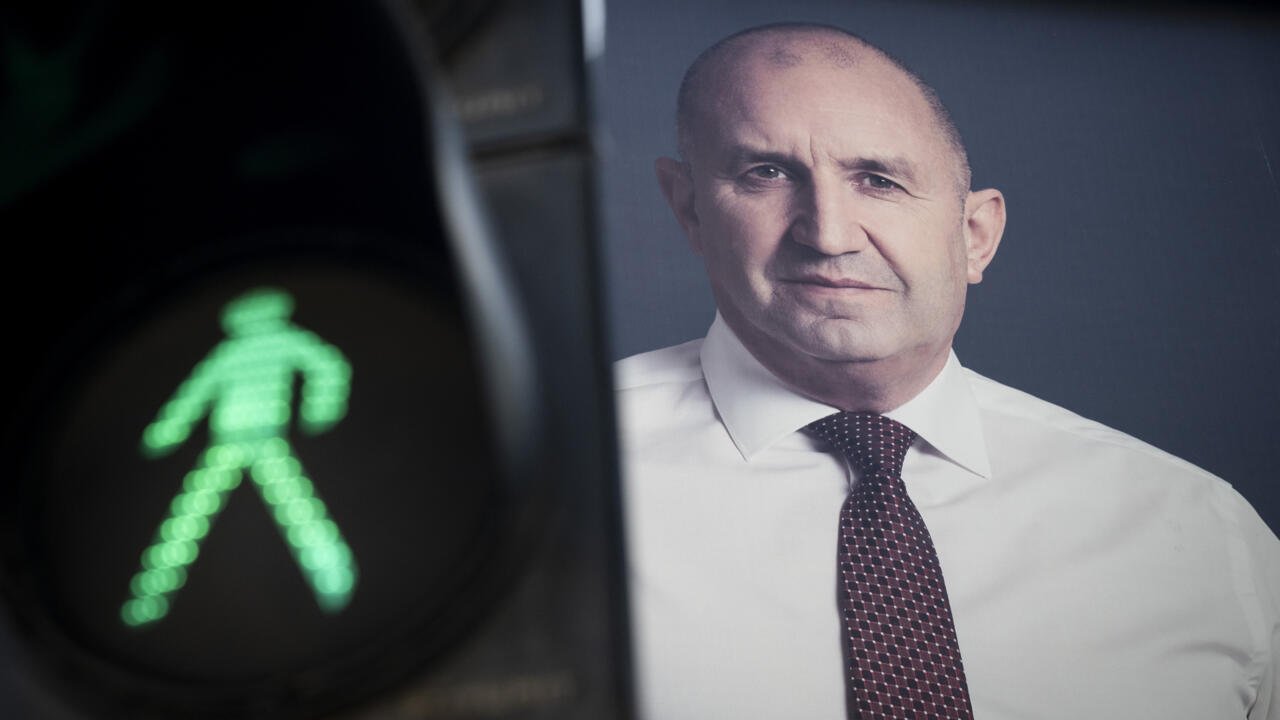
Bulgaria’s Election: A Fight Against Corruption
Bulgarians have headed to the polls for the eighth time in five years, with the former president Rumen Radev’s party predicted to win based on its commitment to combat corruption. The country, the poorest in the European Union, has faced a political crisis since 2021, marked by large anti-corruption protests that led to the fall of longtime Prime Minister Boyko Borissov’s conservative government.
Radev’s Comeback
Radev, a former air force general who served as president for nine years, resigned in January to lead a new centre-left party called Progressive Bulgaria. He has been vocal about his intent to eliminate what he terms the “oligarchic governance model.” Recent polls for Sunday’s election indicate that Radev’s party could capture around 35 percent of the votes.
“Radev is advocating for a brighter future for Bulgaria. We’ve reached a critical juncture where the future of our nation is in question,” said Lazar Lazarov, a philosophy teacher, during Radev’s closing campaign rally in Sofia. “He’s demonstrated his capabilities as both a president and a statesman, making him acceptable to the EU, the United States, Russia, and even China.”
Election Dynamics
According to the polls, Borissov’s pro-European GERB party, which led the previous government, is likely to finish second, garnering about 20 percent of the votes, followed by the liberal PP-DB party.
Polling stations opened at 7 a.m. local time and will close at 5 p.m. GMT. Radev has openly criticized the EU’s green energy initiatives, deeming them naive “in a world without rules.” He has also shown resistance to sending military aid to Ukraine amidst the ongoing conflict with Russia, although he stated he would not veto EU decisions in this regard.
Political Controversies
Radev’s push for renewed relations with Russia has amplified criticism, especially following a recent defense agreement signed between Bulgaria and Ukraine. His rally this week included images of meetings with global leaders, including Russia’s Vladimir Putin, leading many pro-European voters to accuse him of aligning with the Kremlin.
Despite this backlash on social media, Radev was met with enthusiasm from approximately 10,000 supporters at his rally, where he urged unity among his followers and presented his party as a clean alternative to traditional corrupt political entities.
In response to allegations of Radev lacking innovation, Borissov stated that his GERB party had achieved significant milestones, like Bulgaria’s recent entry into the eurozone.
Voter Turnout Expectations
Radev has ruled out forming a coalition with GERB and dismissed alliance prospects with Delyan Peevski, who heads the DPS party and has been sanctioned for corruption by the U.S. and UK. His goal is to achieve an absolute majority in the 240-seat parliament.
Given recent voter fatigue in the political realm and a turnout of just 39 percent in the last election, Radev’s mobilization efforts have sparked expectations for higher participation this time. Analysts suggest that many voters are encouraged to partake in the election to mitigate the influence of vote-buying practices. Law enforcement has ramped up actions against such illegal activities, recently seizing over one million euros and detaining hundreds, including local politicians.
Conclusion
As Bulgaria navigates through its political challenges, the outcome of this election may determine not only the direction of governance but also the future of integrity in its political landscape. With Radev’s anti-corruption messaging resonating strongly among voters, the stakes are high for all parties involved.
- The election marks Bulgaria’s eighth in five years, reflecting ongoing political instability.
- Rumen Radev aims to tackle corruption and has garnered significant support in recent polls.
- The pro-European GERB party is expected to come in second, with challenges of voter turnout in the past.
- Concerns regarding vote buying have prompted increased law enforcement actions leading up to the election.