

Armenia’s Vision for a Peaceful Future: An Interview with Foreign Minister Ararat Mirzoyan
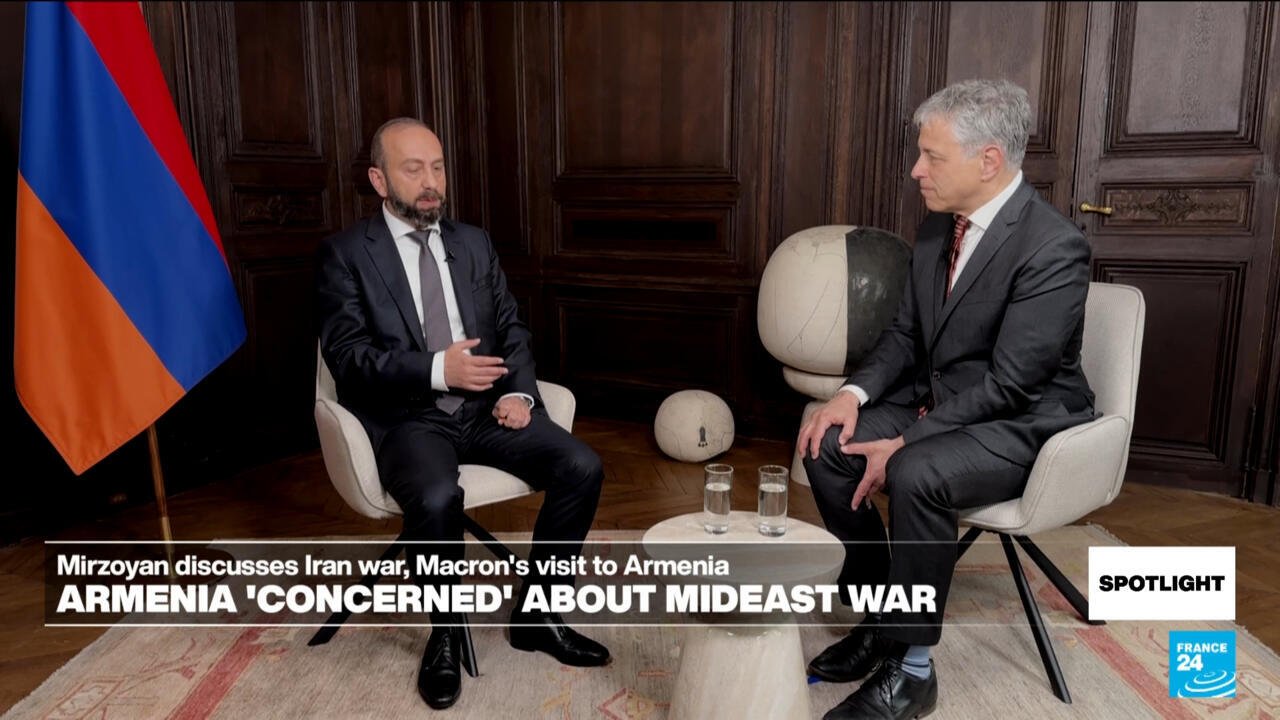
In a recent conversation with France 24’s François Picard ahead of the inaugural EU–Armenia summit, Armenia’s Foreign Minister Ararat Mirzoyan sheds light on the country’s evolving landscape. He emphasizes a pivotal moment characterized by the pursuit of peace and a strategic shift in Armenia’s regional role. Mirzoyan highlights that “we now have peace between Armenia and Azerbaijan,” presenting this not merely as a notion but as a tangible reality, which he aims to institutionalize.
A New Era of Connectivity
Mirzoyan outlines this significant change as part of a broader historical context. After enduring “decades and decades” under blockade, Armenia is now positioned to redefine its influence in the region. He articulates this transformation as one of cooperation rather than competition, stating, “This is not about competition; it’s about unblocking the South Caucasus.” The future of Armenia, as he envisions it, hinges on connectivity, propelled by ambitious infrastructure projects such as railways, electricity grids, and oil and gas pipelines. This approach positions Armenia as a vital link in the Middle Corridor between Europe and Asia.
Wounds of the Past, Focus on the Future
While Armenia grapples with the scars of conflict, particularly after Azerbaijan’s invasion of Nagorno-Karabakh in 2023, Mirzoyan emphasizes the necessity of looking forward. “It’s not easy to forget, and there is no necessity to forget,” he remarks. “We will, of course, remember. But we should also analyze… that our nation… must focus on the present and future rather than dwell in the past.” He points out the burgeoning opportunities in Armenia, highlighting developments in infrastructure, artificial intelligence, data centers, modern educational facilities, and universities.
Value of Democratic Aspirations
On both domestic and geopolitical levels, Mirzoyan expresses optimism about Armenia’s democratic prospects and societal development. He insists that the Armenian people “strongly support the peace agenda” and have significant “European aspirations,” positioning closer ties with the European Union as not just a political objective but a reflection of societal choice.
Regional Relations and Stability
In defining Armenia’s regional context, Mirzoyan maintains a balanced stance. He mentions the recent peace with Azerbaijan and notes “very productive dialogue” with Türkiye aimed at normalizing relations. He refers to connections with Georgia as “brilliant” and “brotherly,” while describing relations with Iran as “very normal neighborly relations.” However, he expresses cautious concerns regarding ongoing regional instability, particularly in relation to Russia. He acknowledges “frustration regarding Russia’s role” but asserts Armenia’s intention to avoid conflict, clarifying that the country seeks “normal friendly relations.”
Upholding Sovereignty
Mirzoyan anchors his insights in the principle of sovereignty, asserting the importance of non-interference in Armenia’s democratic processes. He insists that “no one in the world has the right to interfere” and stresses the significance of respecting the “choice of people.” His reflections encapsulate a nation navigating memories of conflict while aiming for momentum through peace, connectivity, and democratic legitimacy in a shifting regional environment.
Conclusion
As Armenia embarks on this transformative journey, the nation is poised at a crossroads, balancing its painful past with aspirations for a brighter future. Through dialogue, democratic values, and innovative projects, Armenia is working to solidify its role in the South Caucasus and beyond.
Key Takeaways
- Armenia is focusing on establishing lasting peace with Azerbaijan.
- The country aims to redefine its role in the region through enhanced connectivity and infrastructure development.
- Democratic aspirations and support for peace remain strong among the Armenian people.
- Armenia seeks to maintain sovereignty and non-interference from external entities in its democratic processes.