

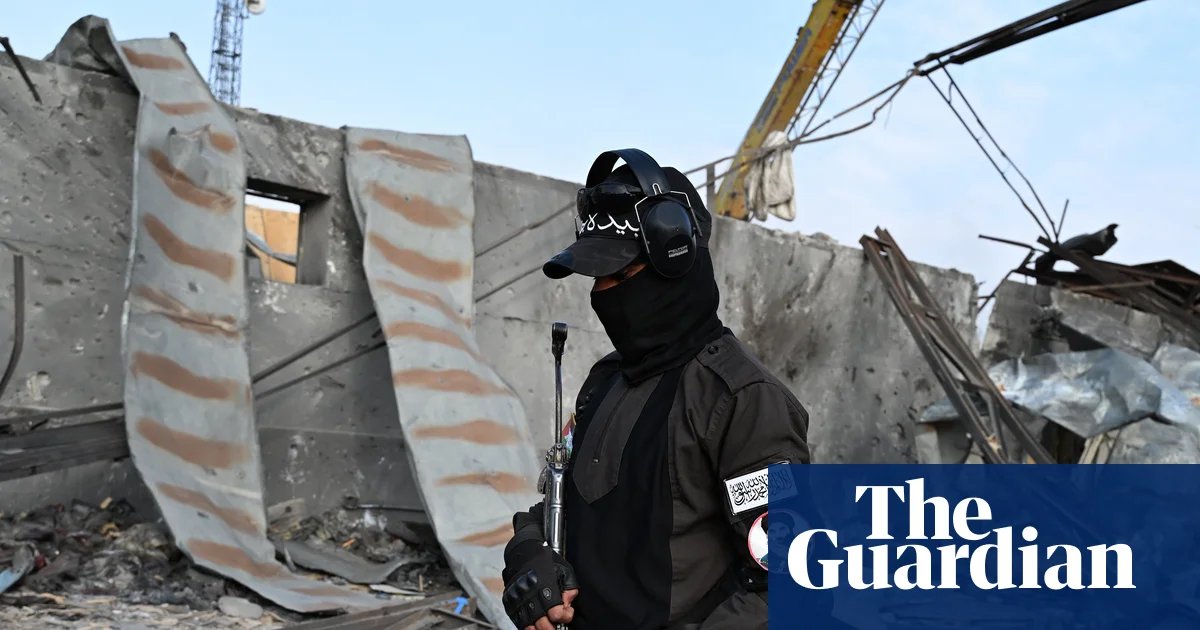
Pakistan’s Airstrikes Against Afghanistan: A Strategy to Deter Militants
Pakistan has intensified its campaign of airstrikes on Afghan soil, targeting locations linked to Taliban support for Pakistani militants. This strategy aims to compel the Taliban government to cease its backing of groups responsible for attacks in Pakistan. However, this approach raises concerns about escalating violence in the region.
The Airstrike Campaign: Justifications and Reactions
Recent reports from Afghan officials indicated that a Pakistani airstrike hit a drug rehabilitation center in Kabul, resulting in significant casualties, which Pakistan has categorically denied, labeling the claims as propaganda. Instead, Pakistani authorities assert that their strikes focus on military and terrorist infrastructure.
The backdrop to this military escalation lies in the surge of terrorist activity faced by Pakistan since the Taliban regained power in Afghanistan in 2021. Islamabad has expressed that its tolerance for cross-border assaults has eroded, leading to the initiation of an operation known as Ghazab lil-Haq, which means “Righteous Fury.” A high-ranking security official underscored Pakistan’s sentiment by questioning why Afghanistan should remain unaffected while Pakistan endures violence.
Taliban’s Response
The Taliban has condemned the airstrikes as an infringement on its sovereignty and has threatened retaliation, hinting at potential suicide bombings. Mohammad Yaqoob, the Taliban’s defense minister and son of the movement’s founder, communicated a stern warning regarding Pakistan’s attacks, implying that the militants would not stand idle while their people suffer.
Furthermore, Amir Khan Muttaqi, the Taliban’s foreign minister, drew parallels between the recent airstrikes and Israel’s military actions in Gaza, suggesting that such aggression from a Muslim neighbor is particularly troubling.
Historical Context and Strategic Implications
Pakistan has a long history of supporting various armed factions in Afghanistan. However, current circumstances are complicated, with no clear opposition group ready to rise against the Taliban. Some experts warn that past attempts to leverage militant groups have failed repeatedly for Pakistan. Islamabad has now called for a more inclusive Afghan government structure.
In addition to military actions, Pakistan has enforced other measures, such as halting trade across borders with Afghanistan and expelling numerous Afghan refugees. According to Mosharraf Zaidi, a spokesperson for Pakistan’s Prime Minister, the military operations are precise and aimed at securing safety for the Pakistani population while maintaining that there is no conflict with the Afghan people.
Legal Justifications and Diplomatic Efforts
Zaidi emphasized that the ultimate goal is to protect Pakistan from further terrorist attacks, stressing that ongoing support for terrorist organizations must end. Former senior diplomat Aizaz Ahmad Chaudhry noted that diplomatic overtures towards the Taliban, both bilaterally and through other nations, have yielded no results, calling the Taliban’s governance more akin to a militia than a state apparatus.
Asif Durrani, who previously served as Pakistan’s special envoy to Afghanistan, highlighted that the void left by the west following the withdrawal of foreign troops in 2021 has forced Pakistan to address the situation alone. He foresees potential upheavals against the Taliban in the future.
Military and Strategic Considerations
The history of allegations against Pakistan regarding its support for the Taliban persists, even as Pakistan contends that it is the Afghan militants, including Pakistanis, who pose a threat from within Afghanistan. Analysts caution that, similar to previous military efforts, Pakistan’s current strikes may lack clear objectives and could lead to further complications, especially given the volatile surrounding geopolitical landscape.
In this context, Qamar Cheema, director of the Sanober Institute in Islamabad, noted that the present military leadership under Field Marshal Asim Munir is determined to take a robust approach against perceived threats, indicating that all options are on the table.
Conclusion
The intensifying airstrike campaign by Pakistan against targets in Afghanistan reflects a desperate attempt to mitigate the threat of terrorism emanating from its neighbor. However, it also raises significant concerns about the risk of further violence, undermining regional stability. Negotiations and diplomatic efforts have so far failed to achieve a lasting peace or a collaborative governance structure in Afghanistan.
- Pakistan launches airstrikes targeting Taliban support networks in Afghanistan.
- The Taliban threatens retaliation, and local authorities accuse Pakistan of violating sovereignty.
- Pakistan’s strategy aims to deter terrorist activities following significant domestic attacks.
- The region remains poised for potential escalation as military options remain on the table.