

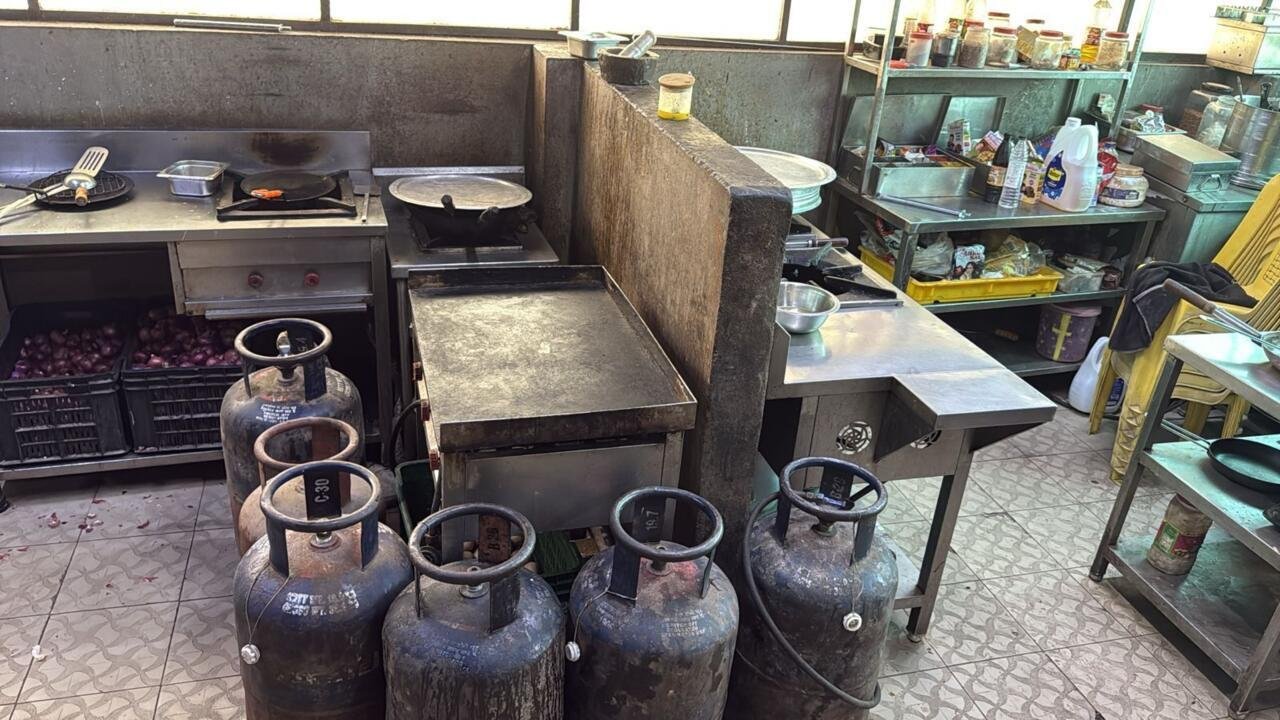
Gas Supply Crisis Hits Indian Restaurants Hard
As the ongoing conflict in the Middle East unfolds, its repercussions are reaching far beyond the battlegrounds. In India, many restaurants are facing a significant challenge due to a disruption in their supply of liquefied petroleum gas (LPG), a critical resource for cooking. Signs stating “No roti due to gas cylinder crisis” are becoming increasingly common across storefronts, indicating a troubling shift in the food service landscape.
The Impact of Global Conflict
The crisis has arisen largely from military tensions, specifically the US-Israeli operations in Iran, which have led to a blockade of the strategic Strait of Hormuz. This disruption has severely affected India’s ability to import LPG, as about 60% of its cooking gas comes from this region.
Despite government assurances that there is no ongoing shortage of LPG, restaurant owners report a different reality. Prime Minister Modi addressed the issue, stating that some individuals are attempting to incite panic regarding the supply. However, while the government is leveraging emergency powers to bolster national LPG production, the immediate beneficiaries appear to be households rather than commercial operations, leaving many restaurants scrambling for fuel.
Restaurants Slashing Menus
Syed Jameel, a restaurant owner in Bengaluru, expressed the struggle to maintain operations amid the dwindling gas supply. “We are finding it really difficult. The supply is really low. We aren’t able to get gas. All the commercial supplies have been stopped,” he said. His establishment has responded by reducing its menu by almost 50%.
“In India, one gas cylinder is about 21 kilograms. We use about 15 to 20 cylinders a day. And for the available gas, the prices are nearly four times the actual price.”
In Gujarat, chef Liju Ninan echoed these sentiments. “We’re just surviving. We don’t have any supplies,” he noted, detailing a precarious situation with his restaurant, Spicy Dine Inn, where the usual weekly gas deliveries have ceased.
Adapting to the Crisis
To cope with the situation, many restaurants are turning to social media to inform customers about menu cutbacks. One vegetarian restaurant in Kochi announced that it would only be able to offer essential items because of the ongoing gas shortage.
The National Restaurant Association of India (NRAI) has called on the government for uninterrupted commercial LPG supply, highlighting the essential nature of the restaurant industry in ensuring food availability.
In a bid to navigate this crisis, some restaurants have begun experimenting with alternative energy sources. A restaurant in Madurai noted that it is using coal to prepare some dishes, informing customers that this might result in slight delays in service.
“There are alternatives. We have electric fryers, but much of the food requires a constant flame. You cannot depend on charcoal or firewood for that,” Jameel explained.
The Pressing Need for Solutions
If the gas crisis extends further, the implications could be dire. Chef Liju Ninan warned, “If the situation doesn’t improve in the next five days, I will have to shut down.” Such closures not only threaten the livelihood of restaurant owners but also impact their employees and the wider community.
Jameel has noticed the increasing strain on his business, which has already seen a significant drop in customers. “Already, almost 30% to 40% of business is low now. Customers are there, but what they want isn’t,” he lamented, arguing that it’s unfair for local vendors to suffer consequences of international conflicts.
“And it’s not only about money; it’s also about passion. I’m a chef. I cook with my heart for my customers,” Chef Ninan added.
Conclusion
The ongoing gas supply crisis highlights not only an immediate challenge for Indian restaurants but also a larger commentary on the interconnectedness of global events and local economies. As tensions continue, the every day livelihoods of many are intricately tied to decisions made far from their homes.
- Indian restaurants are facing a significant gas supply crisis due to geopolitical conflicts.
- Many establishments are reducing their menus and operating hours due to fuel shortages.
- Restaurant owners are exploring alternative cooking methods, but these are not ideal for all dishes.
- Without intervention, many small restaurants may be forced to close, impacting local economies and communities.