

Balendra Shah’s Stunning Victory Marks a New Era in Nepali Politics
In a surprising turn of events in Nepal’s political landscape, rapper-turned-politician Balendra Shah has claimed a significant victory over seasoned leader KP Sharma Oli in their parliamentary constituency. As the Election Commission confirmed results on Saturday, Shah, at just 35 years old, is leading his party to what appears to be a national landslide win.
A Dramatic Upset in the Elections
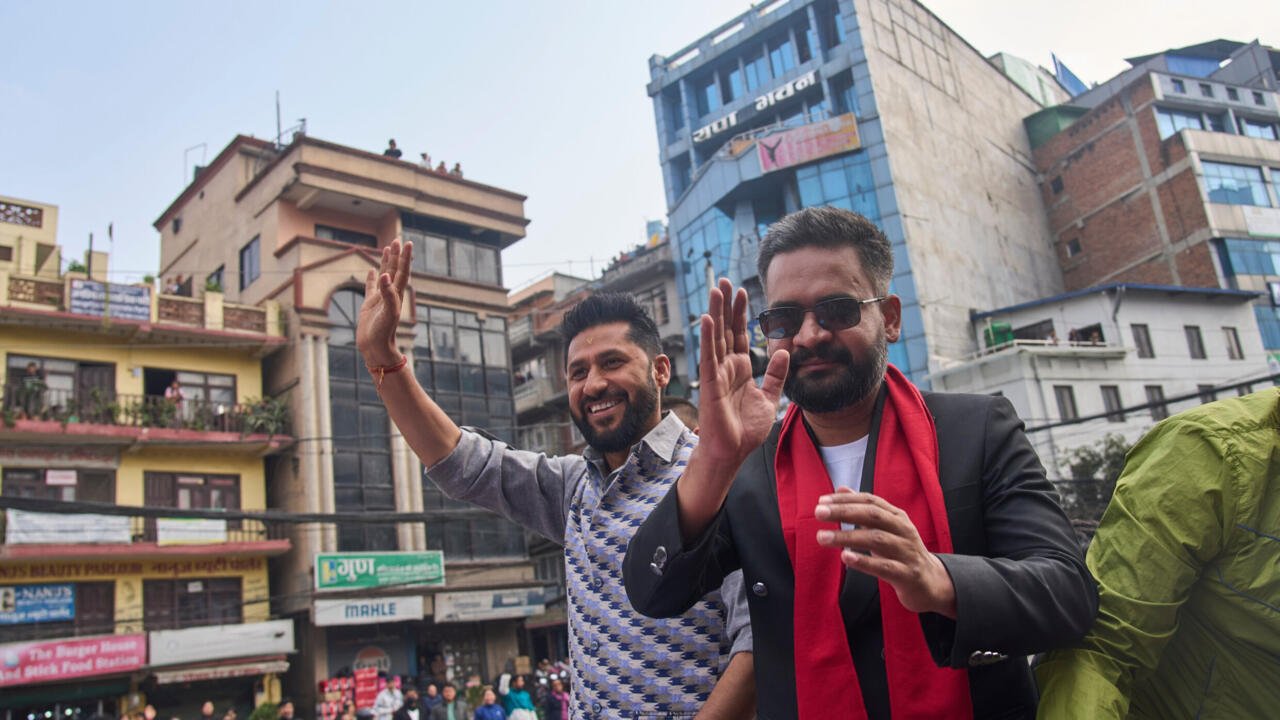
Shah’s triumph over the 74-year-old Marxist leader signals a massive shift in the political scene. Rising from the role of mayor of Kathmandu, his journey to potential prime minister has captivated the youth of Nepal. On the evening following his election win, Shah celebrated with a victory parade through the streets of his new constituency, donning his signature dark sunglasses and enthusiastically acknowledging supporters who chanted his nickname, “Balen.”
In a notable display of support, Shah secured over three times the votes of Oli, a shocking outcome considering the recent political turmoil. The election witnessed its share of tension, coming just six months after widespread protests that led to the downfall of Oli’s administration, resulting in over 77 fatalities.
The youthful energy driving the elections was palpable, particularly among Gen Z voters who were mobilized by dissatisfaction with the current regime. The protests last September originated from a brief social media ban but quickly evolved to highlight deeper concerns over corruption and economic struggles.
The Rise of Shah’s Party
Shah’s centrist Rastriya Swatantra Party (RSP) appears poised to dominate the 275-member House of Representatives, according to early results from the Election Commission, though the counting process remains ongoing. Political analyst Chandra Dev Bhatta noted the scales tipping towards a landslide victory reflects a deep-seated frustration among the populace directed at long-standing political parties.
“This is more than just a win for Shah; it’s a reaction against the established political order,” Bhatta emphasized, indicating that voters are not necessarily swayed by the new candidates’ agendas but rather are expressing dissatisfaction with decades of poor governance.
The People’s Choice
Shah’s ascendance comes as no surprise to many supporters. Rojan Bhattarai, a 22-year-old student from Jhapa, expressed confidence in Shah, stating, “I was almost certain he would win; however, the margin is stunning. It shows just how upset people are with the previous government.” His relatable persona and track record have inspired a wave of optimism among younger voters.
As of Saturday evening, the RSP had declared victories in 61 seats, significantly outperforming other parties such as the Nepali Congress and Oli’s own party. The new election dynamics illustrate a clear voter shift, with Shah leading in many of the remaining constituencies and securing a considerable lead in proportional representation ballots, which determine an additional 110 seats.
Despite the preliminary numbers, Election Commission spokesperson Narayan Prasad Bhattarai cautioned that final results may still be days away, with counting continuing in various regions across the country.
Reflections on Change
The conclusion of these elections exemplifies the rising tide of public sentiment against traditional political players. The lingering effects of last year’s violence, exemplified by the burned remains of Oli’s home in Jhapa, serve as a stark reminder of the unrest that propelled these elections. Voters have expressed their exhaustion with politicians’ unfulfilled promises, reflecting a desire for genuine change within a system they feel has let them down.
As the dust settles and results become clear, there is cautious optimism among the electorate. Many, like Dharmakala Gautam, 74, remain hopeful, despite past disappointments. “We had dreams during the Maoist regime, but little came of it. I’ll hold onto hope this time too,” she remarked.
- Balendra Shah won decisively against veteran KP Sharma Oli, indicating a significant shift in Nepali politics.
- The outcome reflects widespread public dissatisfaction with traditional political parties and governance.
- Shah’s centrist Rastriya Swatantra Party is projected to secure a significant majority in the House of Representatives.
- This election marks a pivotal moment for younger voters advocating for change in Nepal.