

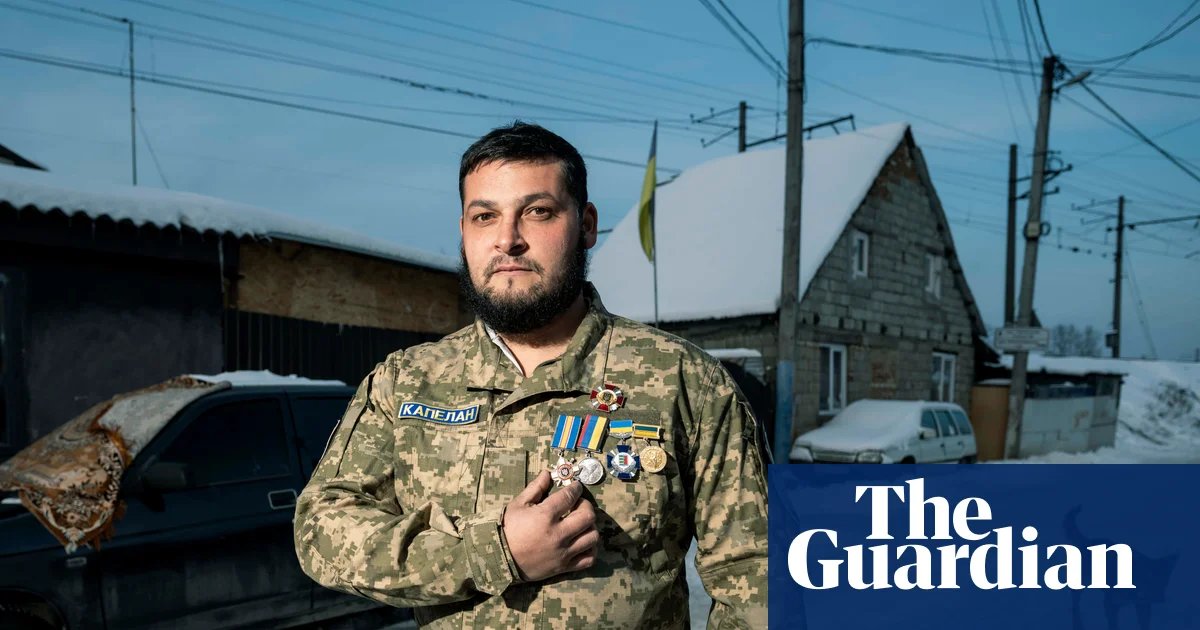
The Unyielding Spirit of Viktor Ilchak: A Roma’s Journey Through War
Viktor Ilchak, a father of four, found himself in a position many would deem unlikely for someone in his situation: serving in the army. Despite Ukraine’s guidelines that prevent the mobilization of men with three or more children, Victor made the decision to enlist, much to the distress of his family. “A typical Capricorn, so stubborn,” reflects his wife, Sveta, on his unwavering resolve.
A Call to Duty
In 2015, as the conflict in Donbas escalated, an incident sparked Viktor’s determination to join the fight. “I heard someone on TV complaining that Roma aren’t defending their homeland. This really upset me, and so I volunteered,” he recounts. When he arrived at the territorial recruitment center in Uzhhorod, the Ukrainian soldiers were taken aback but had no choice but to accept his application.
Life in Radvanka
Viktor and his family reside in Radvanka, a Roma community in Uzhhorod, the capital of Transcarpathia in western Ukraine, bordering several European countries. This area is home to the largest Roma population in the country, but conditions are challenging. According to Myroslav Horvat, Uzhhorod’s only Roma councillor, around 3,500 people live in the settlement, where the streets are unpaved and many homes lack basic amenities like running water.
Family Living Conditions
The Ilchak family occupies a small room measuring just 10 square meters. With no windows and minimal furniture, they share a large bed, while their teenage son sleeps on the floor. Life is not easy, but Viktor remains fiercely dedicated.
A Soldier’s Journey
Viktor fought in Donbas and later served near Mariupol. As a tank mechanic, he endured four injuries and still carries shrapnel from a Russian bomb embedded in his arm. His military jacket is adorned with multiple medals, including the prestigious Order for Courage, awarded to him by President Volodymyr Zelenskyy. Notably, he received an honor from the city council for his remarkable decade of service, a rarity among the Roma community in Uzhhorod.
Returning Home
Last September, Viktor returned home to care for his children and contribute to his community’s well-being. One of his primary goals is to establish a non-governmental organization (NGO), a groundbreaking initiative called the Transcarpathian Roma Association of Combatants, War Veterans, Chaplains, and Volunteers.
The Roma Community
The exact size of the Roma community in Ukraine remains uncertain, with the last census conducted in 2001 reporting just 47,587 individuals. However, the Council of Europe suggests the actual number may be significantly higher. Horvat believes the government intentionally underreports these figures, noting, “The more Roma there are in the country, the more prominent our need for political representation becomes.”
The Struggles of Underrepresentation
The plight of ethnic minorities, particularly the Roma, is a critical component of Ukraine’s discussions regarding EU membership. Initiatives are now underway to identify Roma without documentation and provide them with IDs, which is essential for accessing basic services. Horvat estimates that up to 30,000 people live without proper identification, reducing them to second-class citizens.
The Cost of War
Estimating how many Roma individuals are fighting for Ukraine is challenging. Horvat is aware of around 500 in his region alone, yet nationwide figures could reach into the thousands, although no official statistics exist. “Ukraine doesn’t classify people by ethnicity,” he states.
Compensation Challenges
Families of deceased soldiers receive compensation of 15 million Ukrainian hryvnia (approximately £250,000), with part disbursed immediately and the remainder as monthly payments over the following 40 months. Sadly, Roma fighters often neglect to leave behind last wills, making claims difficult due to the community’s large size and sometimes incomplete documentation.
Tragic Stories
For instance, Marianna Eötvös told me about her brother-in-law, Yevhen Varady, who was killed when a suicide drone struck near Kramatorsk. He had been conscripted from prison, and despite the family’s grief, no compensation was received due to a misspelling in his documents. “One small letter makes a big difference,” she lamented.
Facing Bureaucracy
Obtaining compensation often proves highly frustrating. Viktor noted, “Officials don’t want to deal with Roma. They constantly ask for additional documents or push you to come back another day. Eventually, many simply give up.”
The Reality of Conflict
Despite the challenges, Viktor emphasizes that at the front lines, it doesn’t matter who is Roma or who is not—we are all united in the face of danger. However, in civilian life, the disparities are stark. Many in his community were surprised to learn that those considered uneducated could serve in the military. “But when death is on the line, we are equals. In dealings with state institutions, that is far from true,” he reflects.
Conclusion
Viktor Ilchak’s story is a testament to courage and resilience in the face of adversity. As he seeks to uplift his community through his NGO and fight for their rights, he embodies the spirit of the Roma people who, despite numerous challenges, continue to fight for their place in society.
Key Takeaways
- Viktor Ilchak, a father of four, chose to serve in the Ukrainian army against government policies concerning family.
- The Roma community in Ukraine faces significant challenges, both in terms of representation and access to services.
- Compensations for families of deceased soldiers often face bureaucratic hurdles, further complicating their already difficult situations.
- Viktor aims to establish an NGO for combat veterans from the Roma community, marking a first in Ukraine.