

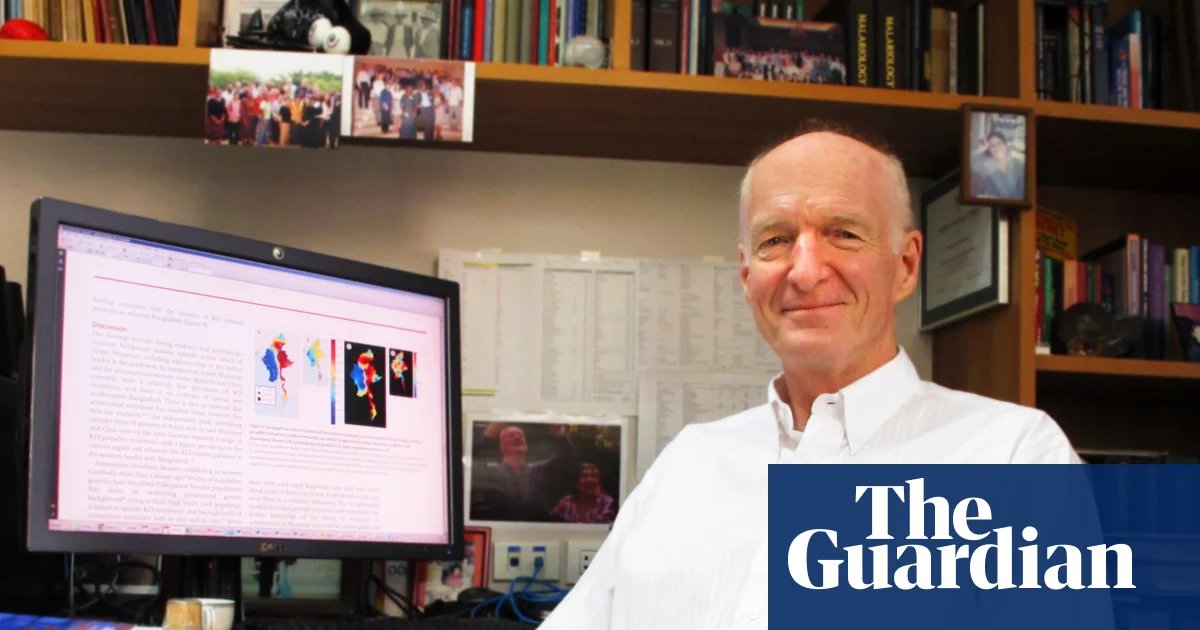
Remembering Nick White: Pioneer in Malaria Research
The remarkable journey of Nick White, a leading figure in the fight against malaria, showcases how dedication to research and compassion for communities can transform global health initiatives. His commitment to traditional Chinese herbal remedies paved the way for significant advancements in treating drug-resistant malaria, ultimately saving millions of lives.
From Traditional Remedies to Global Recommendations
In an era when the notion of using traditional Chinese herbal treatments for malaria was met with skepticism by health policymakers, Nick White’s unwavering perseverance shifted perspectives. He spearheaded efforts to advocate for antimalarial drug combinations featuring artemisinin, a compound derived from the sweet wormwood plant. His influence led to a marked change in the global approach to malaria treatment, significantly reducing mortality rates.
A Life Committed to Healthcare and Advocacy
White, who passed away at the age of 74, exemplified a research ethos deeply rooted in personal engagement with patient health, dedicating much of his life to Thailand, where he became fluent in the language. He took on the role of mentor to many medical professionals and researchers in malaria-prone regions, fostering new leaders in the field.
In addition to his research, he tirelessly advocated for the marginalized, serving on prestigious committees and exerting pressure on governments and international organizations like the World Health Organization to enhance health practices and eradicate ineffective treatments.
The Fight Against Malaria
Malaria, primarily spread through the bites of infected mosquitoes, poses a grave threat particularly to children under five, who account for three-quarters of malaria fatalities, mostly in Africa. By the 1970s, resistance to existing treatments was on the rise, prompting Chinese scientists to explore alternative remedies. They succeeded in isolating artemisinin, establishing its effectiveness in fighting malaria parasites.
Nick White discovered this groundbreaking research shortly after joining the Mahidol-Oxford Research Unit (MORU) in Bangkok in 1980. His first step was to travel to China and secure samples for rigorous testing. Over the next twenty years, he led numerous studies involving artemisinin and its semi-synthetic counterpart, artesunate, often in the most challenging environments such as refugee camps along the Thai-Myanmar border.
Building Lifesaving Networks
As MORU’s director from 1986 onwards, White expanded a network of research facilities across Thailand, Laos, Cambodia, Vietnam, and Myanmar, focusing not just on scientific inquiry but also on humanitarian efforts. Collaborating with local entities, he established free clinics for mothers, thereby cultivating community trust in clinical trials involving pregnant women and children.
Under his leadership, the research expanded to cover various other tropical diseases and important social issues, including the alarming trade in counterfeit medicines that fuelling drug resistance.
Insights and Innovations
One of White’s key insights was recognizing that while artemisinin acted quickly, its effects were often short-lived. He proposed complementing it with a longer-acting medication, improving treatment efficacy. Late 20th-century trials of these combination therapies in Asia revealed that they cured 98% of non-complex cases and were found to be safer than previous treatments. Despite initial frustrations with bureaucratic delays in official endorsements, the World Health Organization finally recommended these therapies in 2006.
Addressing Emerging Resistance
White’s work did not stop at promoting these treatments. He played a vital role in establishing the Worldwide Antimalarial Resistance Network, responding to alarming reports of growing drug resistance, especially in regions like the Thai-Cambodian border. By the time of his passing, he was exploring new drug combinations to counter the evolving malaria threats.
A Multifaceted Legacy
Beyond his professional accomplishments, White was known for his humor and creativity, regularly contributing art to MORU’s festive celebrations. Born in London, he spent his formative years in various countries due to his father’s military career, cultivating a fascination with nature that would follow him throughout his life. This passion translated into significant contributions to wildlife conservation alongside his wife, Jitda.
White’s illustrious career garnered him numerous accolades, including an OBE in 1999 and a knighthood in 2017, though he remained modest about his achievements. He is survived by his family, including his wife and children, who continue to honor his legacy in the field of global health.
Conclusion
Nick White’s relentless dedication to malaria research and community health made him a trailblazer in the fight against one of the world’s deadliest diseases. His innovative approaches to treatment and unwavering commitment to advocacy have left an indelible mark on global health efforts.
- Nick White championed the use of artemisinin in malaria treatment, saving millions of lives.
- He was an advocate for community health and mentored numerous professionals in tropical medicine.
- White established the Worldwide Antimalarial Resistance Network to combat evolving drug resistance.
- His legacy includes numerous honors, reflecting his significant contributions to global health.