

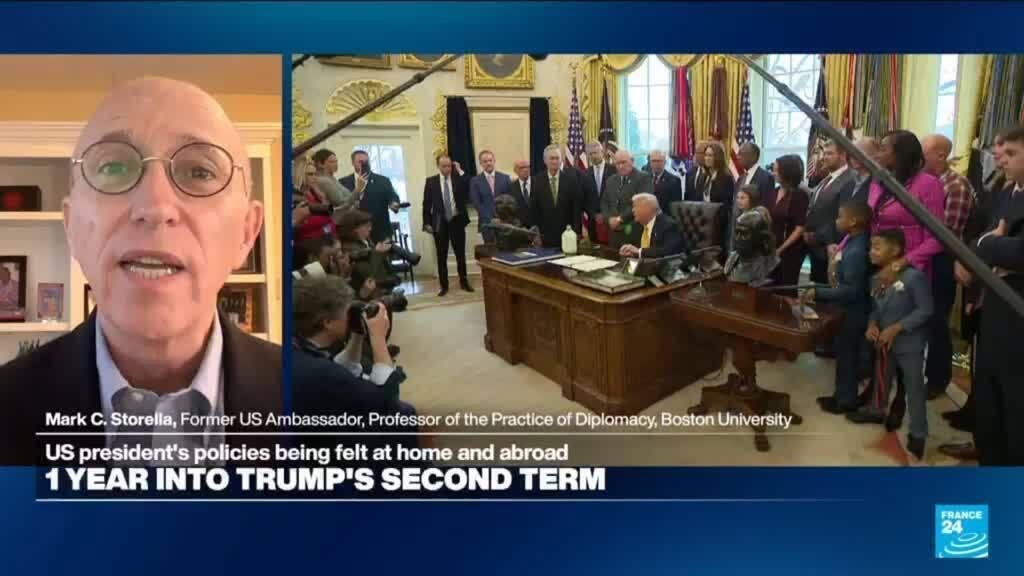
A Candid Discussion with Former Ambassador Mark C. Storella on U.S. Immigration and Foreign Policy
In a recent conversation, Delano D’Souza engages with Mark C. Storella, a former U.S. Ambassador and now a Professor of the Practice of Diplomacy at Boston University. The discussion delves into critical topics regarding U.S. immigration policies alongside both foreign and economic strategies. Storella provides a thought-provoking perspective that urges Americans to reconsider their position on the global stage.
Isolation and Economic Consequences
Storella paints a stark picture of the current U.S. policy landscape, suggesting that the nation is not only withdrawing from international engagement but also jeopardizing its own economic stability and moral standing. He emphasizes that the approach being taken may have long-term repercussions not just for America, but for its alliances worldwide.
The Risks of Authoritarianism
The ambassador raises concerns about the rise of authoritarianism, which often masquerades as practical governance. He cautions that this trend could undermine the fundamental principles of democracy that the U.S. has historically championed. This blending of opportunism with supposed pragmatism poses a serious threat to the established alliances and shared values that have defined American diplomacy.
Implications for Alliances and Values
According to Storella, the ramifications of these policies extend well beyond borders. They risk straining relationships with traditional allies, potentially isolating the U.S. further. As America retreats from its role as a global leader, its influence wanes, making it harder to advocate for democratic values worldwide.
Shifting Focus on Global Cooperation
To counter these alarming trends, Storella advocates for a renewed commitment to international cooperation. He believes that building bridges instead of walls is essential for not only revitalizing the U.S. economy but also restoring its standing as a beacon of democracy.
Conclusion
The insights shared by Mark C. Storella underscore the delicate balance between national interests and global responsibilities. As the U.S. grapples with its identity in a rapidly changing world, it’s crucial to heed these warnings and strive for a more inclusive, cooperative approach to foreign policy.
Key Takeaways
- The U.S. risks isolationism, impacting both its economy and moral authority.
- Authoritarian tendencies are undermining American democratic values and alliances.
- International cooperation is vital for economic stability and global leadership.
- Reassessing current policies can help restore the U.S.’s standing as a champion of democracy.