

Funeral of Ratko Mladic: A Divisive Commemoration in Serbia
The recent funeral of Ratko Mladic, the Bosnian Serb commander who passed away while serving a life sentence for war crimes, has sparked significant controversy. Despite warnings from the European Union, Serbia has publicly recognized Mladic, a figure revered by many within the country, as the first case of genocide in Europe since World War II was attributed to his actions. This article delves into the details surrounding his funeral and the reactions it has provoked.
A Hero’s Farewell
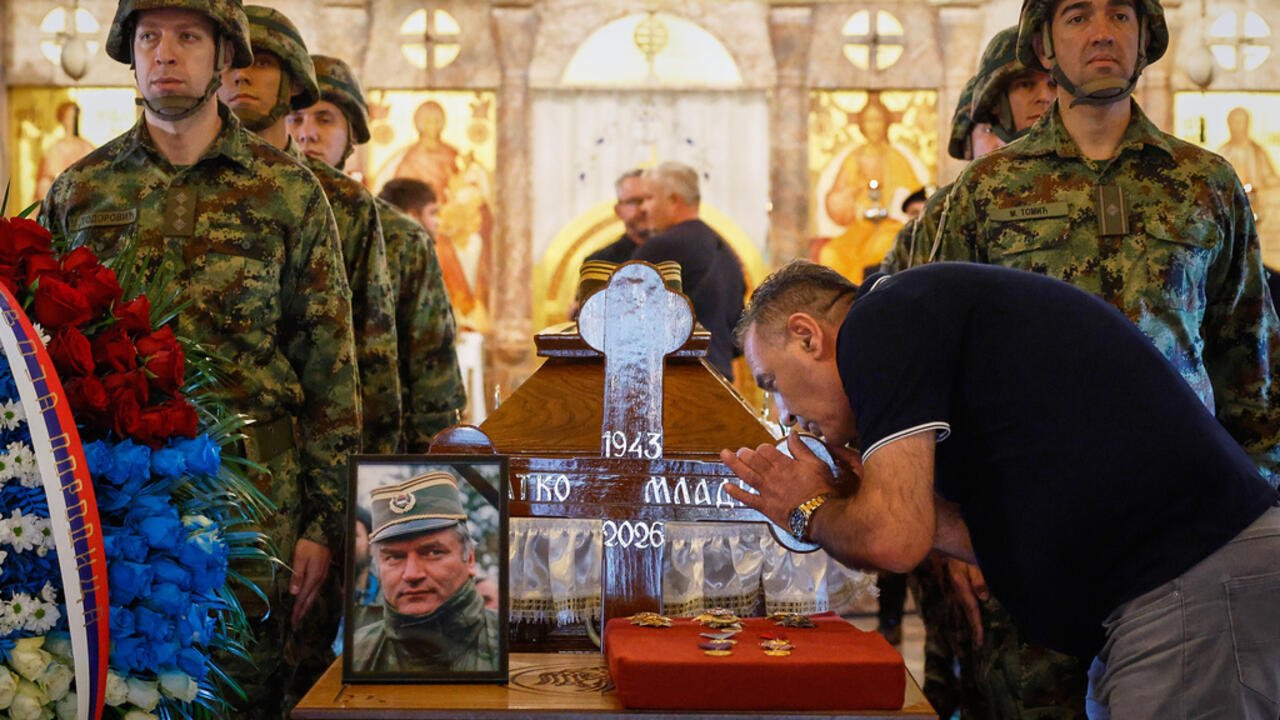
On a poignant Monday morning, thousands gathered at the Serbian Orthodox Church of St. Luke in Belgrade to pay their respects to Mladic. The military commander, who is seen as a hero by numerous Serbs, was honored with traditional military rites. His coffin, adorned with the Serbian flag, featured his officer’s cap and sabre, and was surrounded by soldiers in fatigues. Patriarch Porfirije, head of the Serbian Orthodox Church, officiated the funeral service, emphasizing Mladic’s devotion to the Serbian people.
Milan Dobric, a mournful attendee who traveled from Kosovo, expressed his sentiments: “Mladic was a man who gave everything in his life for the Serbian people. I am glad that this morning people are coming to pay special respect.” Mladic died on August 27 at the age of 84 in The Hague, Netherlands, while serving his sentence for genocide, war crimes, and crimes against humanity committed during the Bosnian War from 1992 to 1995.
Controversial Government Involvement
While Mladic’s family organized the funeral, the Serbian government played an active role by sending a plane to transport his remains back to Belgrade. On Saturday, a formal military commemoration took place at a designated venue. Serbia’s actions have attracted severe criticism, particularly since the country is a candidate for European Union membership. Marta Kos, the EU’s enlargement commissioner, canceled her imminent visit to Serbia, claiming that “the glorification surrounding his death is incompatible with the values on which the EU path is built.”
Many European officials, local leaders, and relatives of Mladic’s victims from the Bosnian War also voiced their discontent. The conflict, which lasted until 1995, resulted in over 100,000 fatalities and left more than a million homeless.
Political Ramifications
Serbia’s populist President, Aleksandar Vucic, dismissed the EU’s objections and accused Kos of “lying.” Though he did not attend the funeral, Vucic has increased his anti-Western rhetoric as the country approaches a parliamentary election next month. In 2017, Mladic was sentenced for his role in the Srebrenica massacre—where over 8,000 Muslim men and boys were executed—as well as for the lengthy siege of Sarajevo and other war crimes that included establishing concentration camps.
Despite Mladic’s notorious crimes, Serbia continues to deny that genocide occurred in Srebrenica, instead labeling the massacre a “horrific crime.” Nationalist supporters have organized vigils in his honor, painted murals depicting his image around Belgrade, and lit flares as a tribute.
The Stalled EU Bid
Serbia’s bid for EU membership has been further complicated by its delays in addressing democratic concerns and its refusal to impose international sanctions on Russia over the ongoing invasion of Ukraine. The aftermath of the war has had profound ramifications; Srebrenica, initially designated as a UN “safe haven” for Bosniaks, was overtaken by Serb forces who mercilessly executed men and boys before burying them in mass graves. The war erupted following the disintegration of the former Yugoslavia, as ethnic Serbs in Bosnia sought to seize territory and create an independent state allied with Serbia.
Conclusion
The funeral of Ratko Mladic has highlighted serious divisions within Serbia and raised questions regarding the country’s future relationship with the European Union. As Serbia commemorates this controversial figure, it faces ongoing scrutiny for its actions during the Bosnian War and the glorification of its wartime leaders.
- Ratko Mladic’s funeral drew thousands of mourners in Belgrade, reflecting his status among many Serbs.
- The Serbian government actively participated in the arrangements, defying EU criticism concerning Mladic’s defense.
- Calls for accountability regarding past war crimes remain contentious within Serbia, impacting its EU membership prospects.
- The legacy of the Bosnian War continues to influence national politics and societal perceptions in the region.