

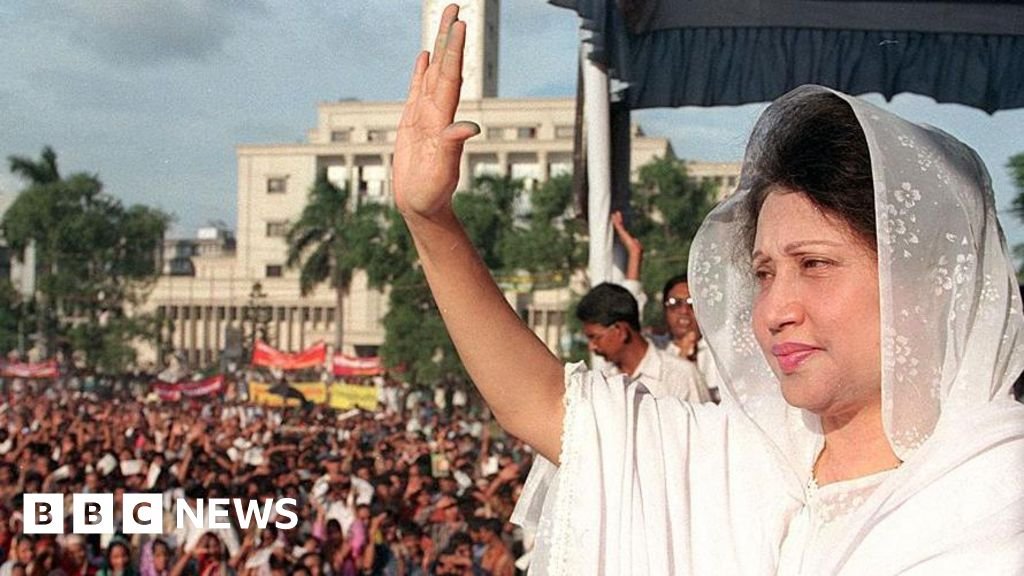
Khaleda Zia, Bangladesh’s First Female Prime Minister, Passes Away at 80
Khaleda Zia, the pioneering first female prime minister of Bangladesh, has passed away at the age of 80. Her political journey, marked by resilience and controversy, transformed her from a “shy housewife” into a prominent figure in the nation’s political landscape. Beginning her career in the shadow of her husband, Zia’s legacy includes leading the Bangladesh Nationalist Party (BNP) through times of turmoil, rallying for democracy, and overcoming personal and political battles.
A Resilient Leader Emerges
Born in 1945 in Dinajpur, then part of British India, Khaleda Zia married Ziaur Rahman at just 15 years old. Her husband, a key player in the struggle for Bangladesh’s independence, became the country’s president after its establishment in 1971. However, following his assassination in 1981, Khaleda stepped into a leadership role within the BNP and eventually ascended to the prime minister’s office, first in the 1990s and again in the early 2000s.
Despite her successes, Zia’s time in office was coupled with numerous challenges. She faced convictions for corruption that imprisoned her for years. Nonetheless, she managed to secure her freedom post-2024, when a popular uprising saw her rival, Sheikh Hasina, ousted from power.
From Widow to Political Force
After becoming a widow at 36, Zia turned her focus to politics. As a member of the BNP from 1982, she built a reputation as an “uncompromising leader,” boldly opposing the military rule that gripped Bangladesh. Her activism against the dictatorship and subsequent success in the 1991 elections marked her as the first woman to lead a Muslim-majority country, as she returned governance to a parliamentary system and prioritized education reform.
Opposition and Political Struggles
Post-2006, as the country faced political unrest, Zia found herself embroiled in corruption charges alongside Hasina, leading both to political stagnation. After her party boycotted the 2014 elections, they lost significant parliamentary representation. In 2018, Zia was convicted for embezzlement but maintained her innocence, asserting the charges were politically motivated.
As her health deteriorated due to diabetes and arthritis, she was moved to house arrest, marking a significant shift in her public role. However, after a change in government in 2024, Zia was released and regained her financial autonomy.
Final Days
Khaleda Zia spent her final years battling various health issues, including cirrhosis and kidney damage. By January 2025, she had traveled to London for medical treatment following her acquittal on multiple charges. Sadly, she passed away on December 30 in Dhaka after months of declining health. Her legacy continues through her elder son, Tarique Rahman, who is viewed as a potential successor in the political landscape of Bangladesh. Her younger son, Arafat Rahman, passed away in 2015.
- Khaleda Zia, Bangladesh’s first female prime minister, died at 80.
- She rose to prominence after the assassination of her husband, Ziaur Rahman.
- Zia served two terms as prime minister and was known for her opposition to military rule.
- Despite legal battles and health struggles, she remained a powerful figure until her passing.