

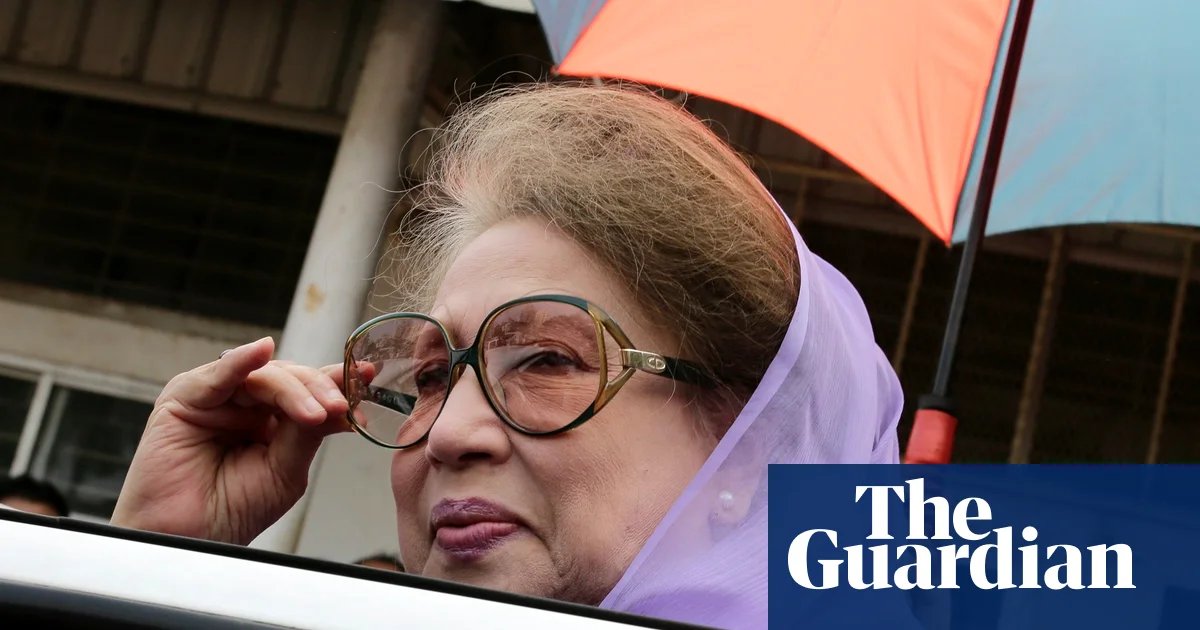
Former Bangladeshi Prime Minister Khaleda Zia Passes Away at 80
Khaleda Zia, the former Prime Minister of Bangladesh and a prominent figure in the nation’s political landscape, has died at the age of 80, as confirmed by her political party on Tuesday. Her rivalry with Sheikh Hasina has shaped the political arena for decades, marking her as a significant leader in Bangladeshi history.
A Legacy of Leadership
The Bangladesh Nationalist Party (BNP) announced Zia’s passing in a statement, noting that she died early in the morning, shortly after the Fajr prayer. “We pray for the forgiveness of her soul and request everyone to offer prayers for her departed soul,” the statement read.
Khaleda Zia served as the first female Prime Minister of Bangladesh and remained a formidable figure in Bangladeshi politics. Although she faced numerous corruption allegations she claimed were politically motivated, the Bangladesh Supreme Court cleared her of the last remaining charge in January 2025, paving the way for her potential candidacy in the upcoming February elections.
A Controversial Political Journey
Upon returning to Bangladesh in May after receiving medical treatment in the UK, Zia was hopeful about her political future. Earlier in January, the interim government permitted her to travel abroad after her previous requests had been denied multiple times by Hasina’s administration. Despite ongoing health challenges and a recent hospitalization, she was determined to participate in the elections set for February 2026.
Throughout her political journey, Zia remained a staunch advocate for democracy, actively challenging authoritarian rule in the country. Her husband, Ziaur Rahman, had come to power in 1977 through a military coup and founded the BNP, but he was later assassinated in a coup in 1981. Zia played a pivotal role in mobilizing the public against military dictatorships, leading to the fall of HM Ershad in 1990.
Intriguing Rivalries
Zia’s political narrative is closely intertwined with that of Sheikh Hasina, the daughter of the country’s founding leader. Their contentious relationship included numerous electoral battles; Zia notably faced criticism in 1996 when her party won an election amid a boycott by major opponents, leading to a brief government that was quickly replaced by a caretaker administration.
Her return to power in 2001, in coalition with Jamaat-e-Islami, marked a controversial period, particularly due to the latter’s contentious history during the independence war. During this time, Zia’s governance model emphasized pro-investment policies, gaining favor with the business community but drawing scrutiny for her foreign policy stances, particularly regarding Pakistan and India.
Final Years and Legacy
In the later stages of her political career, Zia faced severe legal challenges, culminating in her imprisonment for alleged corruption, which her supporters vehemently claimed was politically orchestrated. Her sentencing sparked nationwide protests and significant discourse about political repression in the country, with critics holding Prime Minister Hasina accountable for Zia’s imprisonment.
In her final days, the interim leader Muhammad Yunus urged the nation to honor Zia’s legacy, recognizing her as a “source of utmost inspiration for the nation.” Khaleda Zia leaves behind a complex political legacy that continues to influence the dynamics of Bangladesh’s democratic processes.
- Khaleda Zia, former Prime Minister of Bangladesh, passed away at 80.
- She was a key figure in Bangladeshi politics, known for her rivalry with Sheikh Hasina.
- Zia was the first female Prime Minister and faced multiple allegations of corruption.
- Her legacy reflects a complex relationship with democracy and governance in Bangladesh.