

The Rise of Gaming in South Korea: From Stigma to Stardom
Son Si-woo’s journey from a hesitant gamer to a celebrated esports champion encapsulates the dramatic shift in South Korean attitudes towards gaming. Once seen as a perilous addiction, the gaming industry has become a cornerstone of modern culture, showcasing not just individual talent but also the nation’s growing prowess on the global stage.
A Mother’s Doubt, A Son’s Triumph
At age 27, Son, known in the gaming world as Lehends, vividly recalls the day his mother shut down his computer, halting his dream of becoming a professional gamer. She was worried, convinced that his gaming habit was harming his character. However, after his victory in an amateur tournament that earned him 2 million won (£1,000), belief in his potential blossomed. “From that moment on, they began to support me,” he shares.
Today, as a champion in League of Legends and a key player for Nongshim RedForce—a prominent team sponsored by one of South Korea’s largest food corporations—Lehends symbolizes the changing perceptions of gaming in South Korea.
Transforming Views on Gaming
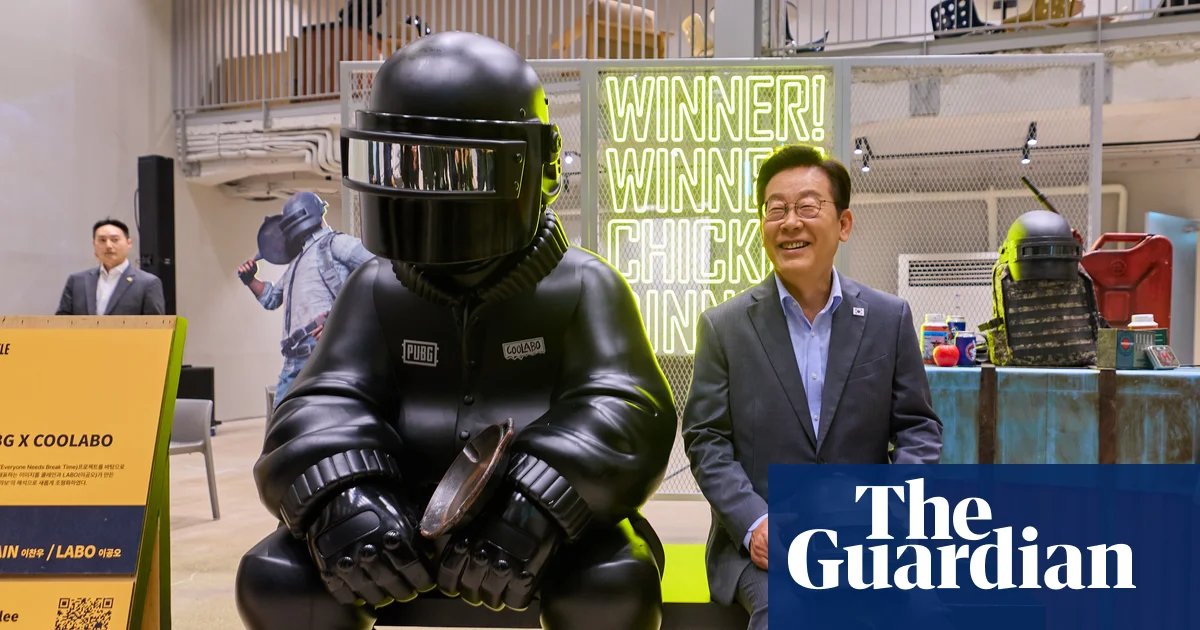
In a notable shift, President Lee Jae Myung recently declared that “games are not addictive substances,” contrasting sharply with the 2013 legislative attempts to classify gaming alongside major social addictions like drugs and gambling. This progressive view has propelled South Korea’s gaming market forward, growing by an impressive 47% between 2019 and 2023, reaching a valuation of 22.96 trillion won (£11.7 billion). Notably, exports have surged by 41%, totaling 10.96 trillion won (£5.6 billion), making gaming a dominant sector in cultural exports.
Among this thriving landscape, esports has emerged as a powerhouse, valued at approximately 257 billion won (£128 million) in 2023. While this represents a smaller slice of the overall industry, its influence is pronounced, driving trends in sponsorship and viewership.
South Korea now ranks fourth globally in terms of gaming market share, trailing only the United States, China, and Japan.
From Curfews to Cultural Icons
The evolution in attitude is stark. Once, South Korea imposed curfews on teenage gamers; now, gaming is recognized as a legitimate occupation and a strategic industry vital to the economy. This transformation traces back to the late 1990s when the nation invested heavily in broadband infrastructure following the Asian financial crisis, facilitating the rise of internet cafés, or PC bangs, which today number around 7,800.
By the late 2000s, professional gaming events for titles like StarCraft began drawing massive crowds, leading to corporate sponsorships and the establishment of formal leagues. Today, educational institutions offer programs in esports, and major tournaments are broadcasted on traditional television, showcasing players in a light akin to pop stars.
Dreams in the Making
At the Nongshim Esports Academy in Guro district, a hub of aspiring professionals, young trainees engage in rigorous practice. The facility is equipped with dormitories, a canteen managed by a nutritionist, and walls adorned with trophies—an evident tribute to the ambition housed within. Roh Hyun-jun, at 22, has set aside his mechanical engineering studies, viewing them as a backup while he trains to become a professional player in League of Legends.
“In team games, we experience a unique unity,” he reflects. “It’s not just about individual wins; it’s about collective success.” The academy, under the same organization that sponsors Lehends’ team, charges around 500,000 won (£253) for 20 hours of training each month. Despite the investment, only 1-2% of students will make it to professional status, indicating the fierce competition that characterizes the sector.
Professionals in the industry can earn six-figure sums from salaries, winnings, and sponsorships, while recent surveys show that gaming is among the top career aspirations for young boys. However, the career lifespan of a professional gamer is often limited, particularly for Korean males who face mandatory military service.
“If you can’t make the cut, you need to move on quickly,” remarks Hwang Sung-hoon, known as Kingen, another player for Nongshim RedForce. Aiden Lee, secretary-general of the League of Legends Champions Korea (LCK), links the success of South Korean teams—who have triumphed in 10 of 15 world championships—to the intense dedication and focus prevalent among aspiring gamers.
Balancing Growth and Safety
The government currently aims to strike a balance between fostering growth and ensuring health among gamers. State-supported “healing centers” provide support for youth who may be overly engaged in gaming, collaborating with medical professionals to offer consultations. Regulations now cap training hours for young gamers to promote healthier competition.
Roh remains steadfast in his ambitions, asserting, “I want to be the most renowned pro gamer. Having chosen this path, I am determined to excel.”
- Gaming in South Korea has transformed from a societal concern to a recognized and celebrated industry.
- The domestic gaming market is valued at 22.96 trillion won, showcasing significant growth in recent years.
- Esports is a vital segment, driving trends and contributing to cultural exports.
- Career paths in gaming are competitive, with only a small percentage of aspiring players achieving professional status.