

The Meteorite Hunters: Exploring the Sky’s Bounty
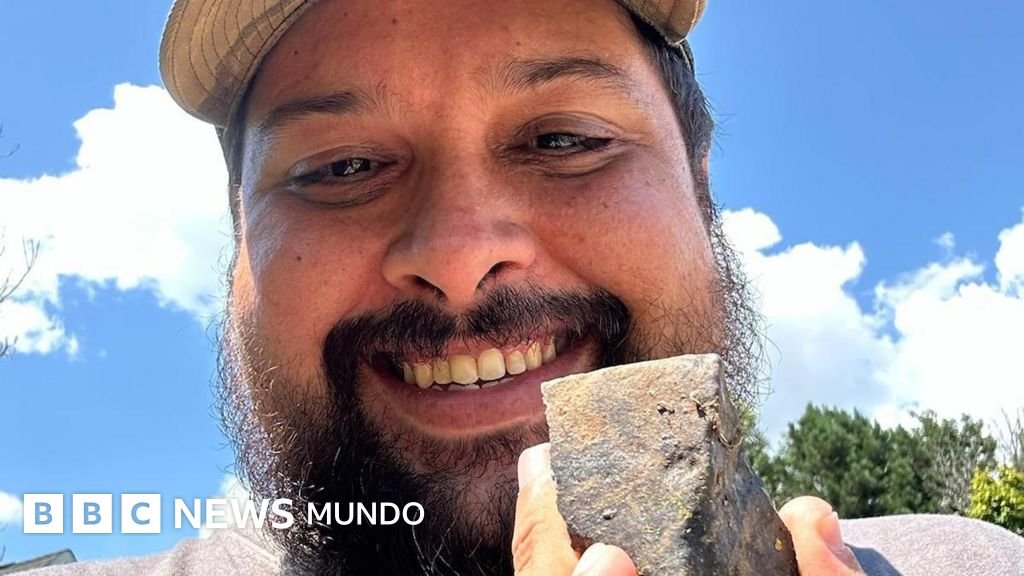
In a world where many believe that “money doesn’t fall from the sky,” a niche yet growing community challenges this notion. These are the meteorite hunters—individuals dedicated to scouring the globe in search of extraterrestrial rocks. Driven by both scientific passion and commercial opportunity, this burgeoning market is attracting collectors ready to pay top dollar for pieces of the cosmos. Among them is Roberto Vargas, a man who transitioned from a mental health therapist to a full-time meteorite seeker, captivatingly altering the course of his life.
A Life-Changing Curiosity
Roberto Vargas’ journey into the realm of meteorites began with sheer curiosity. “I always thought that ordinary people couldn’t own meteorites. So when I held my first one, I was incredibly excited,” he shared. This initial spark initiated his collection and led him on a quest to find more.
In 2019, when he learned about a meteorite that had landed in Costa Rica, he was determined to find it. “I didn’t succeed in locating it, but I did manage to buy several,” he recalled. This spree ignited a new venture, as he began selling these cosmic rocks to cover his expenses, far surpassing his expectations. “I returned from my first trip to Costa Rica on a Friday, and by Monday, I had sold meteorites for over $40,000. It was an experience that changed my life completely,” Vargas remarked.
Just a few years later, he left his job in mental health, earning between $50,000 and $60,000 annually, to pursue meteorite hunting full-time.
The New Marketplace
The intricate work of locating celestial rocks relies heavily on people like Darryl Pitt, a former music photographer turned meteorite dealer. “I was at a Newport Folk Festival when someone suggested, ‘Let’s go to a rock show.’ I had no idea it was a literal showcase of stones, gems, and minerals,” he mused. An early fascination with meteorites blossomed from a childhood trip to an Arizona crater formed by one of these space rocks.
Pitt’s regular ventures evolved into running the first meteorite auction in the 1990s, which has since skyrocketed in popularity—driven largely by the increasing number of collectors interested in owning a piece of the universe.
Understanding Meteorites
What lies behind the allure of these rare stones? Professor Sarah Russell, from the Natural History Museum in London, elaborates: “A meteorite is a rock that has landed on the Earth’s surface. Before it reaches us, as it streaks through the atmosphere, it’s known as a meteor.”
Meteorites can originate from various celestial bodies, with most believed to come from asteroids, but others may hail from the Moon or Mars. Factors such as size, whether they are intact, the rarity of their composition, and their provenance play significant roles in determining their value.
“You can find meteorites for as little as 20 or 30 cents per gram,” Pitt noted, although he warned about the abundance of counterfeits online. Interestingly, a Martian meteorite weighing 24 kilograms sold for a staggering $4.3 million at a New York auction last July.
So, how do you differentiate between a meteorite and ordinary rock? “Upon entering the atmosphere, a meteorite melts on the outside, forming a unique thin crust known as fusion crust,” Russell explained. Testing may also be needed to reveal their chemical composition.
According to Russell, meteorites are categorized into three types: stony, iron, or a combination of both.
The Debate on Commercialization
The auction of the Martian meteorite from Niger raised ethical questions about the commercialization of these natural wonders. Discovered in November 2023 by an anonymous hunter, the sale sparked scrutiny from both officials and scholars regarding its legality. “We need to investigate how this meteorite was extracted, who authorized its removal, and whether or not proper procedures were followed,” stated Professor Idi Umuru Amadou from Abdu Mouni University.
While Niger lacks specific laws governing extraterrestrial objects, regulations about minerals and cultural heritage exist. Objects like meteorites must typically be accompanied by administrative authorization when exported, and failing this could lead to accusations of theft.
The controversy surrounding this recent auction highlighted the ongoing discussions about the ownership of meteorites when they arrive on Earth. Regulations vary significantly across different countries: Australia has strict laws against meteorite exports, while the UK lacks specific prohibitive legislation.
Women in Meteorite Discovery
Not all meteorite hunters are motivated by profit; some are dedicated to ensuring that these fascinating objects find their way to scientific institutions. Among these is a group in Latin America known as the “Azmeteóricas,” composed of Brazilian scientists who boldly chase down meteorite impacts. “We drop everything to search for these new meteorites. Being the first to find them makes a world of difference,” explained meteorologist Amanda Tosi.
While Tosi does not advocate for banning the trade of meteorites, she emphasizes the importance of regulating it to ensure these valuable specimens are preserved for study. “When a market exists for meteorites, it encourages people to seek them out, resulting in important discoveries. But we need balance to protect these treasures as cultural and scientific heritage,” she asserted. Unfortunately, even with existing legislation, countries like Argentina have witnessed their meteorite heritage targeted by smugglers.
“Unique samples can provide insights into parts of our solar system that remain uncharted. Without the chance to study these rocks, we impede our understanding of space, which could impact future missions and the broader space industry,” Russell concluded. Increased interest among private collectors often complicates the acquisition of meteorites for scientific institutions, particularly for those deemed most precious.
Vargas proudly defends his role in the industry, asserting that “there is economic motivation, but there’s also a scientific element. We want these rocks in the hands of scientists, carefully protected and studied.”
Conclusion
The world of meteorite hunting is more than just a quest for profit; it’s a fascinating intersection of science and passion that continues to captivate both enthusiasts and scholars. As interest in these celestial treasures grows, it raises crucial questions about legality, ethical collection, and the future of space exploration.
Key Takeaways:
- The meteorite hunting community is gaining traction, driven by both curiosity and financial interest.
- Understanding the origins and classifications of meteorites can aid collectors and researchers alike.
- Debates surrounding the commercialization of meteorites underscore the importance of regulatory frameworks.
- Women’s contributions to meteorite discovery highlight a blend of scientific dedication and adventure.